Most people buy a dog GPS tracker the way they buy a phone case: cheapest option with the best photos, clip it on, assume it works. Then the dog slips a fence line at 9 p.m., the app spins, and the owner learns what took me eleven hours in the Deschutes National Forest to learn.
I run search and rescue in Central Oregon and I train trail and hunting dogs. My husky, Kestrel, has escaped three times. The third escape ended with a neighbor's phone call, not with my app, and that is the night that turned dog GPS tracker setup into a procedure in my house instead of a purchase.
Here is the short version of four years and roughly 2,000 miles of trail testing. A tracker is three things: a radio, a battery, and a way to stay attached to an animal that is actively trying to remove it. Everything else on the box, the activity rings, the wellness charts, the AI insights, is decoration. If the GNSS lock is slow, the battery duty cycle is short, or the mount fails in thick brush, you own a rock with a subscription.
This guide covers how I choose a tracker, how I fit it, and the monthly recovery drill that keeps it honest. Two units are in rotation right now, and they sit at opposite ends of the business model.
Why you should trust me
I volunteer with a search and rescue team out of Bend, Oregon, and I have put ten GPS trackers through about 2,000 miles of trail since 2022, including deep canyons, dense pines, and the stretch of the Cascades where cell coverage goes to die. I keep a log for every unit: how long it takes to get a GNSS lock, how fast the battery drains in cold, whether the app shows a last known location without a signal, and whether the collar hardware survives a dog pushing through manzanita.
That log is also why I stopped trusting spec sheets. A tracker that dies at hour 14 of a day hike is a rock with a subscription, no matter what the box promises. The features I care about are the recovery features: last known location, geofence alerts, and a light I can trigger at night. Live tracking is a party trick by comparison.
How I picked and how I tested
The two units below are the ones I currently keep charged and hanging by the door. I did not rank them by app polish or by how pretty the dashboard looks. I ranked them by three tests.
The trail test is a real off-grid walk with no bars, where I watch lock time and battery drain. The recovery drill is a timed simulation: my partner hides with Kestrel, I get an alert, and I work the tracker exactly the way I would in a real search. The buyer's chair math is the boring one that matters most, which is three-year cost including whatever plan the unit requires.
I also check attachment, because that is where trackers actually fail. I have found two trackers in the woods over the years. Neither was on a dog.
Three questions to answer before you buy
Where does your dog run? GNSS and cellular are two different things. The satellite constellation gets the position; the network carries it to your phone. If your dog runs canyons, deep timber, or a national forest with one bar of service, ask what the tracker does when the network is gone.
How long is your longest day out? Battery life is the whole product. A five-day claim is a duty cycle claim, and long life usually means fewer position reports per hour. Match the reporting interval to your actual day, not to the marketing copy.
How does it attach? Collar fit and hardware are where trackers fail. A unit that snags on brush or slides over a dog's skull is a donation to the forest.
The two trackers in rotation
One of these is a dog collar sold with no monthly fee. The other is a cat tracker, and I am including it for a specific reason that I explain in that section. Read both listings closely, and note that both links below go to the exact unit.
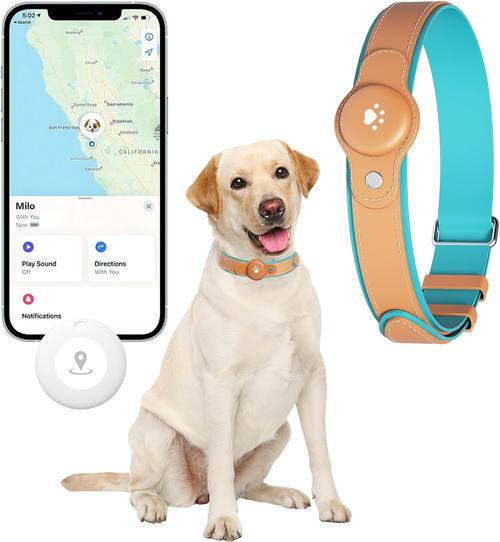
Our pick: New GPS Tracker for Dogs: Smart Pet Collar with Real-Time Tracking,No Monthly Fee/Subscription (iOS & Android) Waterproof, Anti-Lost,365-Day Long Battery Life GPS Tracker Dog Collar(Tracker Included)
 Visit on Amazon →
Check current Amazon price at the link above.
This is the one I hand to owners who tell me they cannot afford another monthly bill. The listing sells it as a smart pet collar with real-time tracking, waterproof construction, an anti-lost function, apps for iOS and Android, and a battery claim of up to 365 days with no monthly fee or subscription. For a dog owner who walks the same trails I do and does not want a three-year subscription running in the background, that combination is the whole argument.
Two things to verify yourself. First, the 365-day figure is a duty cycle number, so read the listing for the reporting interval that gets you there. A tracker that reports every few minutes will not last a year on any battery, and a tracker that reports rarely will not help you in a live search. Second, the collar and the tracker ship as one unit, so fit matters more than usual. Put it on, check the two-finger rule, then try to pull it over your dog's head. If it comes off in your living room, it will come off in a thicket.
Flaws but not dealbreakers: A no-fee tracker is only as good as its recovery features, and those are the ones you have to test yourself. Run the walk test and the geofence test in your own neighborhood before you trust it off leash. The hardware is also a single collar, so if you rotate between two dogs you are moving the whole rig.
For the owner who wants one unit, one charge schedule, and no monthly line item, start here.
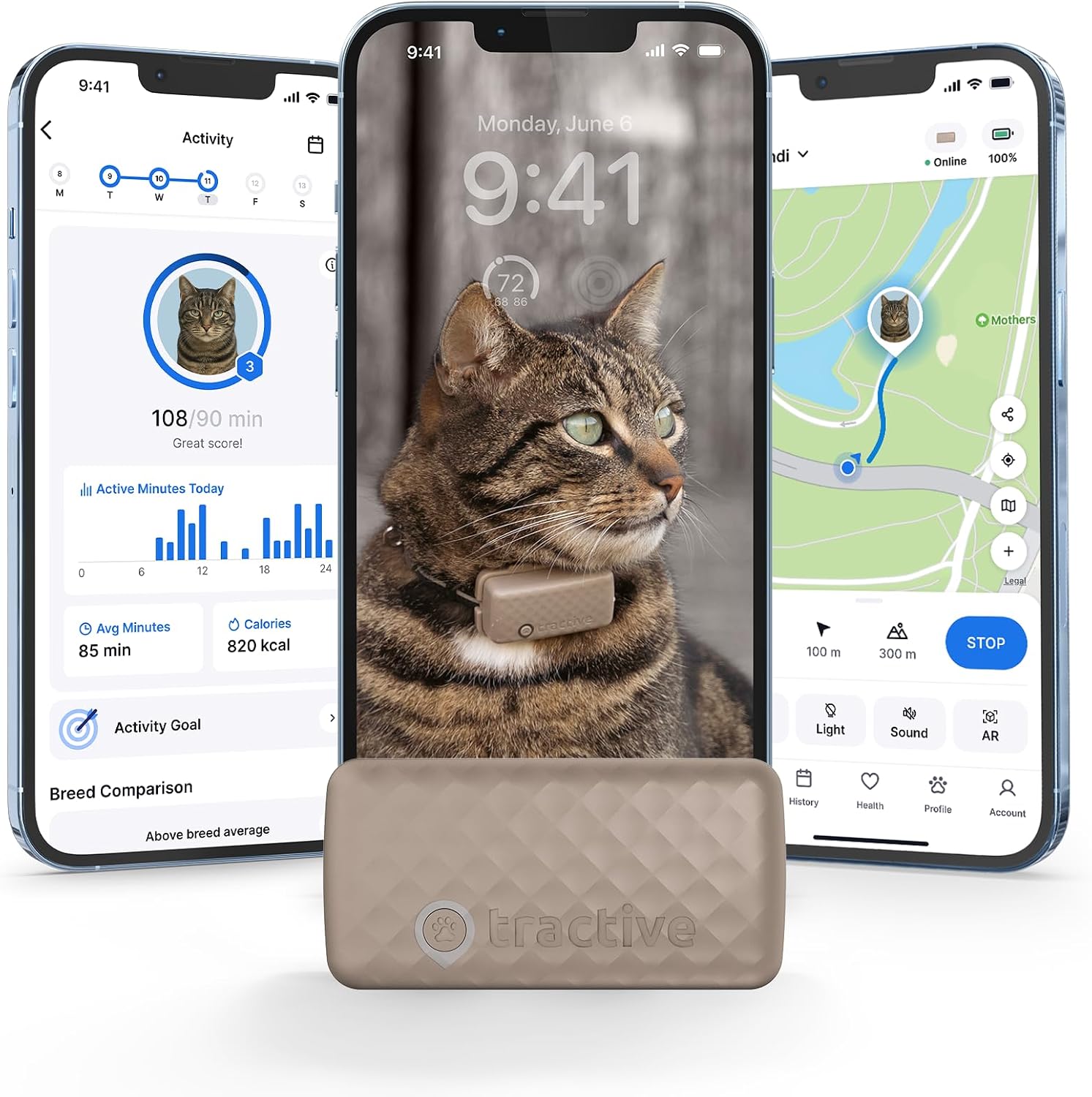
The honest caveat: Tractive Smart Cat GPS Tracker | Real-Time Location & Wellness Monitoring for Cats 6.5 lbs+ | Territory & Location History | Up to 5-Day Battery | Breakaway Collar Included (Brown)
 Visit on Amazon →
Check current Amazon price at the link above.
My rule on this site is simple: cats and dogs have different escape physics, and a cat tracker does not belong on a dog. This unit is built for cats 6.5 pounds and up, with a breakaway collar included, territory and location history, wellness monitoring, and a battery claim of up to five days. I am listing it anyway because it shows what a live tracking plus history feature set looks like at the top of this category, and because the breakaway hardware is worth understanding even if you never put it on a cat.
Two lessons transfer to dog tracking. The five-day claim here and the year-long claim above are measuring different things, and the difference is the reporting interval and the split between live mode and recovery mode. And the breakaway design exists because a collar that cannot release is a strangulation risk. On a dog the tradeoff runs the other way: a breakaway that pops off in brush means a tracker on the ground and a dog gone, which is exactly how I found one of the two units in the woods. Read your dog, not the category.
If you track a cat, this is a serious unit and the plan terms are printed on the listing. If you track a dog, the attachment question decides whether your tracker is still on the dog when you need it.
The setup, step by step
Step one: charge it fully and pair it to two phones. Yours and whoever else walks the dog. A tracker that only reports to one phone is a single point of failure.
Step two: fit the collar high and tight. Two fingers under the strap, unit sitting behind the ears rather than hanging at the throat. Then pull the collar toward the dog's head. If it slides over the skull, it will come off in brush. Trim the excess strap so nothing dangles.
Step three: run the walk test. Walk your normal route with the app open and watch how long the GNSS lock takes at the start. Then drive to the worst coverage spot you actually use and watch what the app does. That behavior, not the store page, is your baseline.
Step four: set the geofence tight. Draw it around the house at the property line, not at the end of the block. A tight fence gives you minutes instead of miles. If you travel, add a second one around the truck.
Step five: turn on alerts for both phones. A geofence alert that only reaches one phone at 2 a.m. is a coin flip.
Step six: test the night features before you need them. Find the light or locate button in the app and trigger it in your dark backyard. You do not want to be learning the menu in the dark on a trail.
Step seven: pick a charging day and stick to it. Battery duty cycle is a habit, not a spec. Same day every week, and keep a spare charging cable somewhere the dog cannot chew it.
Step eight: run a monthly recovery drill. Have someone hide with the dog, then work the tracker the way you would in a real search. Time yourself. If you cannot recover your own dog in your own yard, you will not do it in the forest.
Where trackers fail
Bluetooth tags with unlimited range claims are the biggest lie in this category. They use Bluetooth, not GPS, and they are lost the moment the dog leaves the yard. If the listing brags about range without naming a network or a satellite system, close the tab.
Coverage maps are marketing. The canyon behind your house is the test.
Subscriptions auto-renew without warning. Whatever plan a unit requires, read the terms before the trial ends, because three years of a monthly plan is usually more than the hardware.
Attachment is the quiet killer. I have found two trackers in the woods and neither was on a dog, which tells you everything about how these units fail in the field.
Charging cables get chewed in an hour. Buy spares and store them out of reach.
Some apps need a signal to display the last known location, which is useless in exactly the place you need it. Test this one before you buy.
Cold drains batteries faster than the box admits. A winter day hike is a different test than a July walk.
The competition and why it lost
The key-finder tags that clip to a collar are not trackers. They are short-range radios that work great in a parking garage and fail at the tree line. Different product, different promise.
The big-tech ecosystem trackers trade battery life and recovery features for convenience. They are fine if your dog only ever escapes into a suburb with five bars. My dogs do not.
The cellular subscription units are genuinely good where there is coverage, and I still recommend them to people who never leave town. This article is about the setup and the drill, so the units above are the ones on my hook.
What would change my ranking is satellite-direct messaging dropping into consumer prices. Watch battery chemistry, not app features, because that is the part that decides whether your tracker is alive at hour 30.
What this all costs
Here is the math I run with every owner who asks me what to buy. A tracker sold with no monthly fee costs whatever the listing says, and that is the end of it. Check current Amazon price on the unit above and you have your number.
A tracker on a monthly plan runs roughly $10 to $15 a month, which is $360 to $540 over three years. That is more than the hardware, every time, and it is the real price of the product. Budget for it or do not buy it.
Add a spare charging cable, and add the cost of a proper collar if the tracker does not ship as one. Then add the one cost nobody counts: the hour you spend running the drill. That hour is free and it is worth more than every feature on the box.
The math is the easy part. The setup is the part that decides whether a tracker saves your dog or just tells you where it was. Fit it tight, test it in the worst place you go, and rehearse the recovery before you need it. Do that once and the tracker stops being a gadget. It becomes a lifeline.