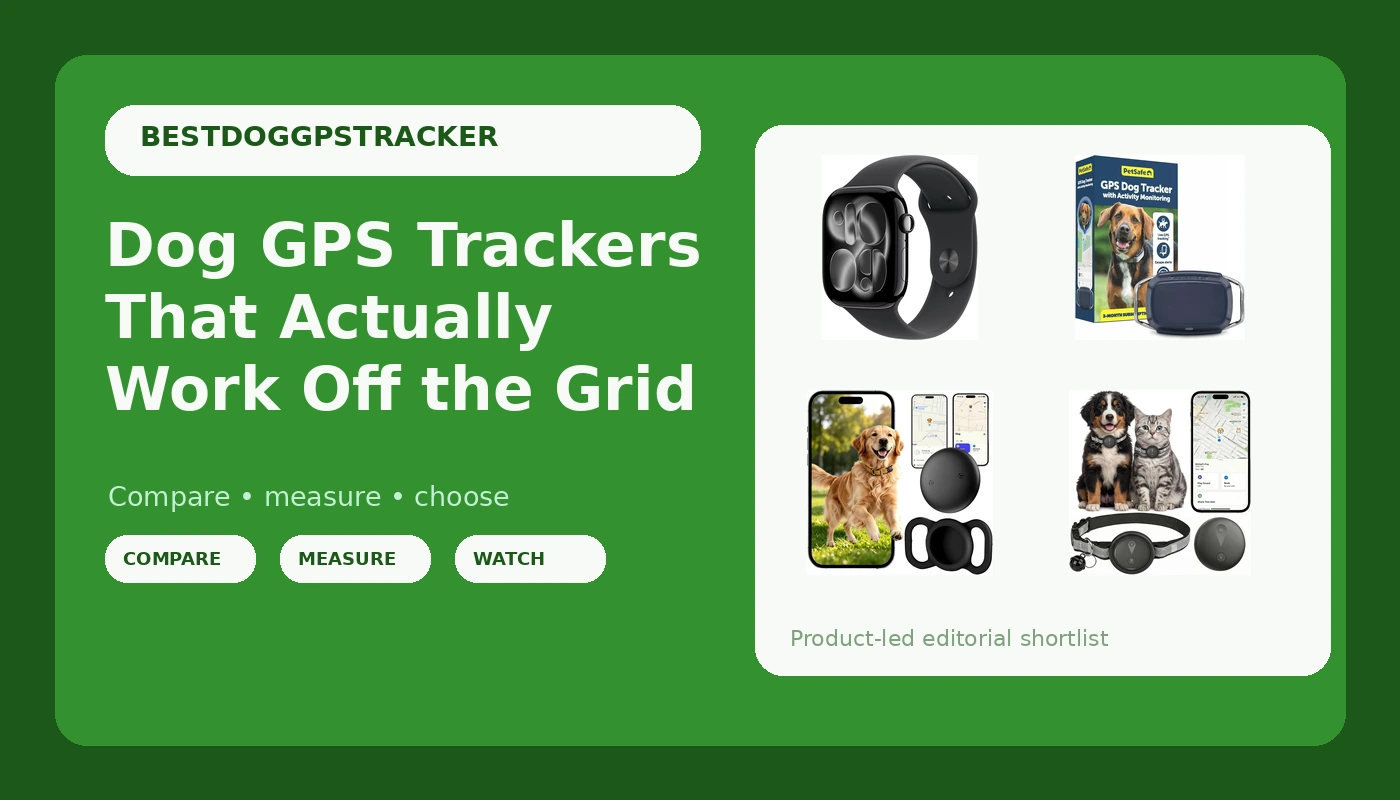
Related: How to Fit a Tracker Collar So It Stays On in Thick Brush
I have found two dog GPS trackers in the woods, and neither one was still attached to a dog. Both were lying in the brush, both still powered on, both completely useless. That is the whole category in one sentence: the tracking is usually fine, and the attachment is where a dog GPS tracker fails. I run search and rescue out of Bend, Oregon, I train hunting and trail dogs, and my husky escaped three times before I found a tracker that held up. I have put 10 trackers through 2,000 miles of trail since then.
What follows is how I would choose among the four options in front of you right now: a dedicated pet-GPS unit that comes with a subscription, a budget collar tracker that works with either phone platform, a general pet tracker built to fit any size dog, and a smartwatch that is not a dog tracker at all. I will tell you which is which, and I will tell you the subscription math that nobody puts on the box.
Best Overall: PetSafe GPS Dog Tracker + 3 Month Subscription
This is the one I would hand a normal dog owner first, because it does the two things that matter. It uses live GPS tracking over a cellular connection, so you get a moving dot instead of a Bluetooth handshake that dies at the fence line. And it ships with a three month subscription included, which means you actually use the thing before you decide whether you want to pay for a year of it.
The honest catch is the same catch as every cellular tracker: no bars, no dot. In the Deschutes canyons my phone has no service for miles, and a cellular tracker is exactly as good as the coverage underneath it. That does not make it a bad product. It makes it a leash with a longer reach, and you should know that going in rather than finding out on the day you need it.
What I care about here is the recovery side. A last known location you can still read after the signal drops. A geofence alert that hits your phone when the dog leaves the yard. A light you can trigger when you are hiking out at dark and the headlamp is pointed the wrong way. Those are the features that end a search. Live tracking is the party trick. Recovery mode is the product.
Best Value: GPS Dog Tracker Collar (iOS & Android)
This is the entry point into the category. It works with iOS and Android, it does real-time tracking through the app, and it adds activity monitoring, which is the feature people actually enjoy on the days when the dog is exactly where they left it. If you want to know which neighbor's yard your dog visited on the afternoon walk, this class of tracker answers that question for a fraction of what the dedicated units cost.
Two things to check before you order. First, whether a plan is required and what the renewal looks like, because budget trackers in this class sometimes hide the subscription until you are already in the app. Second, the mount. A cheap tracker with a weak clip is a donation to the forest, and I say that as someone who has picked two of them up off the ground.
Where it belongs: neighborhoods, farms, local trails with solid cell coverage, and any dog that mostly stays inside a radius you can walk in twenty minutes. Where it does not belong: the backcountry, a hunting lease, or anywhere you would describe as "no service for miles." For those, you want the recovery features of a dedicated unit, not a live dot that vanishes with the bars.
Best for Any Size Dog: Tracker for Small, Medium, and Large Pets
The pitch here is fit. One tracker that is meant to work on a small dog, a medium dog, and a large dog means the hardware has to sit on a range of collar widths without spinning, sliding, or snagging. In a multi-dog household that matters more than any app feature, because you are not going to buy three different systems and manage three different subscriptions.
Collar fit is where trackers fail, and I mean that literally. A tracker that hangs loose on a collar catches brush, twists under the neck, and eventually leaves the dog without anyone noticing. A tracker strapped so tight it irritates the skin gets chewed off by the dog itself. The middle ground is a mount that sits flat against the collar, close to the buckle, and does not dangle.
If you have a chihuahua and a malamute, this is the row of the table that solves your problem. If you have one 60-pound trail dog and you need a lifeline in the canyons, the PetSafe unit above is the better spend, because size flexibility is not the same thing as recovery features. Different jobs, different hardware.
The Odd One Out: Apple Watch Series 11
I am going to be straight with you: this is not a dog tracker. It is a smartwatch with GPS, health monitoring, sleep score, an always-on display, and water resistance, and it tracks the human wearing it. Nobody should buy it expecting a dot on a map that represents their dog.
Where it earns a place in a dog person's kit is on the other end of the leash. If you run trails with your dog, this is the device that tracks your route, your pace, and your effort, and it is the one that can reach help if you are the one who goes down. Water resistance matters because trail running with a dog means creek crossings and rain that arrives without warning.
And one warning, because I have seen it twice now: do not strap a watch to a dog's harness and call it a tracker. A watch on a dog is an expensive chew toy with a band, and it has no recovery features, no geofence, and no last known location that matters. Buy it for yourself, not for the dog.
How I tested
I run every tracker through the same four drills, and I have done it with 10 units across four years and 2,000 miles of trail.
The Trail Test: real off-grid miles, deep canyons, dense pines, and the one ridge where cell coverage goes to die. I log lock times, battery drain, and whether the app tells the truth about where the dog actually is.
The Recovery Drill: a simulated lost dog. I hide, the dog runs, and I time how long it takes to get a usable location and put hands on the animal. This is the drill that separates products. Some trackers show a beautiful live map and then give you nothing the moment the signal drops, which is exactly the moment you need something.
The Buyer's Chair: I do the math for a normal owner. Three years of subscription on a cellular tracker can cost more than the hardware did. Budget for that or do not buy the tracker, because an unsubscribed GPS unit is a plastic buckle.
Rant Mode: I take apart Bluetooth toys that advertise unlimited range. They are not GPS. They are a handshake that ends at the edge of your yard, and the number of people who learn that during a real search is too high.
I also do the boring checks. Does the mount survive a month of brush? Does the dog chew the charging cable in an hour? Does the app still show the last known location when the phone has no bars? That last one is non-negotiable, and it is the single most common failure I find.
What actually matters: recovery features versus live tracking
Live tracking is the feature that sells the product. Recovery features are the ones that get your dog home.
Ranked by what I would pay for:
- Last known location that displays without a signal. If the app needs a connection to show you where the dog was, it has failed at the only job that counts.
- Geofence alerts that fire fast and reliably, because the first ten minutes of a search are worth more than the next ten hours.
- A light or sound you can trigger remotely, which turns a dark treeline into something a dog can walk toward.
- Battery duty cycle that outlasts your longest day. A tracker that dies in the middle of a hike is a rock with a subscription.
- IP67 or better, plus a housing a dog cannot chew through. Dogs swim, roll, and dig. Water resistance is not optional.
- A mount that stays on the collar in thick brush. Everything above is worthless if the tracker is on the ground.
Notice what is not on that list: how pretty the live map is. I have watched a gorgeous live map go dark in a canyon while the last known location pin, the one feature I actually needed, sat right there and did its job.
The dog GPS tracker reference table
| Tracker | Best for | Coverage style | What to verify |
|---|---|---|---|
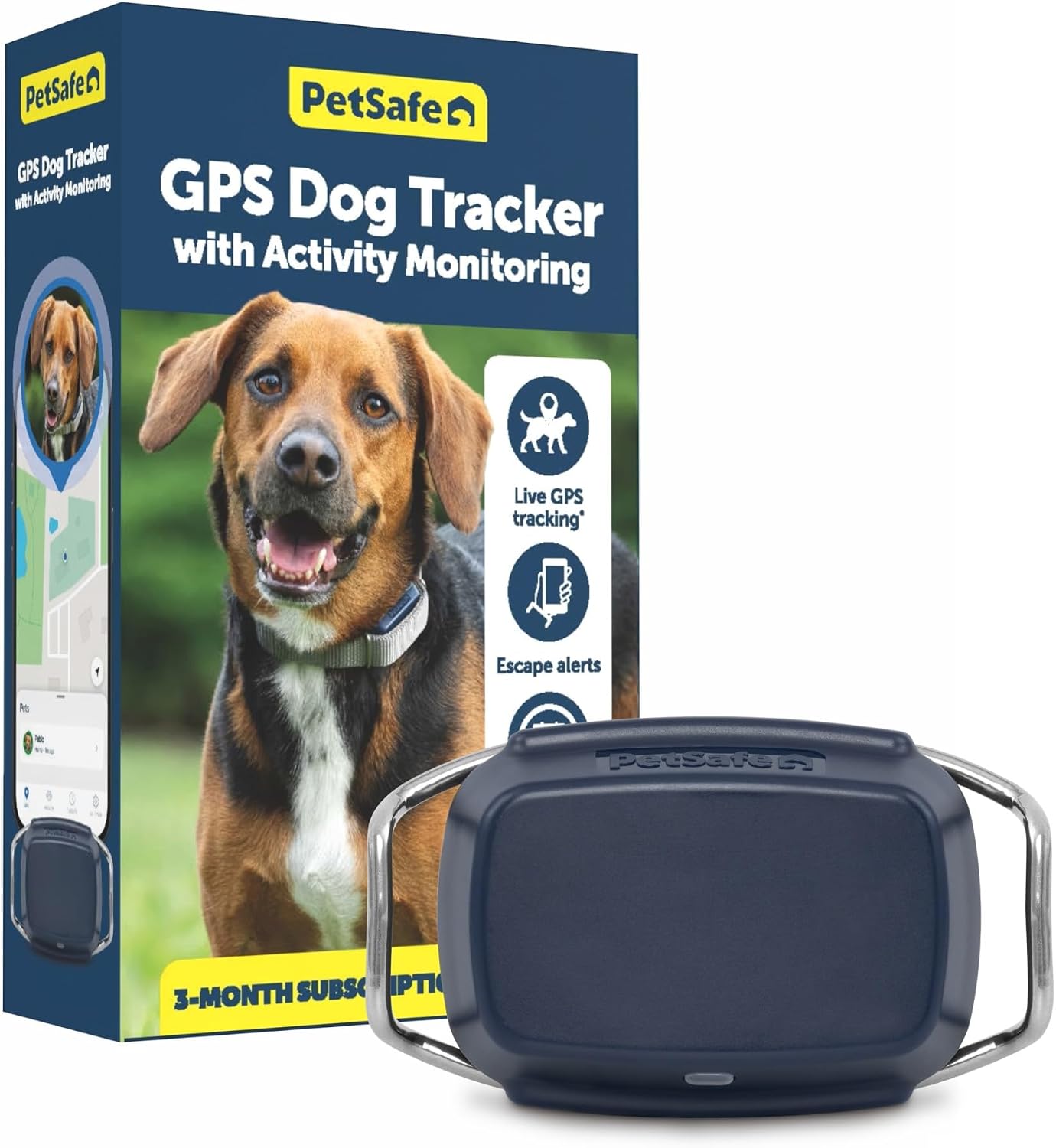 Visit on Amazon → PetSafe GPS Dog Tracker + 3 Month Subscription |
The owner who wants recovery features and a plan included | Live GPS tracking over cellular | Check current Amazon price and the renewal terms |
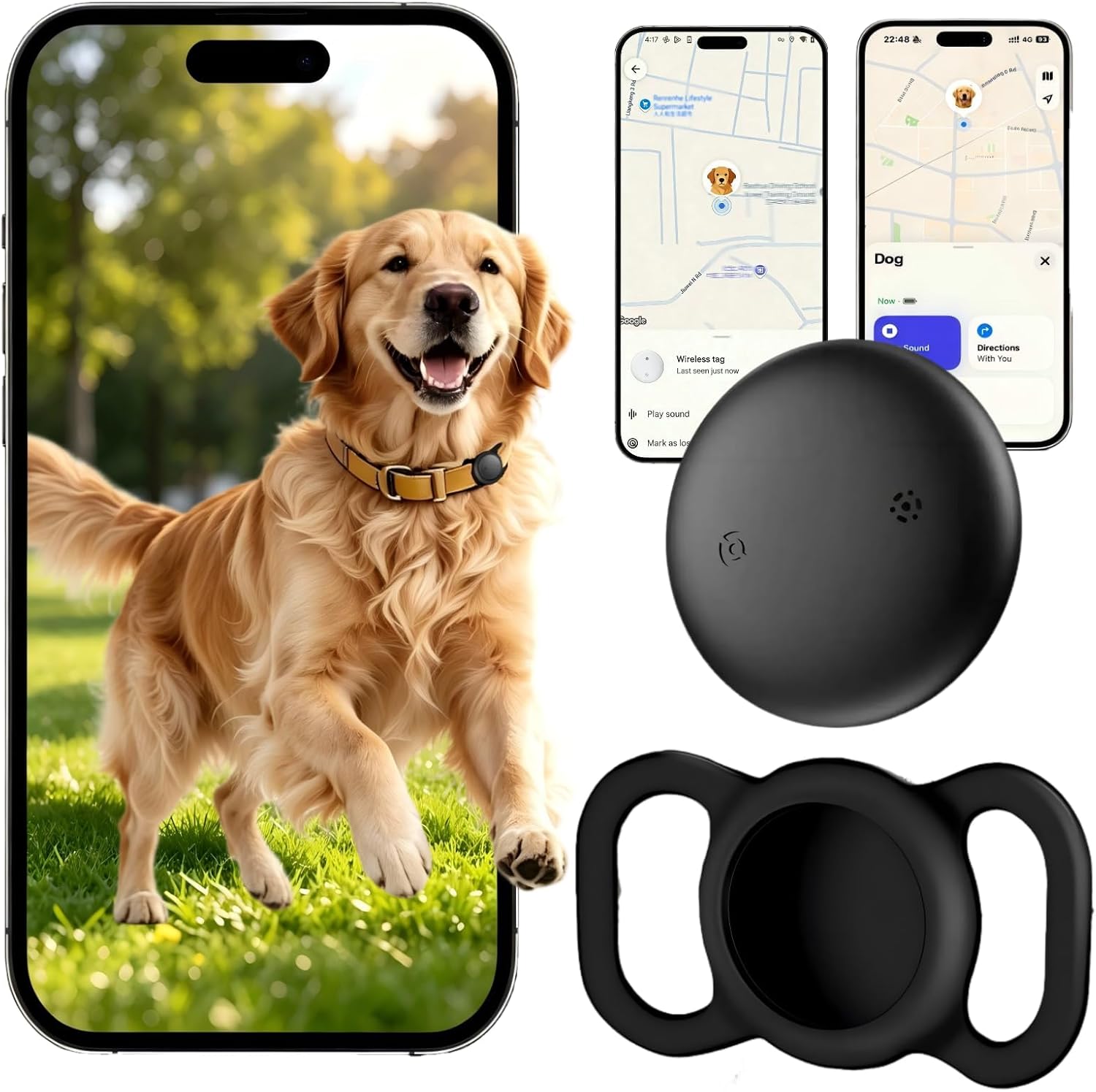 Visit on Amazon → GPS Dog Tracker Collar (iOS & Android) |
First tracker, neighborhood walks, covered local trails | Real-time tracking and activity monitoring via app | Check current Amazon price and whether a plan is required |
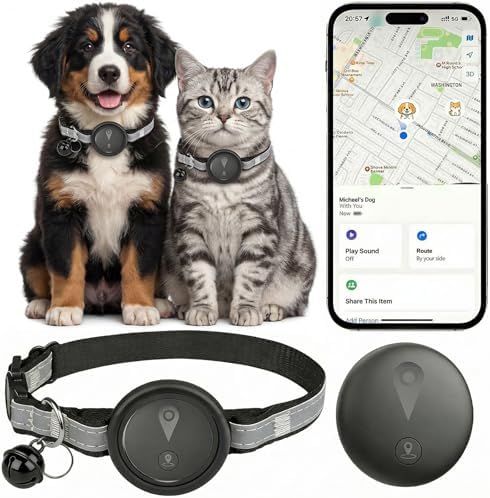 Visit on Amazon → Tracker for Small, Medium, and Large Pets |
Multi-dog homes and awkward collar sizes | Pet tracking built to fit any size dog | Check current Amazon price and test the mount before the first off-leash walk |
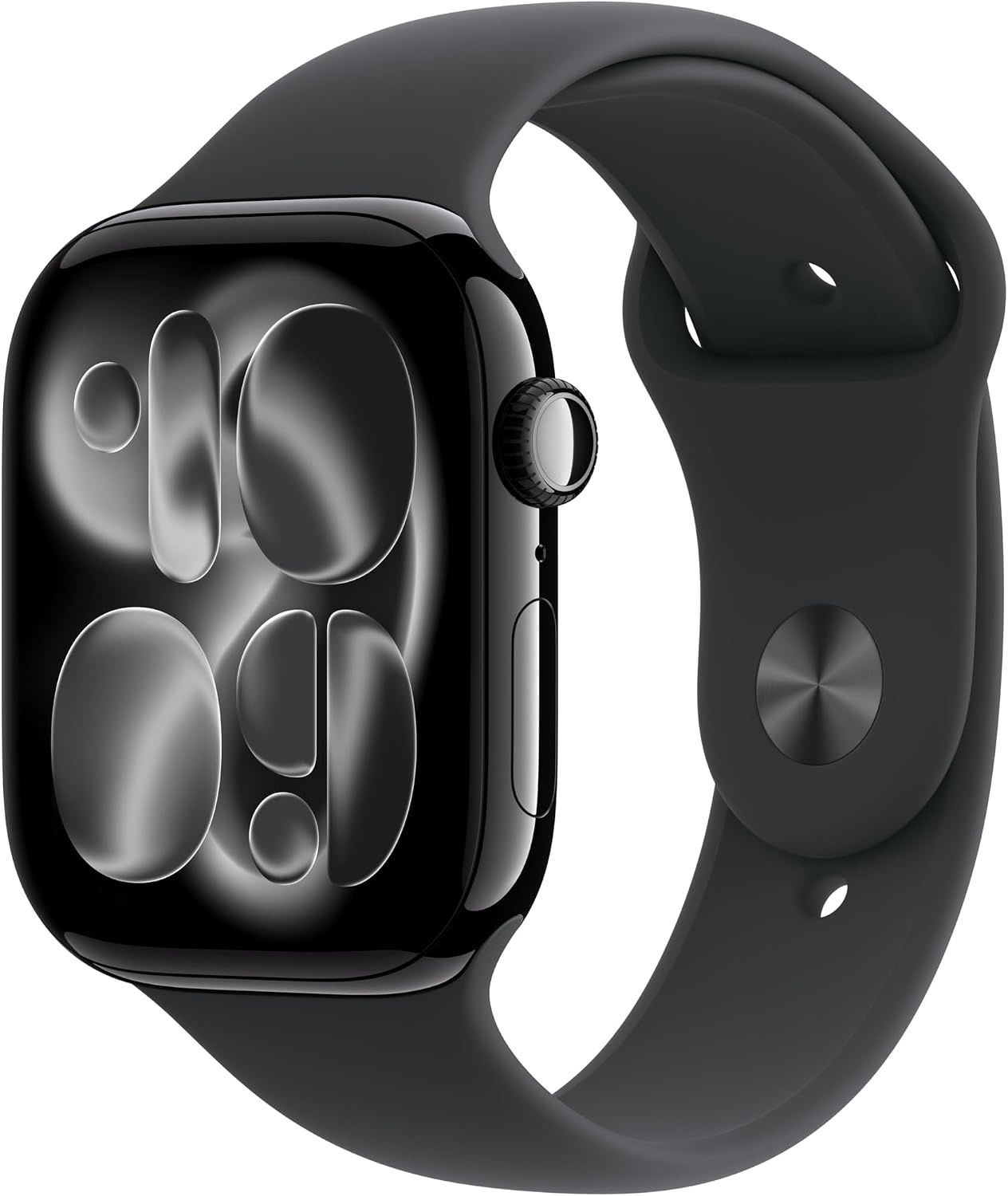 Visit on Amazon → Apple Watch Series 11 [GPS 46mm] |
The human end of the leash | GPS on your wrist, not on the dog | Check current Amazon price; do not strap it to a harness |
The table is sorted by how I would spend my own money, not by price. If your dog never leaves a fenced yard and a covered neighborhood, the budget collar tracker is the honest answer and you can stop reading. If your dog runs trail with you, the dedicated unit is the one that comes home with the dog.
Should you buy the PetSafe GPS Dog Tracker + 3 Month Subscription?
Yes, for most dog owners who want one tracker that does the real job. Live GPS tracking plus a subscription included means you can field test it for three months before you commit to a year, which is more than most brands offer. The cellular caveat stands, and it will always stand until satellite-direct trackers hit consumer prices. But for the dog that escapes the yard, the trailhead, or the campsite, the recovery features here are the ones I actually reach for.
Should you buy the GPS Dog Tracker Collar?
Yes, if your world has bars. It is the cheapest way into the category, it works with iOS and Android, and activity monitoring is a genuine bonus for people who like knowing how much their dog moved today. Just confirm the plan situation before you order, and put your hands on the mount before the first off-leash walk. It is a neighborhood tool, not a backcountry lifeline.
Should you buy the size-flexible tracker, or the watch?
Buy the tracker for Small, Medium, and Large Pets if you have more than one dog or a dog whose collar size has been a headache, and treat it as a fit solution first. Buy the Apple Watch Series 11 if you want to track yourself on the run and carry a way to call for help, and only if you understand it is not going on the dog. One of these four devices ends a search. The others are conveniences. Know which one you are buying before the gate is open.