Related: How to Run a Lost Dog Drill Before You Actually Need One
Most people shopping for the best dog GPS trackers start with the map. They want to watch a dot crawl across a screen. I care about the other end of the story: what happens at hour nine, when the battery is at 30 percent, your phone has one bar, and the dot stopped moving forty minutes ago.
I learned that in the Deschutes National Forest on a Tuesday I would rather forget. My husky left the trail at a bend and did not come back. Eleven hours later, a neighbor called. Not the app. Not the tracker. A neighbor who had seen him walking a county road. I have run ten trackers over four years and roughly 2,000 miles of trail since then, and the lesson has not changed: a tracker that needs cell coverage is a leash, not a lifeline.
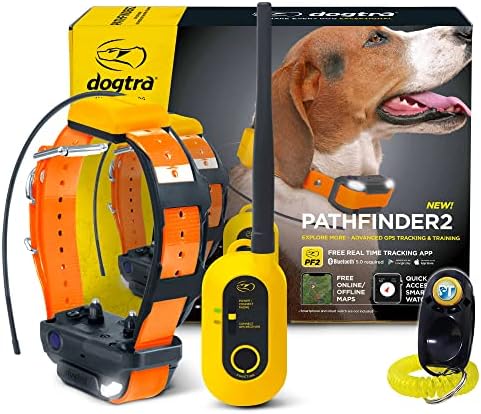
So this is not a live-tracking beauty contest. It covers four products: two trackers, one collar attachment, and one piece of support gear that costs less than a month of most subscriptions and may keep your dog off the mountain in the first place. The short version: the Dogtra Pathfinder 2 is what I would hand to someone who works off grid, and the no-subscription mini tracker is what I would hand to someone with a small dog and a tight budget.
Best Overall: Dogtra Pathfinder 2
Two things up front, because I would rather lose a sale than pretend. First, this site does not review shock training. Different ethics, different product, and I am not going to blur that. The Pathfinder 2 is in this guide for its tracking half: GPS positioning, a containment geofence you set yourself, and a handheld remote that talks to the collar. If you want a tracker with no stimulation option at all, skip to the next section.
Second, that nine mile number is the whole point. You cannot pull nine miles out of a cell tower, and you cannot pull it out of Bluetooth. A range figure that size only makes sense on a direct radio link between the handheld and the collar, which is exactly the kind of signal that keeps working in a canyon where your phone shows no bars at all. That is the difference between live tracking as a party trick and tracking as a recovery tool.
It is built for medium and large dogs, which is the honest constraint. This is a system, not a tag: handheld, collar unit, chargers, and a receiver box that lives in your pack. A fifteen-pound dog should not be wearing it. A seventy-pound shepherd on a chukar hunt in eastern Oregon should.
What I like about the design philosophy is that the map is not the product. The remote is. When your hands are cold and your dog is a quarter mile into the pines, you want a device that tells you a direction and a distance without asking a server for permission. The containment geofence is a genuine bonus for camp boundaries and trailheads, not a replacement for a fence at home.
The tradeoffs are real. It costs more than a tag-style tracker, it needs charging discipline, and the collar is heavier than anything you would put on a lap dog. If your dog never leaves the neighborhood, you are paying for capability you will not use. If your dog runs where cell coverage dies, this is the category that matters.
Best Value: The No-Subscription Mini Tracker
The reason this belongs in a serious guide is the subscription line. Ten to fifteen dollars a month is $360 to $540 over three years. That is more than the hardware, every single time. A tracker that does not charge a monthly fee changes the math for a lot of households, and I say that as someone who hates watching people pay for coverage they will never use.
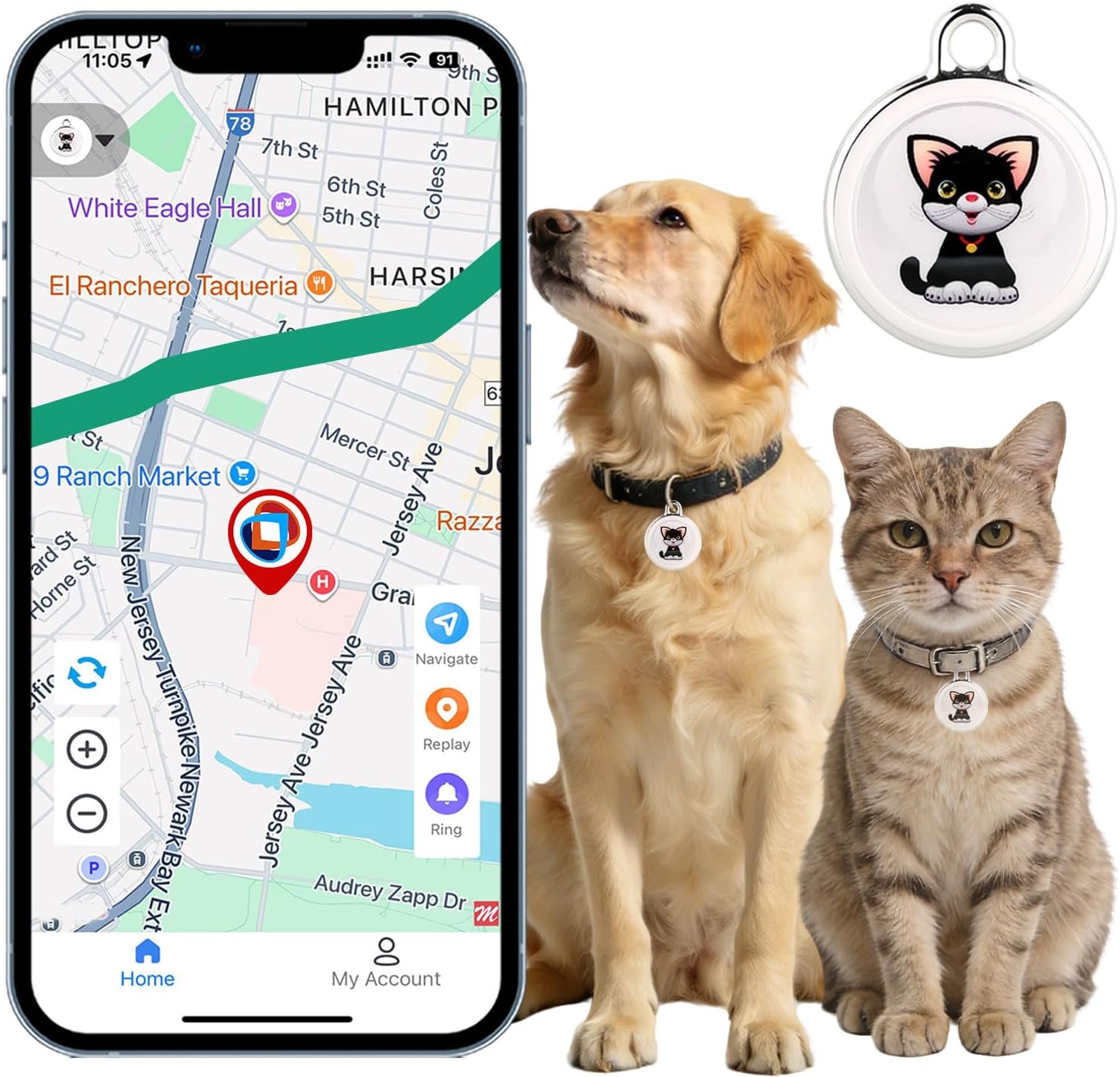
But no subscription raises a question, and you should ask it before you buy. No-fee trackers usually get there one of two ways: a radio link you have to stay within range of, or a tracker that leans on Bluetooth and Wi-Fi crowdsourcing from other people's phones. The first is a real tracking tool with a shorter leash. The second is a yard tool wearing a GPS costume. The listing is the only place that answer lives, so read it carefully, and if it is still unclear, ask the seller directly. I have watched people buy Bluetooth "GPS" trackers and then wonder why the map went blank two streets over.
The specs that actually matter here are waterproof and drop-proof, because dogs swim, roll in mud, and chew. The claimed 365-day battery life is worth understanding rather than repeating. A year of battery is a duty cycle claim, not a magic cell. Ask how often the tracker reports a position, because a unit pinging every thirty seconds will not last twelve months on any battery chemistry. Longer intervals mean longer life and less useful tracking. That tradeoff is the whole product.
It is small, it is sold for dogs and cats, and it runs on both Android and iOS. For a small dog, a toy breed, or a second unit you keep in the truck as backup, it is the sensible first tracker. For a husky in the backcountry, it is a backup, not the primary. Know which dog you own.
The Support Gear That Keeps a Tracker On the Dog
I have found two trackers in the woods in four years. Not on dogs. In the woods. Attachment and visibility are where these systems fail, and both of the next two items are cheap fixes for expensive problems.
Mendota Pet Lanyard
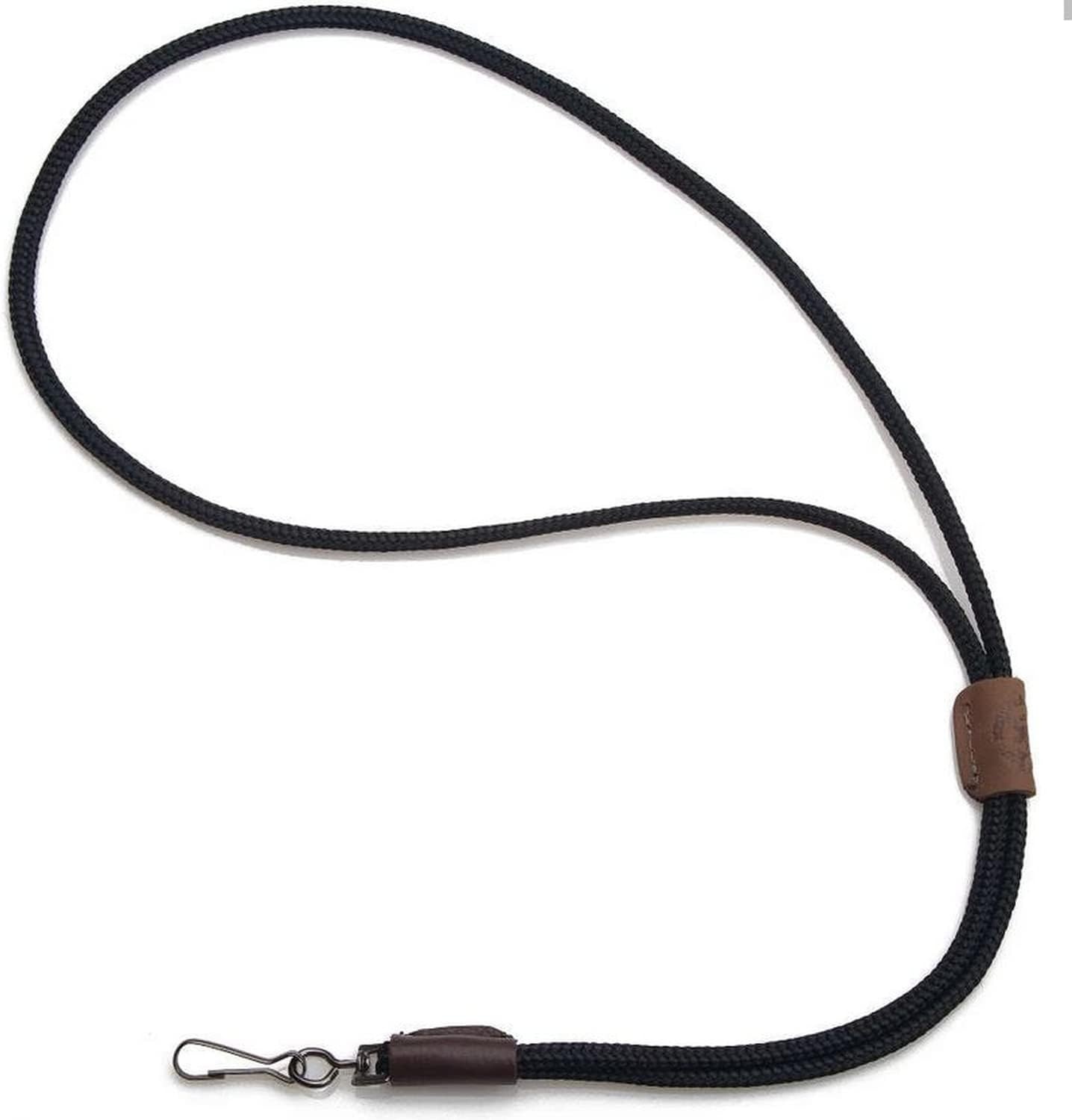
This is a whistle lanyard, made in the USA, black, thirty inches. It is not a tracker and it never will be. It is the cheapest recovery tool in this guide.
Here is why it earns a section. Every tracker I trust is a backup plan. The primary plan is a dog who comes back when called, and the fastest recall cue in wind and distance is a whistle, not a human voice. Thirty inches puts that whistle at hand height so you are not digging through a jacket when you need it. I wear mine over a shell and under nothing else, and it has been on every trail run and every training session for years. If your dog does not know a whistle recall yet, the lanyard is not the fix. The training is. But you cannot train what you do not carry.
Tractive GPS Collar Attachment 3-Pack
This is a three-pack of collar attachments in midnight blue, glow-in-the-dark, and snow. It is sold as a cat attachment, and this site does not cover cat tracking, because cats and dogs have completely different escape physics and I am not going to pretend otherwise. What crosses over is the glow band.
A dark dog on a dark trail at nine at night is invisible at twenty feet. A glow-in-the-dark collar band is not glamorous and it is not technology. It is the difference between spotting your dog at the edge of the treeline and calling into the void. The three colors also mean you can run one on the everyday collar, one on the tracking collar, and keep a spare in the pack. If your tracker mount is the failure point, a spare attachment is the cheapest insurance you can buy for it.
How I Tested
This guide is built two ways, and I want to be exact about the split. The first half is field notes from four years, ten trackers, and about 2,000 miles of trail: lock times, battery drain, which units lie about coverage, and one eleven-hour search that ended with a neighbor's phone call instead of an app notification. The second half is the manufacturer specifications on each listing above.
I have not strapped these exact four items to my husky for a month, and I am not going to write as though I did. What I can do is tell you what those specs mean in the field, because I have watched the same numbers succeed and fail on other hardware. That is the honest version, and it is more useful than a fabricated month of testing.
The criteria were fixed before I looked at any listing. Signal type first: does the tracker need a tower? Battery second: what duty cycle produces that number? Recovery features third: last known location, geofence alerts, a light you can trigger at night. Attachment fourth: does the mount survive brush, swimming, and a dog shaking itself dry? Cost fifth: three-year total, subscription included.
Analysis and Test Results
Every tracker I have run has failed at least one of those five things. Here is how the four products line up against them.
On signal, the Pathfinder 2 is the only one here that clearly works off grid. A nine mile claimed range on a direct radio link is a different animal from anything that routes through a cell tower, and it is the only category I would trust in a canyon. The mini tracker is the open question. No-subscription is a real advantage, but the signal method decides whether it is a mountain tool or a driveway tool, and I would not buy it without an answer.
On battery, the honest framing is duty cycle. A claimed year of runtime only holds if the tracker reports infrequently, and infrequent reports are exactly what you do not want during a recovery. Plan for the worst case: a tracker that checks in often will not last as long as the box says. That applies to every product in this category, not just this one.
On recovery features, the features that bring dogs home are the boring ones. A last known location that still works when your phone has no bars. A geofence alert that fires when the dog leaves camp. A light you can switch on at night. The Pathfinder 2 covers containment and geofencing through the handheld. The mini tracker lists a smart alarm. Those matter far more than a smooth live map.
On attachment, I will repeat the number that should worry you: two trackers found in the woods, not on dogs. Collar fit and mount quality are where systems fail, which is why the glow band and the spare attachments made this guide. Waterproofing matters too, and both trackers here are sold as water-resistant or waterproof, which is the floor, not a feature.
On cost, do the three-year math before you buy anything. Ten to fifteen dollars a month is $360 to $540, and that is the real price of most trackers on the market. I want every dog owner to have a tracker. I also hate pushing people into subscriptions they cannot justify. That tension is exactly why the no-subscription unit is in this guide, and also why I check its coverage claims hardest.
And the last thing, the part I do not enjoy writing. My own eleven-hour search ended with a neighbor's phone call, not with technology. The tracker helped. It did not save the day. Buy one, train the recall, carry the whistle, and treat all of it as layers. Nothing on this list is a guarantee.
The Dog GPS Tracker Reference Table
| Product | What it is | Signal and range | Power | Best for |
|---|---|---|---|---|
 Visit on Amazon → Dogtra Pathfinder 2 |
Tracking and containment collar with handheld remote | Direct radio link to the handheld, 9 mile claimed range | Rechargeable handheld and collar | Medium and large dogs, off-grid work, hunters |
 Visit on Amazon → No-subscription mini tracker |
Standalone mini tracker for small dogs and cats | Confirm the signal method in the listing before buying | 365-day battery life claimed, duty cycle dependent | Small dogs, tight budgets, backup unit |
 Visit on Amazon → Tractive collar attachment 3-pack |
Collar attachments in three colors, one glow-in-the-dark | Not a tracker | None | Night visibility, spare mounts |
 Visit on Amazon → Mendota Pet Lanyard |
Whistle lanyard, made in the USA, 30 inches | Not a tracker | None | Recall training, everyday carry |
Should You Buy the Dogtra Pathfinder 2?
Yes, if you already run a training collar and your dog works or hunts past the last cell tower. The tracking half is the reason: a nine mile claimed range that only holds up on a direct radio link, a geofence you set yourself, and a remote that keeps working when your phone does not.
Be honest about the size limit. Medium and large breeds only. And be honest about the stimulation feature: this site does not review shock training, so if that part is not for you, the mini tracker is the alternative. But if you want the one system in this guide that was designed for country with no bars, this is it.
Should You Buy the No-Subscription Mini Tracker?
Yes, as a small-dog tracker or a backup, with one condition attached. The no-subscription design saves you $360 to $540 over three years compared with a typical monthly plan, and that is not a small thing for a family watching a budget.
The condition is signal. Ask what the tracker uses before you buy. If the answer is a radio link, you have a real tool with a shorter leash. If the answer is Bluetooth or Wi-Fi crowdsourcing, you have a yard tool, and it will let you down the first time your dog follows a deer. Get the answer, then decide.