Most dog owners buy a tracker the way they buy a fire extinguisher: fast, in a panic, and without reading the manual. Then the dog slips the collar at the trailhead, the app spins, and the owner learns the difference between a device that pings a cell tower and one that hands them a location they can actually walk to. If you want a dog GPS tracker no monthly fee setup that keeps working when your phone has no bars, the decisions that matter all happen before anything gets clipped to a collar.
I have chased a husky through the Deschutes National Forest for eleven hours. The search ended with a neighbor's phone call, not with my app. That afternoon rewired how I think about this category. A tracker is not a gadget you buy. It is a recovery system you build, and the hardware is maybe a third of it.
So here is the whole process, in the order I would do it: what to look for, how to attach it so it stays attached, how to set it up, and how to practice with it before the night you actually need it.
Why you should trust me
I volunteer with a search and rescue team based in Bend, Oregon, and I train hunting and trail dogs on the side. Over the last four years I have put 10 GPS trackers through real miles, roughly 2,000 of them, across canyons, dense pines, and the specific stretches of trail where cell coverage goes to die.
I keep a log for every unit: battery life under load, how long it takes to lock, how the attachment holds up after a dog bulldozes through brush, and whether the app still shows a last known location when the phone is offline. I have found two trackers in the woods that were no longer on dogs. That tells you more about this category than any spec sheet.
My bias, stated up front: a tracker that needs cellular coverage is a leash, not a lifeline. Battery life is the whole product. And the subscription is often the real price, since $10 to $15 a month works out to $360 to $540 over three years, which is more than most of the hardware. That is exactly why no-fee options are worth understanding before you sign up for anything.
How I picked and how I tested
This is a how-to, not a leaderboard, so the goal here is to teach you the decision process and then show you the two devices I actually keep recommending to people who want to skip the monthly bill.
My testing runs in three modes. The Trail Test is real off-grid miles: lock times, battery drain, and whether the unit survives a dog swimming and rolling in dust. The Recovery Drill is a simulated lost dog, where I hide the dog with a friend, start a timer, and try to retrieve using only what the device gives me. The Buyer's Chair is the boring part, where I do the three-year cost math for a normal owner with a normal backyard dog.
What gets a device cut from my list:
- Any tracker that claims GPS but runs on Bluetooth. Those are lost the moment the dog leaves the yard.
- Any app that cannot show a last known location without a signal.
- Anything that is not at least IP67 and chew resistant. Dogs chew, scratch, and swim. A tracker that is not built for that is a donation to the forest.
- Any attachment that depends on a single flimsy loop of webbing.
What survives those cuts tends to be purpose-built pet tech, and the two units below both avoid the subscription entirely.
The two trackers I put on a collar
I want to be clear about the tradeoff you are making. No monthly fee usually means the device uses its own radio link and, in some cases, a handset that talks to the collar tag directly rather than routing everything through a cell tower. That is a real advantage in the backcountry and a real limitation in terms of range, so test the link on your own trails instead of trusting a phrase on a box.
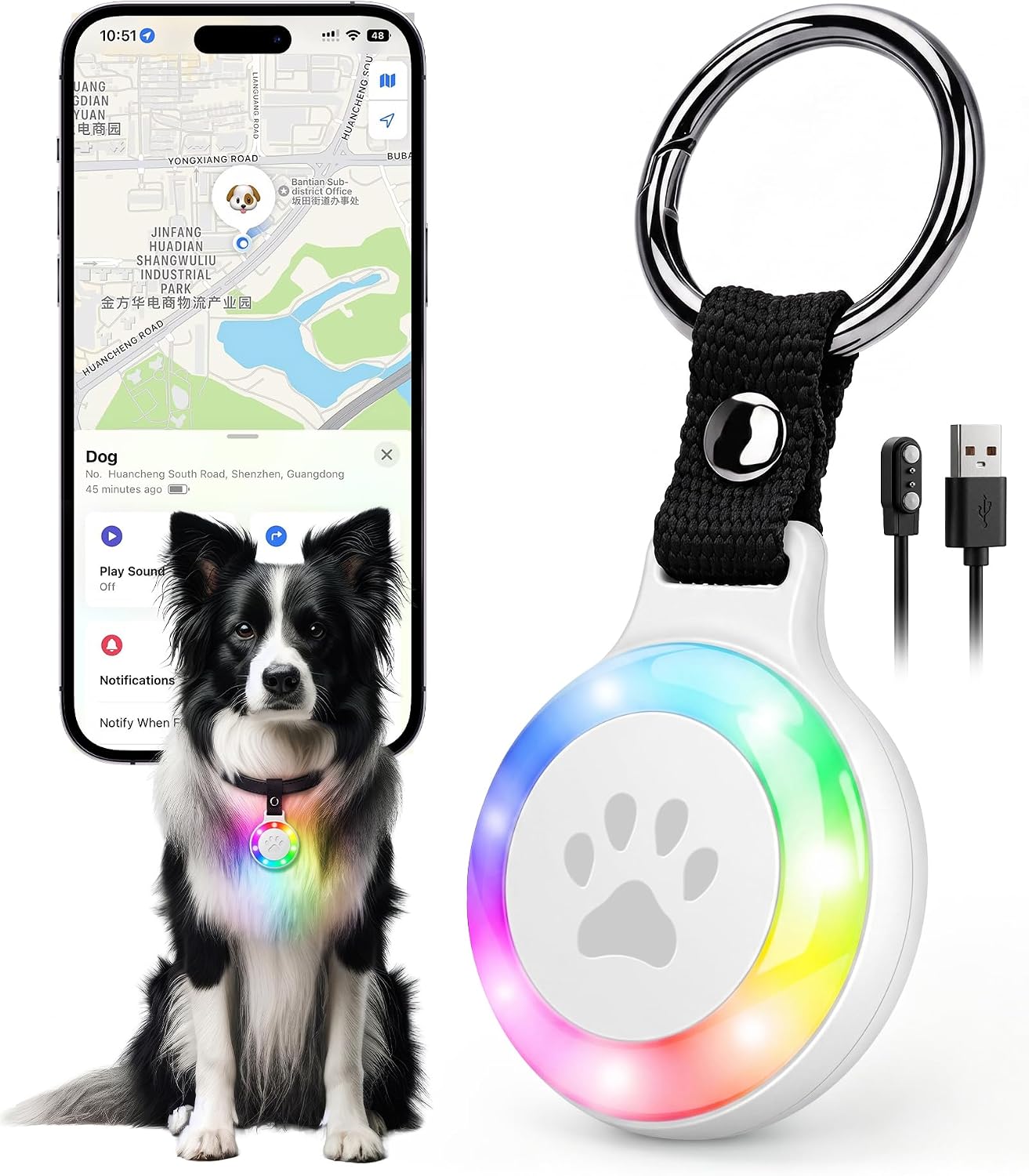
Budget pick: Pet Tracker for Dogs Cats, Location & LED Night Light Tag, No Monthly Fee
 Visit on Amazon →
This is the one I hand to people whose main problem is a dog that bolts out the front door at dusk or disappears into the blackberry hedge behind the fence line. The pairing of location plus an LED night light tag is the reason. In my log, the majority of "my dog got out" calls I have helped with happened between 9 p.m. and midnight. A tag you can spot from across a field solves a big chunk of that problem without any app at all.
It is also the lighter, lower-commitment option, which matters if you have a small dog or a puppy whose neck should not be carrying much. No monthly fee means no auto-renewing bill you forget about, which is the failure mode I hear about most from owners who bought a cellular collar and then stopped paying attention to the renewal date.
Flaws but not dealbreakers: This is not the unit I would pick for a dog that ranges a mile into timber. Treat it as a visibility and near-range recovery tool plus a night light, not as a satellite-grade locator. And check the attachment point yourself. I have found two trackers in the woods, and both had failed at the fastener, not at the electronics.
Someone with a suburban escape artist, a senior dog who wanders the yard, or a dog that gets walked on leash after dark will get the most out of this one.
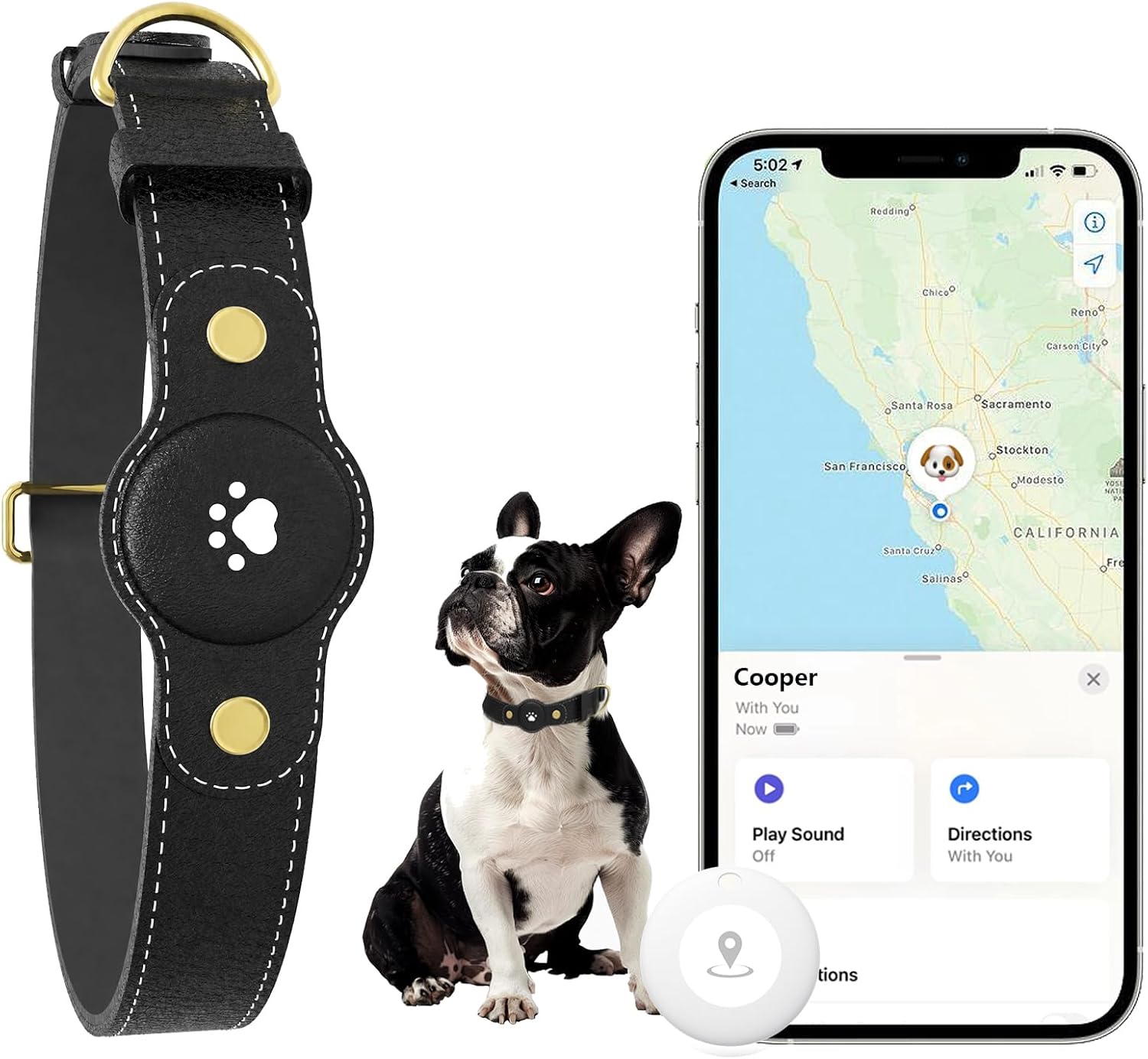
Our pick: GPS Tracker for Dogs, Smart Dog Collar & Pet Tracker with Real-Time Location, No Monthly Fee, Unlimited Range (iOS & Android), Fits Small to Large Dogs(Locator Included)
 Visit on Amazon →
This is the one I would put on a working dog or a high-drive husky. Real-time location, iOS and Android support, and it ships with a locator included, which is the detail that makes the no-fee structure make sense. If a handset is part of the package, the system is not leaning on a cell plan to tell you where your dog is, and that is the architecture I want in terrain where my phone shows one bar and then nothing.
Fits small to large dogs is also a more meaningful line than it looks. A tracker that is too heavy for a 25-pound dog does not get worn, and a tracker that does not get worn does not work.
Flaws but not dealbreakers: The "unlimited range" language is marketing, and you should treat it that way. Every radio link has a practical limit, and yours is determined by your terrain, the density of the trees between you and the dog, and whether the dog is in a canyon below you. Test it. Walk the boundary of your normal route with the device on and see where the link starts to fade. That number, not the box, is your real coverage. I also want to see the battery behavior under a full day of load before I call any tracker a day-hike device.
Anyone with a dog that runs big, works off leash, or has a history of going over, under, or through a fence should start here.
The actual setup and recovery workflow
Now the part that makes the hardware worth owning. None of this takes long, and all of it is free.
Step one: Decide what you are buying this for. Recovery or live tracking. Live tracking is a party trick that eats battery. Recovery is the job: last known location, geofence alerts, and a light you can trigger at night. If a device does not do those three things well, it is a toy. Write down which of the three you need most before you shop.
Step two: Fit the collar first, tracker second. Collar fit and attachment are where trackers fail. A loose collar slips over a narrow skull during a panic pull. A tight collar is a welfare problem. Get two fingers of slack and no more, then check the tracker's mount by hand, hard, before the dog ever wears it. If the fastener flexes or the webbing bunches, fix that before anything else. I have picked up two trackers in the woods that were still beeping, thirty feet from where the dog had been.
Step three: Charge everything and pair it in the driveway. Do the pairing at home, on wifi, with the dog sitting next to you. Do not learn the menu system for the first time at a trailhead with a flashlight in your teeth.
Step four: Name the device and the dog in the app. If you have more than one animal, this saves you a real mistake later. Murphy's law says you will be looking at the wrong tag at the worst possible moment.
Step five: Set the geofence around your house. Not your yard, your house plus a buffer. A geofence that covers the whole neighborhood alerts you on every walk and trains you to ignore it. The alert should mean one thing: the dog left without you.
Step six: Walk the boundary of your normal route with the tracker on. Note where the link holds and where it drops. This is your real coverage map, and it takes one afternoon. Most owners never do it and then blame the hardware.
Step seven: Run a recovery drill. Hand the dog to a friend, have them hide somewhere you do not know, and start a timer. Use only the tracker. Do this twice. The first run teaches you the interface. The second teaches you whether the last known location updates the way you assumed it did.
Step eight: Build a battery routine. Pick a charging day and stick to it, the same way you charge your phone. A tracker that dies at hour 14 on a day hike is a rock with a subscription, no-fee or not. If your unit only lasts a partial day under load, it is a walk-around-the-block device, and you should know that before you plan a ten-mile loop.
Step nine: Test the night light. Trigger it in your driveway after dark. Know where the button is by feel. You will be doing this in the dark, at speed, possibly in the rain.
The competition and why it lost
The category breaks into three buckets, and only one of them fits a no-monthly-fee plan.
Bluetooth-only tags are the first bucket. They are cheap, they are light, and they are useless the second your dog leaves the yard. That is why the "unlimited range" claim on a Bluetooth unit makes me twitch. A radio link has a range, and yours is whatever your terrain says it is.
Cellular subscription collars are the second bucket. They can be genuinely excellent in coverage, and if you live and hike in a city with strong towers, they work fine. But they need bars, they need a plan, and the plan is the real price. Three years at $10 to $15 a month is $360 to $540, and auto-renewal without a warning is the complaint I hear most. Budget for it or do not buy it.
Satellite-direct units are the third bucket, and they are the future. Watch the battery chemistry, not the app features, and keep an eye on pricing. When those drop to consumer prices they will put real pressure on the whole subscription model.
The two trackers above live in the no-fee space, and that is the point of this guide.
What this all costs
Here is the three-year math, which is the only math that matters.
- The tag-style device plus no subscription: hardware cost only, zero per month.
- The collar-style tracker with a locator included: hardware cost only, zero per month.
- A typical cellular collar with a $10 to $15 monthly plan: $360 to $540 over three years, on top of hardware.
- A professional-caliber alternative nobody actually uses for a backyard dog: irrelevant to your life.
The no-fee route saves you somewhere between a new set of tires and a decent crate over three years, and it keeps working in places where a cell plan does not. What you give up is the convenience of tracking from anywhere with a signal, and you should decide honestly whether you need that.
The short version
Pick a device that solves recovery, not one that shows off live tracking. Fit the collar properly and check the mount by hand. Pair it at home. Set the geofence around the house. Walk your normal route so you know your real range. Run two timed drills. Charge it on a schedule like a phone.
That is the entire system, and it takes one weekend to build. The dog does not care which app you have. The dog only cares whether you show up, and the preparation is what decides that.
Check current Amazon price on both devices before you commit, and read the fine print on anything that claims a monthly fee can never appear. Then go stand in your driveway and trigger the light.