Every dog GPS tracker looks brilliant in a parking lot. The test that matters happens four miles up a canyon road where your phone shows one bar, then none, and your husky is somewhere in the trees. That gap between a demo and a lifeline is the whole reason this guide exists. Choosing and setting up a dog GPS tracker is not a shopping decision, it is a preparation decision, and the setup you do at home in twenty minutes is what decides whether hour three of a search is calm or frantic.
I run search-and-rescue drills with a husky who has escaped three times in four years. I have put ten trackers through real off-grid miles, kept a log of lock times and battery drain, and spent eleven hours in the Deschutes National Forest looking for a dog that a neighbor eventually found, not the app. That day taught me more than every spec sheet since. So here is the honest version: how to pick between the two real categories of tracker, how to set one up so it works, and what it costs over three years once the subscription math lands.
Why you should trust me
I am a search-and-rescue volunteer in Bend, Oregon, and I train hunting and trail dogs. Over four years I have logged roughly 2,000 miles of trail with trackers strapped to dogs and, in a few cases, strapped to a pack so I could watch what the collar was doing while the dog ran. I keep a spreadsheet of satellite lock times, battery duty cycle, and the moment each unit dropped off the map. I have also found two trackers in the woods, both of them off the dog, which is why I care about attachment more than almost any other feature.
I do not sell these things and I do not get paid by the brands. My bias is simple: a tracker that needs a cell tower is a leash, not a lifeline, and battery life is the whole product.
How I picked and how I tested
I judge trackers on four things, and none of them is the app icon.
Off-grid behavior. Does the unit still give me a direction and a distance when my phone has no bars? If the answer depends on coverage, it is a suburban tool and I say so.
Battery duty cycle. I want a unit that survives a full day hike and then some. A tracker that dies at hour 14 is a rock with a subscription attached.
Attachment and fit. Collars fail at the buckle and the antenna housing. I check whether a dog can back out of it, whether the unit sits flat against the neck, and whether it snags in brush.
Recovery features. Last known location, a geofence alert, and a light I can trigger at night. Live tracking is a party trick. Recovery is the product.
The two units below are the two categories that matter, a handheld-and-collar system that talks to the collar directly, and an app-based collar for the neighborhood-and-trail dog. I set both up with the same workflow further down, and I ran both categories through the same recovery drill: hide the collar in brush, walk a quarter mile, and time how long it takes to get a usable bearing. On a handheld system the bearing shows up without a network. On an app-based collar, the drill is really a test of how your phone behaves when it is out of coverage, which is exactly what you need to know before you need it.
Which tracker fits your dog
Two products, two jobs. Pick the job first, then the product.
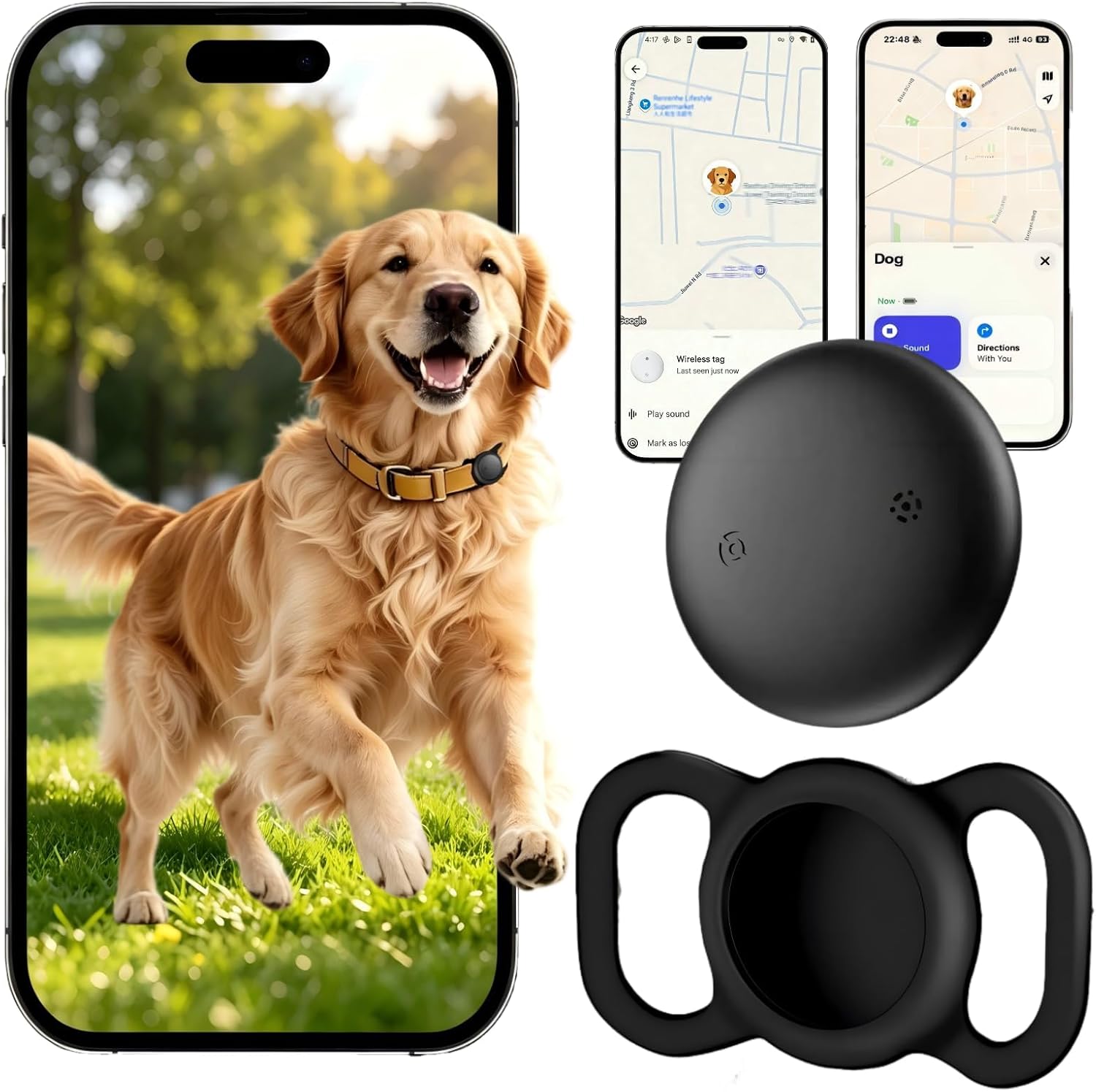
Budget pick: GPS Dog Tracker Collar (iOS & Android) - Smart Activity Real-Time Tracking
 Visit on Amazon →
This is the collar for the dog who escapes the yard, slips the gate, or bolts down a greenbelt. It pairs with an app on iOS and Android, tracks in real time, and logs activity, so it earns its place as the everyday collar for a suburban or trail-adjacent dog. Check current Amazon price.
Here is how I would use it honestly. It is the right first tracker for someone who has never had one, because the price of entry is low enough that you can find out whether you will actually maintain the habit of checking an app. It is also the right collar for a dog who stays within a few miles of home, where your phone usually has coverage and a neighbor might spot the dog before you do.
Flaws but not dealbreakers: App-based trackers live or die by coverage and by the app itself. Before you rely on this on a canyon hike, open the app, walk to the edge of your coverage, and watch what happens to the last known location. If the map goes blank instead of pinning the last point, that is a limitation you need to know about now rather than at dusk. Pair it with a tag that has your phone number, always.
Anyone who wants real-time tracking, activity data, and a low-cost way into dog GPS should start here.
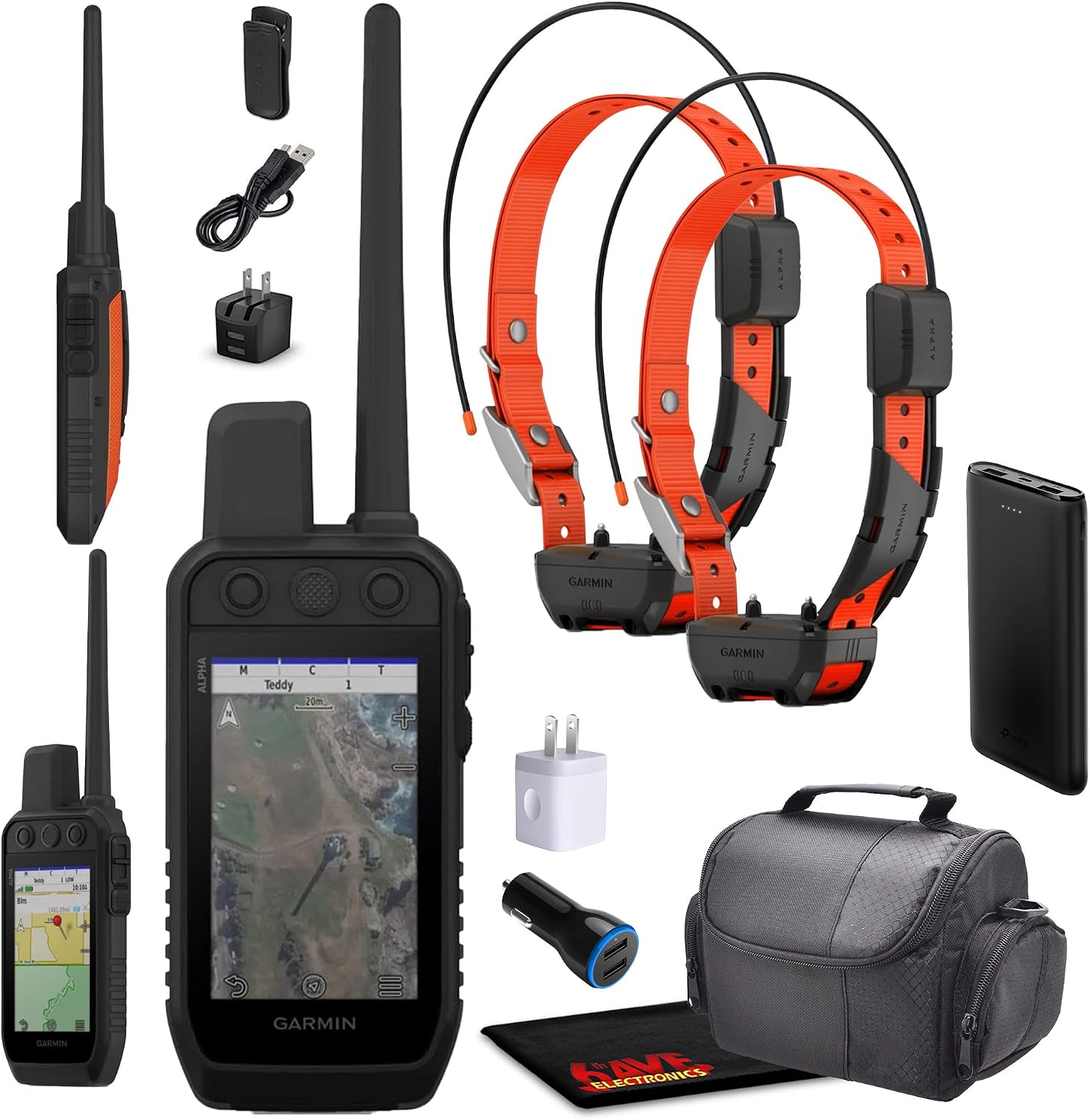
Upgrade pick: Garmin Alpha 300 Handheld Dog Tracking with 2X Alpha TT25 Dog Collar Bundle
 Visit on Amazon →
This is the other category entirely: a handheld that talks to the collar directly, plus two Alpha TT25 collars in the box. The point of a handheld system is that the link between you and the dog does not route through a cell tower, which is the single most important property a tracker can have in the backcountry. It also means you are holding the antenna, so you can raise it, aim it, and walk a bearing instead of staring at a phone. Check current Amazon price.
The two-collar bundle matters more than people expect. If you run two dogs, or you want a spare collar so one is always charged, you are not buying this twice. And this is the system I point hunting and SAR people toward, because the recovery workflow, bearing, distance, and a direction to walk, works when nothing else does.
Flaws but not dealbreakers: This is a serious purchase and it asks for serious habits. The handheld is another device to charge, carry, and learn, and the collar is heavier than a lifestyle tracker, so fit matters more. Do not buy this if you will leave it in a drawer. Buy it if you run dogs in places where losing one is a real possibility.
Anyone who hunts, runs long trails, or lives where coverage ends should look here first.
Setting up a dog GPS tracker: the actual workflow
This works for either unit above. Do it once, at home, before the first real trip.
Step one: charge everything and register it. Charge the collar and the handheld or phone to full, then register the device and create the account while you are on wifi. Do not discover a firmware update in a trailhead parking lot.
Step two: fit the collar properly. Two fingers should slide under the strap, no more. Too loose and the antenna housing flops and snags. Too tight and you will rub the coat. Put the unit on the side of the neck, not the throat, so the dog cannot paw at it and so it stays upright when the dog runs.
Step three: confirm a satellite lock before the leash comes off. Every tracker needs time to acquire. Turn it on at the trailhead, set it down in the open, and wait for a solid lock. I do not release a dog until the unit shows a position. This one habit prevents most of the panic I see.
Step four: set your geofence around the real boundary. Not the property line on the deed, the boundary the dog actually respects. If your dog clears the fence line in a straight line when spooked, your geofence should sit inside that. A geofence that triggers after the dog is already gone is decoration.
Step five: turn on alerts and test them. Notification on exit, notification on low battery. Then walk the collar out of the zone and confirm your phone actually buzzes. Alerts you have never seen fire are alerts you will not trust.
Step six: learn where last known location lives. Find that screen now. If your app only shows a live dot, you have found a real limitation, and you should know it before you are standing in the dark.
Step seven: set a charging rhythm. Every night, or every second night, depending on the unit and the season. Cold drains batteries faster than anything in the specs. In winter I charge daily, no exceptions.
Step eight: run a recovery drill. Hide the collar in brush or under a bush, walk a quarter mile away, and find it using only the tracker. Time yourself. Then do it again with the dog wearing it and a friend holding the leash out of sight. The drill is boring. So is a search that lasts eleven hours.
The recovery features that matter more than live tracking
Everyone sells live tracking. It is the feature that looks best in a video and helps least in an emergency, because live tracking assumes you have a screen, a signal, and enough battery to keep watching. What saves dogs is duller.
Last known location. When the signal drops, the unit should pin the last place it saw the dog. That point is your search start, and it is worth more than an empty live map.
Geofence alerts. The alert fires while the dog is still close. That is the difference between a ten-minute walk and a three-hour drive.
A triggerable light. At night, a light on the collar turns a black dog in black pines into a visible target. If your tracker has one, learn the button sequence now.
A bearing you can walk. With a handheld system, distance and direction update as you move, which lets you grid a canyon instead of guessing.
What this guide leaves out
Two things, deliberately. First, Bluetooth-only gadgets that advertise "unlimited range." They are not trackers, they are proximity tags, and they are useless the moment the dog leaves the yard. Second, shock and invisible-fence collars. That is a different product category with a different set of ethics, and it does not belong in a guide about finding a lost dog.
What this all costs
The collar is the cheap part. The subscription is the real price, and most people do not run this math before they buy.
Many app-based trackers run somewhere in the range of $10 to $15 a month. Over three years that is $360 to $540, which is more than the hardware itself. Some plans bill annually and auto-renew, so set a calendar reminder thirty days before renewal and read the terms before you enter a card. A handheld system changes the math: no monthly fee to track your own dog, but a much larger upfront cost and a steeper learning curve. Neither is wrong. They are different budgets for different risks.
Cost per day over three years, roughly:
- A subscription tracker: the hardware plus $360 to $540 in service, spread over about 1,095 days.
- A handheld system: mostly upfront, then near zero ongoing, spread over the same 1,095 days.
If you hike twice a year, the subscription tracker is the sensible buy. If you run dogs off-grid weekly, the handheld pays for itself in peace of mind, and the two-collar bundle means one purchase instead of two.
The part nobody wants to do
Buying the tracker is the easy half. The half that finds your dog is the twenty minutes you spend fitting the collar, setting the geofence, confirming a lock, and running a drill in your own neighborhood while the stakes are zero.
I know exactly what it feels like to watch a battery percentage fall while the sun goes down. The neighbor's phone call saved that dog, not my app, and I have set up every tracker since with that afternoon in mind. Pick the tracker that matches your terrain. Then do the setup, and do the drill. The dog you find at hour one is the dog you prepared for.