Related: How to Fit a GPS Collar So It Doesn't Slip Off in Brush
The first tracker I put on my husky came with a two-year contract and a coverage map that stopped about four miles from my driveway. She got out on a Tuesday in November, and the search ended eleven hours later when a neighbor called, not when the app refreshed. That is the moment I stopped caring about live tracking and started caring about a no monthly fee dog tracker that survives the places dogs actually run.
I live in Bend, Oregon, I volunteer with a search-and-rescue team, and I have burned through ten trackers in four years across something like 2,000 miles of trail. I keep a log of satellite lock times, battery drain, and which units quietly lie about coverage. This guide is the short version of that log applied to four current collars, three built for dogs and one that is not.
One honest note before we start. What follows is a design and spec review plus the field criteria I use, not a lab test of these specific units. Where I quote a manufacturer's number, I say so, and I tell you how much to trust it.
What "no monthly fee" actually changes
A subscription is the real price of most trackers. Ten to fifteen dollars a month is $360 to $540 over three years, which is more than the hardware. So when a collar advertises no monthly fee, the first question is not "is it good" but "what replaced the fee."
There are two honest answers. Either the maker folded connectivity into the purchase price, or the collar leans on a local radio link to your phone and uses satellite positioning mainly for the last known point. Both can work. Neither is magic. A no-fee collar that still needs a live connection to show you anything is a leash with extra steps, and in a canyon with no bars it tells you nothing at all.
The features that end searches are boring ones: a stored last known location, a geofence alert that fires while you can still catch the dog, and a light you can trigger at night. Judge these four collars on that list, not on how pretty the map looks.
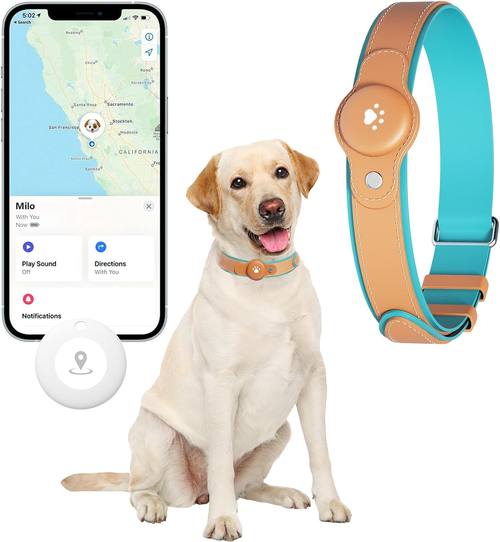
Best overall: New GPS Tracker for Dogs smart pet collar
This is the one I would hand a friend first, and the reason is the battery claim. The listing advertises up to 365 days of battery life with no monthly fee or subscription, works with both iOS and Android, and calls the collar waterproof and anti-lost. The 365-day figure is the headline and also the part you should squint at.
A year of battery is a standby number, not a tracking number. Every GPS collar I have logged drains in two stages: a slow trickle while it sits and listens, then a cliff when it starts pushing live positions to your phone. So read the 365 days as "you will not charge this weekly," not as "you can watch your dog run for a year." If the collar delivers even a fraction of that while tracking, it beats most of what I have worn out.
The design decisions are right for a dog that works cover. It is a collar rather than a dangling tag, which matters more than any spec sheet, because I have found two trackers in the woods that were not on dogs. The anti-lost framing and the waterproof rating point at the same priority I have: attachment and weather sealing before app features.
The catch is the same as every no-fee collar. You are trusting a fixed radio path and the manufacturer's app to deliver a position when your dog is somewhere your phone has no bars. Ask yourself whether it stores the last known point and whether the geofence alert fires early. Those two answers matter more than the battery number on the box. Check current Amazon price.
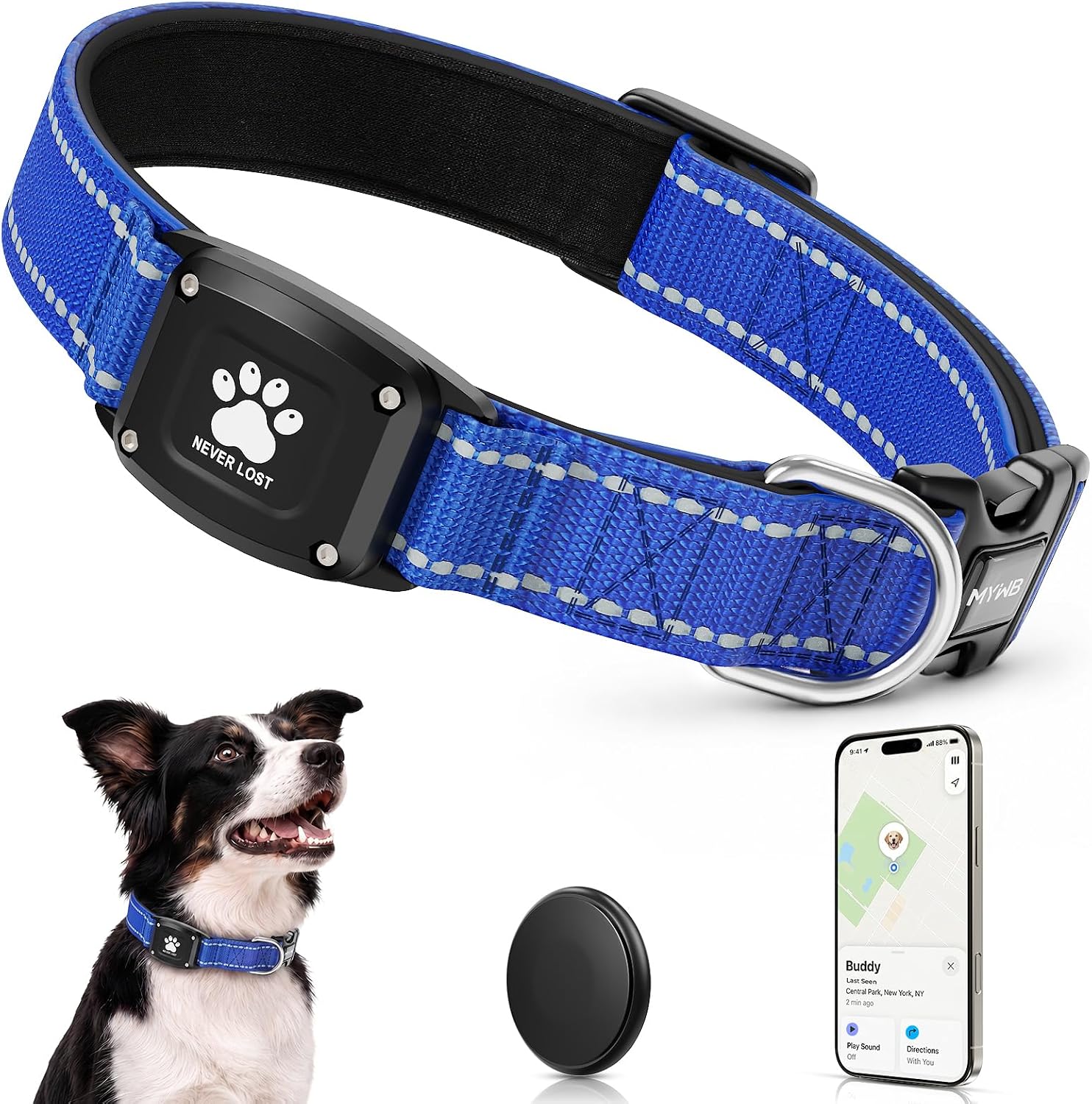
Best value: GPS Dog Collar with Tracker, waterproof, blue, large
If the budget is the deciding factor, this is the collar to look at. It is a waterproof GPS dog collar with a tracker built in, no monthly fee, in blue, size large. No subscription is the whole pitch, and at this end of the market that pitch is worth taking seriously, because the alternative is a cheap Bluetooth tag that claims unlimited range and loses your dog the second she clears the fence line.
What I like about the format is the same thing I like about the first pick: it is one piece. A collar that carries its own tracker cannot rotate loose on a D-ring, and it cannot be chewed off by a determined dog the way a hanging unit can. The large sizing suits the dogs most likely to need a tracker, the shepherds, huskies, and hounds that cover ground fast.
What I would verify before trusting it in the backcountry is the recovery layer. A no-fee collar at this price usually depends on a phone link for live positions, so the important questions are whether it keeps a last known location when the signal drops and whether it warns you at the fence line rather than after. If you hike in canyons or dense pines where coverage dies, treat this as a neighborhood and trailhead collar, not a wilderness lifeline.
That is not a knock. Most dogs escape into the neighborhood, and for that job a waterproof, no-fee collar that you can actually afford to replace is a smart buy. Fit matters more than anything else here: snug behind the ears, two fingers of slack, and check it monthly, because a loose collar in thick brush is how trackers get donated to the forest. Check current Amazon price.
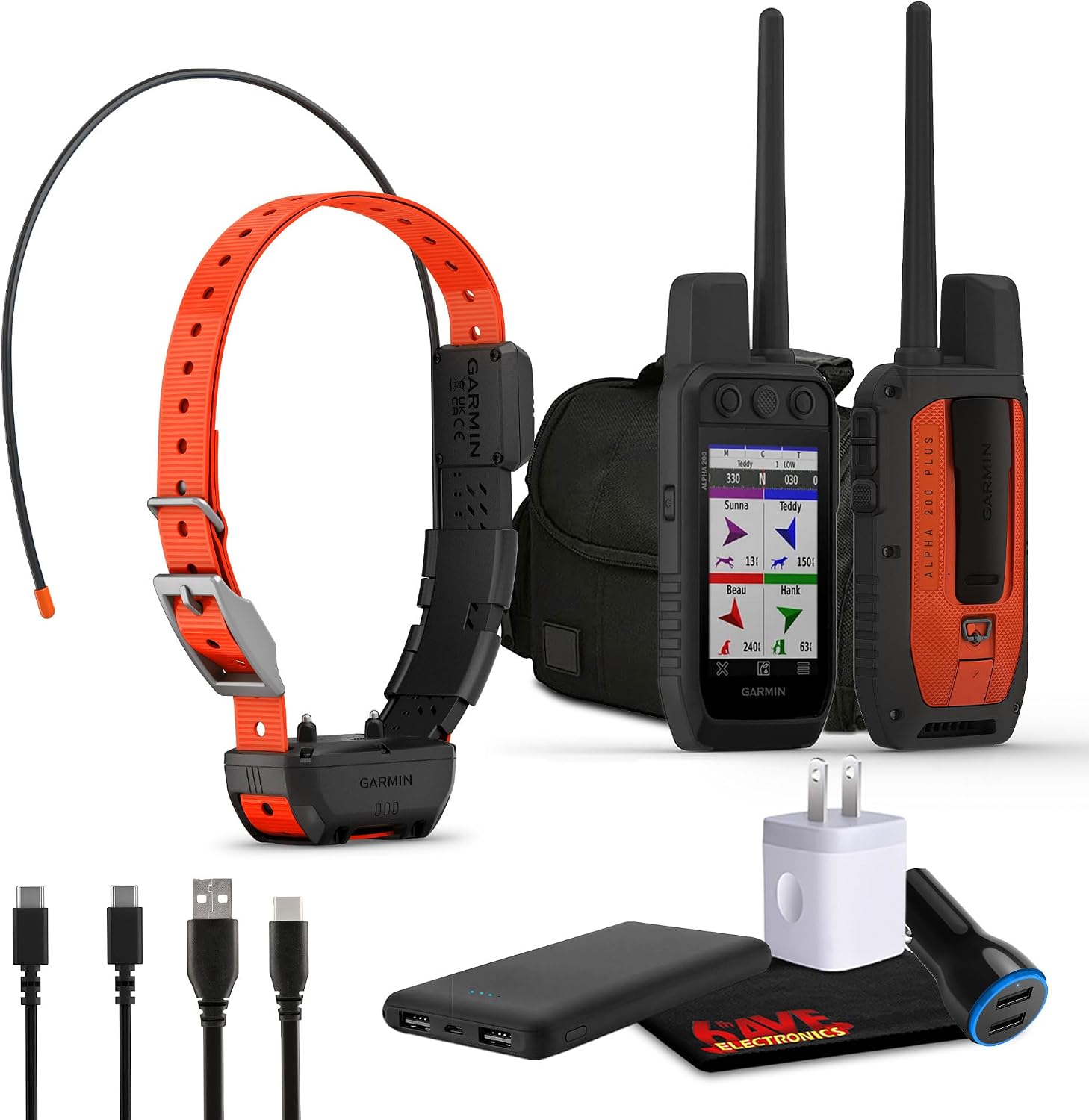
Best off-grid pick: No Monthly Fee Dog Tracker, add-on unit only
This one is the most interesting listing in the group, and also the one most likely to be bought by mistake. It is an off-grid GPS collar tracker with no monthly fee, and it is labeled add-on unit only. That last part is the whole story: it is a piece of a system, not a complete solution.
Read the add-on label as a budget warning. If you are buying this, you are buying into whatever it pairs with, and that hardware may cost more than the collar itself. I have watched people order a component and then discover the base station was the expensive half. Before you click, confirm what the add-on attaches to and what that costs, because the three-year total is the number that matters, not the sticker on one part.
What earns it the off-grid label is the positioning approach. Off-grid framing usually means the unit leans on satellite positioning and a stored position rather than a live cellular feed, which is exactly the direction I think this whole category is heading. Satellite-direct tracking at consumer prices will gut the subscription model, and collars like this are the early shape of that shift.
My honest read: this is for the owner who already runs the parent system, or who wants to build toward off-grid recovery and understands that the first purchase is partial. If you want one box that works on its own out of the gate, start with the smart pet collar above instead. If you already own the base and want to extend coverage where cell service goes to die, this is the piece that makes that possible. Check current Amazon price.
The one that is not for your dog: AngelSense
I include this because readers ask, and because it is a useful mirror. AngelSense is a GPS tracker built for kids, specifically for autism safety, special needs, and elderly care. It is not a dog collar, and I would not put it on a dog's neck.
Here is why it still belongs in the conversation. Caregiver tracking and dog tracking are solving the same engineering problem: get a position to a worried person, in real time, with enough battery to be there when it counts. The difference is what happens next. A device built for a wandering child is designed around alerts to a caregiver, human attachment methods, and wear that survives a person, not a dog shaking off a harness in a creek.
Two practical warnings. First, a product rated for a child is not rated for teeth, mud, or a husky rolling in pine duff, and I have never seen one survive a determined chewer. Second, the fit is wrong. Human wearables sit on a torso or a belt; a dog tracker has to sit behind the ears on a collar that stays put in brush.
So if you are shopping for a person in your family, this is a legitimate category with real products, and you should evaluate it on caregiver features rather than dog specs. If you are shopping for a dog, skip it and stay with the collars above. Check current Amazon price.
How I judge a dog GPS tracker
I do not start with the app. I start with four things I can check before the dog ever wears it.
Battery duty cycle. A tracker has two lives: sitting still and listening, and pushing positions. The second one eats the first for breakfast. When a listing promises a long battery life, I want to know whether that is a standby figure, because a tracker that dies at hour 14 on a day hike is a rock with a subscription, and a no-fee rock is still a rock.
Satellite lock. How long does it take to get a first fix, and does it hold that fix under pines or in a canyon? GNSS lock time is the number nobody advertises and everybody notices. My log has units that locked in seconds in an open field and units that took minutes in the trees, and the trees are where you need them.
Sealing and attachment. IP67 or better, and a mount that does not rotate, snag, or fall off. I have found two trackers in the woods. Neither was attached to a dog. If a collar is not chew-resistant and properly sealed, you are making a donation to the forest.
Recovery features. Live tracking is a party trick. The features that end searches are a stored last known location, a geofence alert that fires early enough to act, and a light you can trigger at night. If the app needs a live signal to show you anything at all, it fails the only test that matters.
The no monthly fee dog tracker comparison table
This is how the four stack up on the things I can verify from the listings and the design, plus what each one is actually for. Prices move, so I do not print them.
| Tracker | Monthly fee | Battery claim | Build and format | Best for |
|---|---|---|---|---|
 Visit on Amazon → Visit on Amazon →New GPS Tracker for Dogs smart pet collar |
None | Up to 365 days, per the listing | Waterproof collar, iOS and Android | Most owners who want one box that works |
 Visit on Amazon → Visit on Amazon →GPS Dog Collar with Tracker, blue, large |
None | Not stated | Waterproof collar, size large | Budget buyers and neighborhood escape artists |
 Visit on Amazon → Visit on Amazon →No Monthly Fee Dog Tracker, add-on unit only |
None | Not stated | Off-grid collar tracker, add-on unit | Owners extending an existing off-grid system |
 Visit on Amazon → Visit on Amazon →AngelSense GPS Tracker for Kids |
Per the listing's own plan | Not stated | Wearable for people, not dogs | Families tracking a child or elderly relative |
| Price check | Check current Amazon price on every row |
The table's job is to keep you honest about two numbers: the fee column and the format column. A no-fee collar that is half a system is not cheaper than a subscription collar. It is just more expensive later.
Should you buy the New GPS Tracker for Dogs smart pet collar?
Yes, for most people. It is the only collar here that combines no monthly fee, a waterproof build, and a battery claim long enough that charging stops being a chore. The 365-day number deserves skepticism, because tracking drains a battery faster than standby, but even a partial version of that claim puts it ahead of units that need a charge every other day.
Buy it if you want one complete product, you run iOS or Android, and your dog's world is the yard, the trailhead, and the neighborhood. Pair it with a monthly fit check and a habit of looking at the geofence settings before you leave the house.
Should you buy the GPS Dog Collar with Tracker in blue, large?
Yes, if the budget is tight and the dog stays within cell range. It is a waterproof, no-fee collar in one piece, which is the right shape for a dog that swims and rolls, and the large size fits the breeds that need tracking most. The compromise is the recovery layer. I would not rely on it deep in a canyon where the phone link dies.
Buy it if you want a straightforward, affordable collar and you understand it is a trailhead tool, not a wilderness lifeline.
The bottom line
A no monthly fee dog tracker is only a bargain if it does the boring jobs. Battery that lasts past the hike, a position that survives a lost signal, and a collar that stays on the dog. The New GPS Tracker for Dogs smart pet collar is the closest thing here to a complete answer. The blue waterproof collar is the value pick for neighborhood escapes. The off-grid add-on is for people already building a system, and AngelSense is for the humans in your family, not the dog.
Spend the money on the tracker, then spend twenty minutes fitting it properly. Every search I have been part of ended with a person, a light, or a stored position, never with a prettier map.