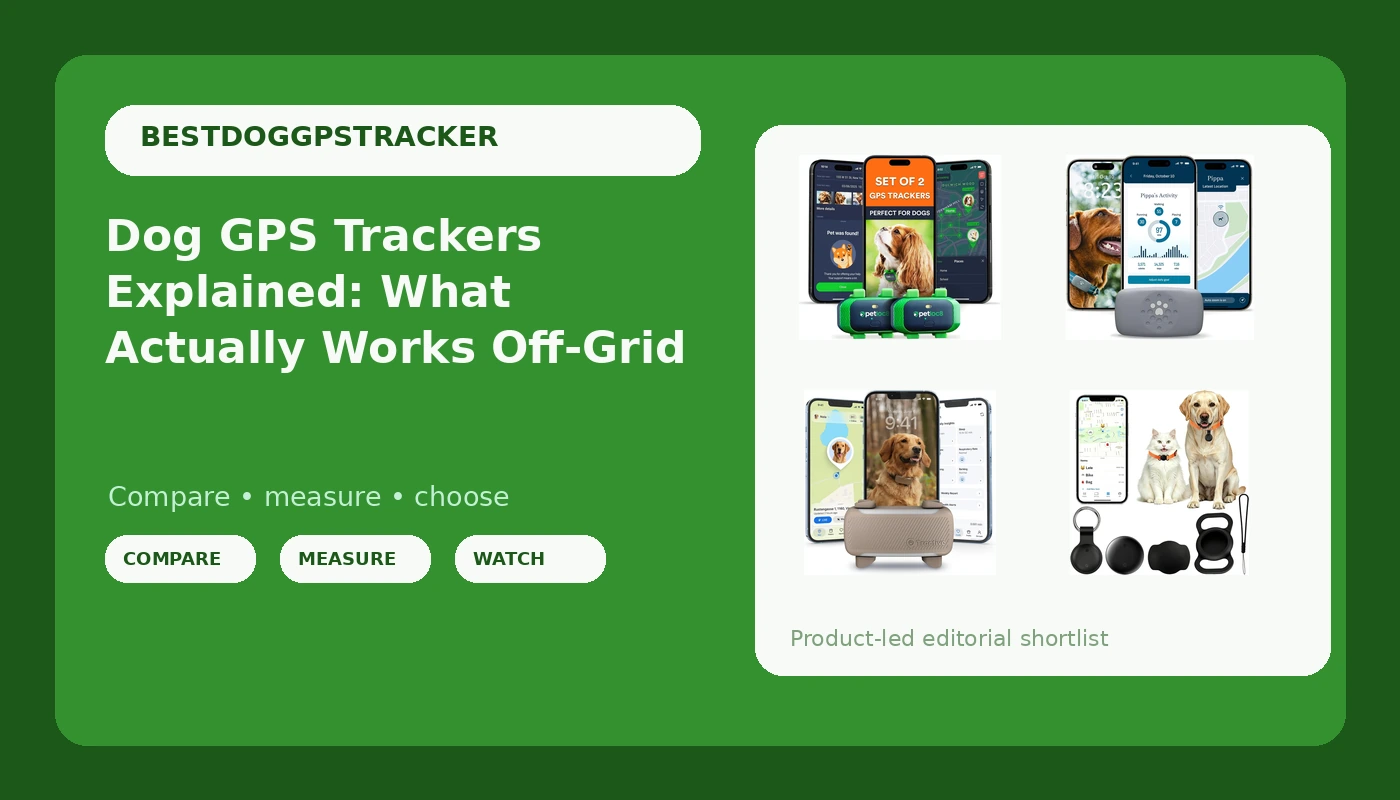
A dog GPS tracker is three devices in one shell: a satellite receiver, a cellular radio, and a battery. Each part fails in a different way. The receiver needs a clear view of the sky. The radio needs a tower. The battery has to survive cold mornings, long swims, and a dog that treats every thicket as a shortcut. Knowing which part does what is the difference between a tracker that brings your dog home and a subscription you cancel in frustration. This explainer walks through how a dog GPS tracker actually works, what the recurring fee buys, and how the four current options below differ in the ways that matter when a dog is missing.
Related: How Long Do Dog GPS Tracker Batteries Really Last? →
Quick answer
A dog GPS tracker combines a GNSS receiver that calculates position from satellites with a cellular radio that relays that position to an app, which is why several of the models here state that a subscription is required. The meaningful differences between them are battery strategy, how the unit attaches to the collar, whether it supports both iOS and Android, and how much recovery information the app can show when coverage is thin.
Four useful options
| Model | Best fit | What stands out |
|---|---|---|
| Tractive XL Smart Dog GPS Tracker | Live Pet Tracker with Virtual Fence | Vital Signs Monitoring of Heart & Respiratory Rate | Up to 6-Weeks Battery Life | Dog Collar Attachment (Brown) | Long days out and health baseline data | Listing states up to six weeks of battery plus heart and respiratory rate monitoring |
| petivity Dog GPS Tracker Powered by Purina, Waterproof Real Time Tracking GPS Dog Collar, Downloadable App, Subscription Required | Owners who want a known pet brand behind the app | Waterproof real-time tracking with a downloadable app, subscription required |
| Set of 2 Dog GPS Trackers - Real-Time Location Tracking Device with App - Smart Alerts & Geo-Fence - Collar-Compatible, Waterproof - Long-Life Battery - iOS & Android - (Subscription Required) | Households tracking two dogs | Two trackers in one set with geofence and smart alerts, subscription required |
| GPS Pet Tracker for Dogs (Android & iOS), Smart Pet Tracker for Collar | One dog, simplest setup | Collar-mounted tracker that pairs with both Android and iOS |
Long battery and health data: Tractive XL Smart Dog GPS Tracker
Battery claims deserve scrutiny. A tracker running live mode, pinging the network every few seconds, drains far faster than one reporting on a schedule. The six-week figure belongs to the efficient end of that range, so expect less if you leave live tracking running from dawn to dark. The health monitoring is the more unusual feature: heart and respiratory rate readings are useful baseline data for older dogs or dogs with a known condition, and they give you something concrete to compare against at a vet visit. What the listing does not promise is satellite-direct communication, so treat this as a cellular tracker that works where your phone works.
Brand-backed and waterproof: petivity Dog GPS Tracker Powered by Purina
The appeal here is ecosystem, not novelty. A large pet company behind the app is a bet on the service surviving longer than a startup's, and that matters because a tracker is only useful while the network it talks to still exists. The listing uses the word waterproof, which is worth taking at face value but not beyond it: it does not state an IP rating, so if your dog is a dock diver, check the listing detail before you commit. The subscription is stated plainly, so budget for it as part of the purchase rather than as an afterthought.
Two dogs, one purchase: Set of 2 Dog GPS Trackers
A geofence is the feature people underrate. You draw a boundary around the yard or the campsite, and the app alerts you when the dog crosses it, which means you find out about an escape in minutes instead of at dinner. For a two-dog house, buying a set keeps both animals on the same app and the same account, which is far less annoying than juggling two logins while one dog is trotting down the driveway. Confirm whether the subscription covers both trackers or bills per unit, because that single detail changes the three-year math considerably.
Simplest way to start: GPS Pet Tracker for Dogs (Android & iOS)
This is the one to look at when you want to find out whether collar tracking fits your routine at all. The listing is thin on the details that matter most in bad weather: it does not state an IP rating, a battery duration, or whether a subscription is required. Ask those questions before you buy, because a tracker that is not sealed against water and does not state its runtime is a gamble on a wet hike. If the answers check out for your dog, the cross-platform support means you are not locked into one phone brand when you upgrade.
Prices and availability may change. Product images, names, and retailer links are matched to verified listings. No current price, rating, stock status, or measured result is stated here without current evidence.
How satellite position and cellular relay work together
Two different technologies are doing the work, and confusing them is where most bad buying decisions start. The GNSS side listens to satellites and calculates where the dog is. That part needs open sky, so a dog in a canyon, under dense pine, or inside a culvert will produce a slower fix or no fix at all. The cellular side takes that position and sends it to your phone over a mobile network, which is why the app can show nothing useful in a place with no bars.
This is also why Bluetooth gadgets marketed as trackers are a different product category. Bluetooth range is measured in tens of feet, so the moment your dog leaves the yard the connection drops and you have no location at all. A cellular tracker keeps reporting from miles away as long as a tower is in range. A satellite-direct tracker, which skips the cell network entirely, is the third category, and it is rare and expensive today.
The features that matter in an actual search are the recovery features, not the live map. A geofence alert tells you the escape happened. The last known location gives a search team a place to start. A light or sound you can trigger remotely helps you find a dog that is stuck nearby and silent. Live tracking is pleasant to watch on a normal walk, but it is the geofence and the last known pin that do the work when things go wrong.
What the subscription adds over three years
The hardware is the cheap part. A tracker without an active plan is a plastic lump on the collar, because the cellular data and the app service are what you are really paying for. Plans vary by brand, so run the arithmetic before you buy rather than after.
- Find the plan price for the model you are considering, monthly and annual, before you order the hardware.
- Multiply the annual figure by three to see the realistic three-year cost of ownership.
- Check whether the plan is billed per tracker or per account, which decides the math for multi-dog homes.
- Read the auto-renewal and cancellation terms, and note the renewal date somewhere you will see it.
- Compare that total against how often you genuinely need live tracking, and drop to the cheapest tier that still gives you geofence alerts and last known location.
Setting up a tracker so it helps in a search
- Charge the tracker fully before the first hike, and top it up on a fixed weekly schedule rather than when the app complains.
- Walk the boundary of your geofence and trigger a test alert so you know the notification actually reaches your phone.
- Record your dog's normal resting heart and respiratory rate if your tracker reports them, so an abnormal reading means something.
- Keep a recent photo, collar description, and microchip number in one note on your phone, ready to hand to a search team.
- Fit the tracker snugly against the collar with the attachment you trust, then tug test it, because a unit dangling in brush is a unit you will lose.
Which option should you choose?
Choose the Tractive XL Smart Dog GPS Tracker when battery life and health data are the priority and you want the longest stated runtime in this group. Choose the petivity Dog GPS Tracker Powered by Purina when you want a waterproof tracker from a pet brand with a long track record. Choose the Set of 2 Dog GPS Trackers when you have two dogs and want both on a single app and account. Choose the GPS Pet Tracker for Dogs (Android & iOS) when you want the simplest collar-mounted starting point and can confirm the missing specs with the seller.
None of these listings states a current price, a rating, or a measured battery result in this article, and the battery figures quoted are the manufacturer's own claims rather than independent test data. Verify waterproofing, subscription terms, and plan pricing on the listing before you buy, because those three details decide whether a tracker works for your dog and your budget.
The bottom line
A dog GPS tracker is a subscription with a collar attachment, and the honest way to shop is to pick the battery and recovery features you need first, then accept the recurring cost as part of the product. If you want long runtime and vital signs monitoring, the Tractive XL is built for that. If you want a waterproof tracker from a familiar pet brand, the petivity is the straightforward choice. If two dogs share your house, the two-pack keeps them on one account. If you are simply testing whether collar tracking fits your routine, start with the simplest unit, confirm the specs the listing leaves out, and spend a season finding out whether the geofence alert ever reaches your phone when it counts.