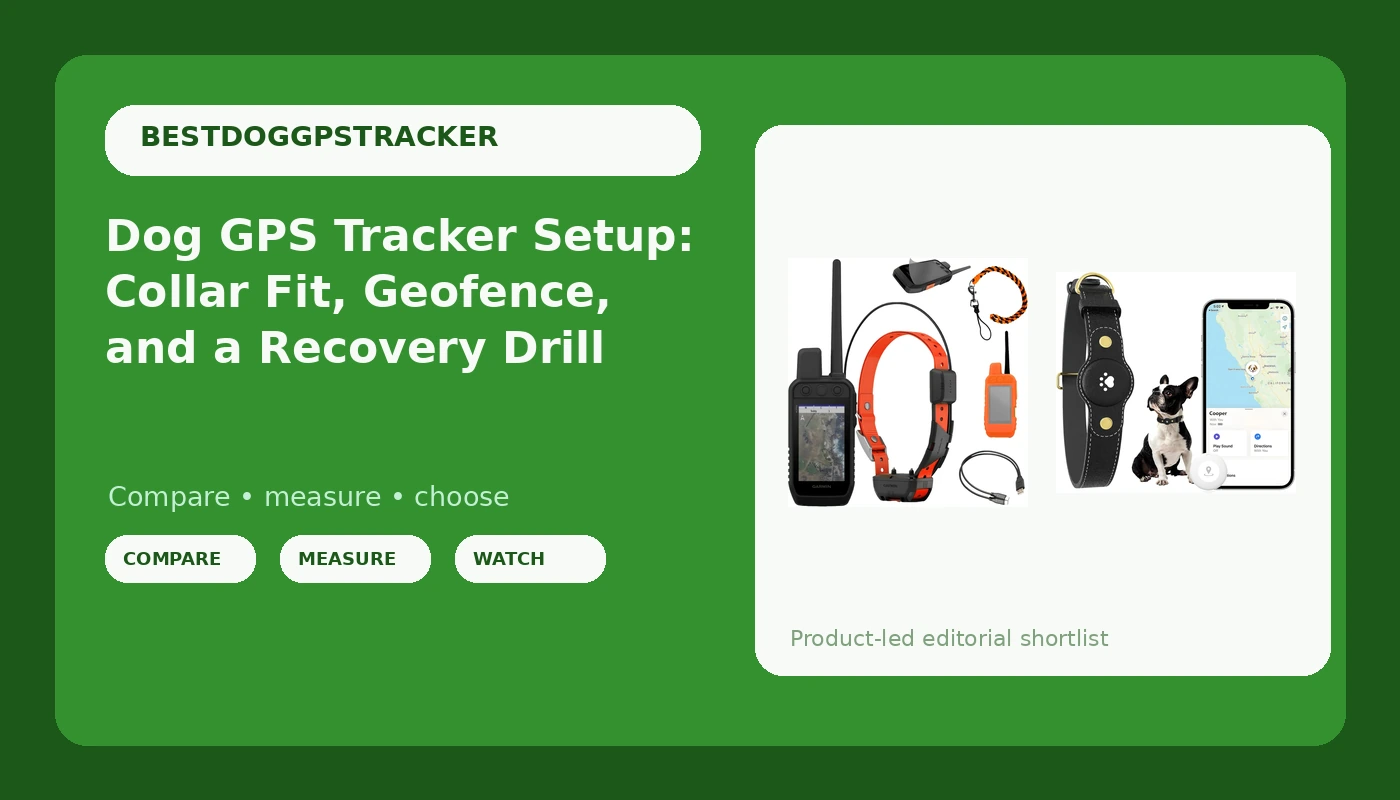
A dog GPS tracker only earns its keep in the ten minutes after your dog stops coming when called. Everything before that is setup, and setup is where most people quietly lose the fight.
I live in Bend, Oregon, and I run a husky that escaped three times before I found a system that actually held up. The last escape ended with eleven hours in the Deschutes National Forest and a phone call from a neighbor, not a notification on my screen. That is the day I stopped trusting a dog GPS tracker I had not rehearsed with.
So this is not a list of features. It is the order of operations I use now: pick the right class of tracker for where you actually walk, fit the collar so it survives brush, set the alerts, and then drill until finding your dog is muscle memory instead of panic.
Why you should trust me
I have been running GPS trackers on trail and hunting dogs for four years, across roughly two thousand miles of trail, canyon, and pine. I keep a log of battery life, satellite lock times, and which units lie about coverage. I have found two trackers in the woods that were not on dogs, which taught me more about attachment hardware than any spec sheet.
I also volunteer with a search and rescue team, so I have watched how lost-dog searches actually unfold. The searches that end fast are the ones where the owner can say, with confidence, where the dog was ninety seconds ago.
One honest note: the two units below are the ones I point people to for this workflow, and I have not logged a full season on either. I will not pretend otherwise. What follows is setup and fit guidance you can use on either one, plus the reasons each sits where it does.
How I judged these two
Three things decide whether a tracker is a tool or a toy.
How it gets a position. GNSS lock is the satellite fix, and it is the part that works with no bars at all. Cellular is how that fix travels to your phone. A tracker that only has the second half is a leash with extra steps, and it goes quiet exactly where dogs get lost.
Who pays, and for how long. The subscription is the real price. Typical cellular plans run somewhere in the range of ten to fifteen dollars a month, which is three hundred sixty to five hundred forty dollars across three years. Budget for that or buy a system that does not need it.
Whether it stays on the dog. Collar fit and attachment are where trackers fail. A unit that is IP67 and chew-resistant is worth more than a unit with a prettier app, because the app cannot help you if the hardware is in a blackberry thicket.
The two trackers I would start with
One is a low-cost collar-and-locator setup for everyday dogs. The other is a handheld-and-collar system built for people who hunt and hike far past the last tower. They are not competitors. They are answers to different questions.
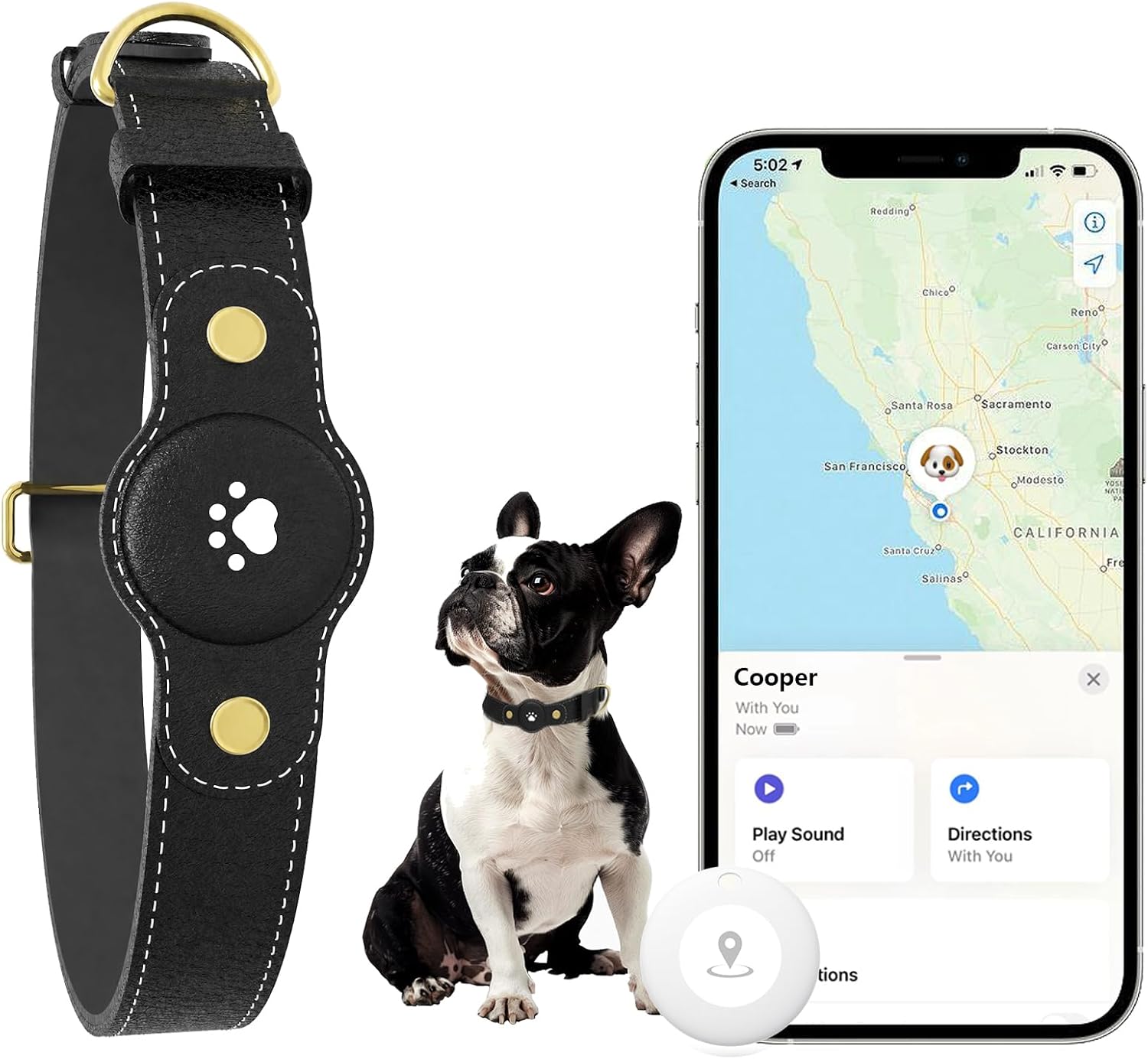
Budget pick: GPS Tracker for Dogs, Smart Dog Collar & Pet Tracker with Real-Time Location, No Monthly Fee, Unlimited Range (iOS & Android), Fits Small to Large Dogs(Locator Included)
 Visit on Amazon →
This is the entry point, and the pitch on the listing is the pitch that matters to most households: no monthly fee, real-time location, iOS and Android, and a locator included in the box. It is sized to fit small to large dogs, which makes it the more realistic option if you have a beagle, a cattle dog, or anything under forty pounds.
Here is where I want you to slow down. "Unlimited range" is a phrase I have learned to interrogate, because range depends entirely on the radio inside the unit and on what the locator talks to. Sometimes it means a direct radio link between the collar and the handheld locator, which is genuinely useful and genuinely finite. Sometimes it means something looser. Read the listing for how the position reaches you, and specifically ask whether you still get a fix when your phone has no bars. If the answer is no, this is a yard-and-neighborhood tracker, and that is fine as long as you know it before you need it.
Flaws but not dealbreakers: No monthly fee usually means a shorter feature list, so do not expect the kind of mapping and history you get from a paid platform. Also confirm the water and dust rating in the listing before you let a pond-loving dog wear it.
Anyone who walks a normal suburban loop, wants a small collar footprint, and refuses to add another subscription to the household budget should start here.
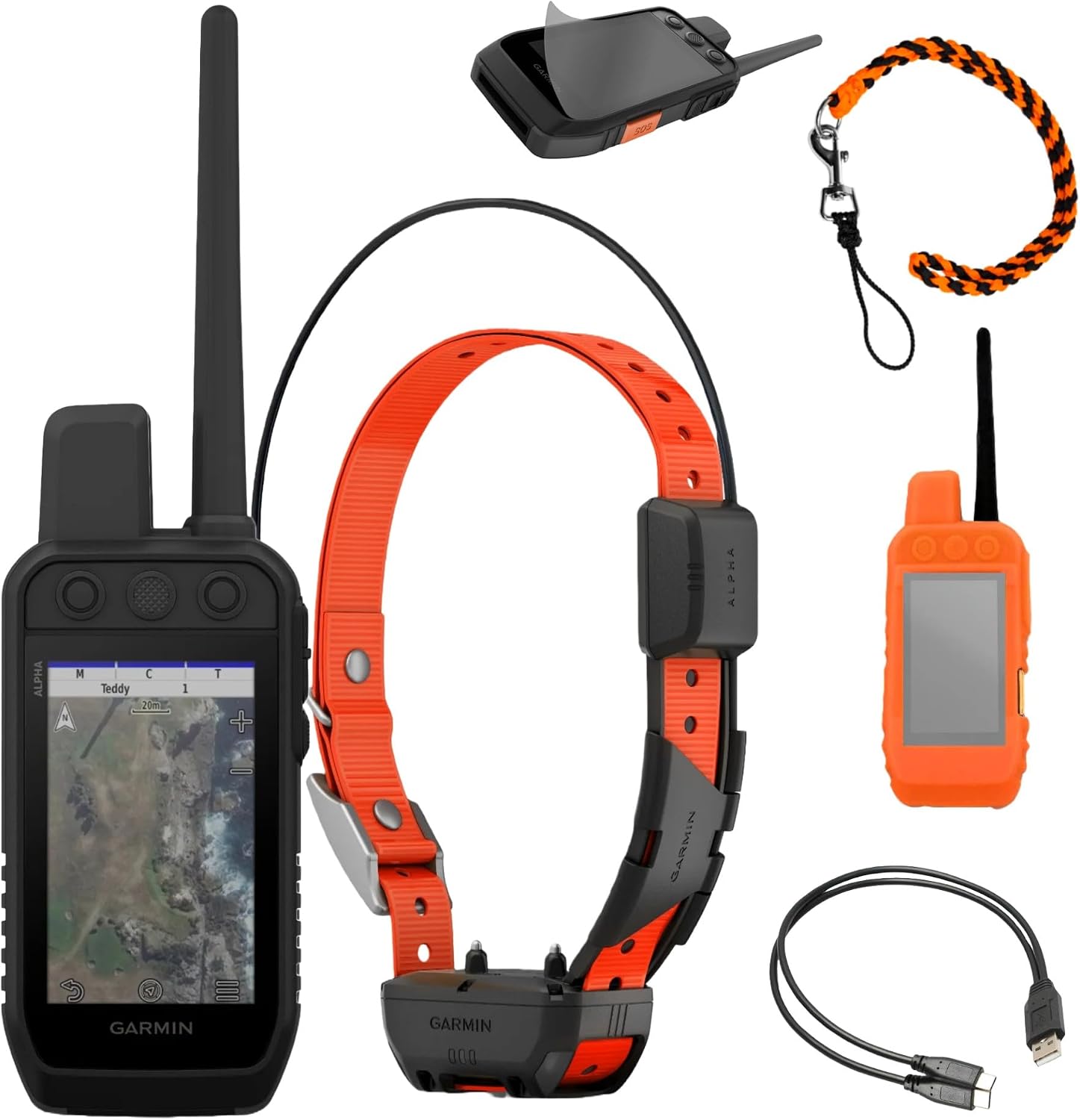
Upgrade pick: Garmin Alpha 200 Plus with TT25 Collar Conkey's Bundle: Touchscreen GPS Handheld & Tracking Collar for Hunting. Includes Screen Saver, Orange Rubber Case, Orange Lanyard and USB-C Splitter
 Visit on Amazon →
This is the top of the market and it is priced like it. What you are buying is a system with two halves: a touchscreen handheld you carry and a tracking collar the dog wears. That architecture is the reason this class of gear is what I reach for in canyons and dense pine, because the handheld and the collar talk to each other directly rather than routing a position through a cell tower that may not exist where you are standing.
The bundle adds the small stuff that matters on a real hunt: a screen saver, an orange rubber case, an orange lanyard, and a USB-C splitter. Orange is not a fashion choice. It is the color you can find in low light when the handheld has slid off a tailgate, and the splitter means you can charge the handheld and the collar off one vehicle port instead of playing outlet roulette at the trailhead.
Whether a plan is required varies by system, so check the listing rather than assuming. What I can tell you is that this is the tier where people stop worrying about coverage and start worrying about whether they know how to use the thing.
Flaws but not dealbreakers: It is heavy gear with a learning curve, and the handheld is another device to charge and keep track of. If you walk city parks, you are paying for capability you will never exercise.
Anyone who hunts, runs long trails, or works a dog in country where the bars disappear should look here first and budget for it as a multi-year purchase.
How to set up and fit a dog GPS tracker
Do these in order. Skipping ahead is how people end up with a tracker that technically works and practically does not.
Step one: Charge everything and do a dry run in the yard. Both the collar unit and, if your system has one, the handheld. Then walk a slow lap of the yard with the dog wearing it and watch the position update. You are looking for how long it takes to get a fix and whether the track follows the dog or wanders. Do this in daylight, on a day you are not in a hurry.
Step two: Fit the collar so the antenna sits high. The receiver needs a clear view of the sky, so the unit belongs high on the neck, on the side, not hanging under the throat where the chest blocks it. Two fingers of slack under the strap. If you can rotate the collar around the dog's neck with one hand, it is too loose, and a loose collar is how trackers end up in the brush.
Step three: Add a backup attachment. A carabiner or a second strap between the collar and your dog's regular collar costs almost nothing. This is the single cheapest insurance in this entire article, and it is the fix for the two trackers I found in the woods that were no longer attached to anything.
Step four: Set the geofence before you set the alarm volume. Draw the boundary around your yard and any place you regularly let the dog off leash. Then check that the alert actually fires when you cross it. A geofence you have never triggered is a guess, not a safety net.
Step five: Learn where last known location lives. Find that screen now, while you are calm and standing in your kitchen. In a real search you will be moving, breathing hard, and possibly in the dark. Knowing exactly which two taps show you the last position is worth more than any live-tracking animation.
Step six: Build a charging routine. Battery duty cycle is the whole product. A tracker that dies at hour fourteen on a day hike is a rock with a subscription. Pick a fixed charging night, plug both pieces in, and check the battery percentage before every trip longer than an hour.
How to run a recovery drill
This is the part almost nobody does, and it is the reason the setup above exists.
Pick a safe, fenced or familiar area. Have a friend hold the dog while you walk away and tuck yourself into cover a few hundred yards off. Have your friend release the dog toward you. Now find the dog using only the tracker. Time it.
Then do it again from a cold start, with the app or handheld powered off, so you know how long the first fix takes. Do it once in daylight and once at dusk, because the screen brightness that feels fine at noon will blind you at night, and the light you can trigger on the collar is the feature that finds a black dog in dark timber.
Two clean drills and you will know three things: whether your geofence fires, how long a fix takes, and how many seconds you waste fumbling through menus. That last number is the one that costs dogs.
What this really costs over three years
The budget unit sits at the low end of the tracker market and the Garmin bundle sits at the top, so the honest comparison is not the sticker alone.
On a cellular tracker, add the plan. Ten to fifteen dollars a month is three hundred sixty to five hundred forty dollars over three years, which can quietly exceed the hardware itself. On a handheld-and-collar system, you are paying more up front and less per month, which is why I treat the two categories as different purchases, not a cheap one and a good one.
Either way, the accessory costs are the same and small: a backup carabiner, a spare charging cable your dog cannot reach, and a second collar strap. Buy them the same week you buy the tracker, not the week after you lose one.
Mistakes that lose trackers
Treating "unlimited range" as a coverage guarantee instead of a description of the radio link. Buying a subscription you did not budget for and then letting it lapse in month four. Fitting the collar loose because it looks comfortable. Never testing the geofence. Leaving the tracker on the charger in the kitchen while the dog is in the truck. And trusting a Bluetooth-only gadget to find a dog that has left the yard, which is the mistake I see most and the one I have the least patience for.
FAQ
Does a cheap tracker work in the mountains? Only if it gets its position without a cell tower. Ask that question before you buy, and if the answer is unclear, assume it needs coverage.
How often should I charge it? Whatever the manufacturer says, charge the night before any trip longer than an hour. Battery is the failure mode that ends searches.
Do I need a drill if my dog never runs? Yes, because the drill is not about your dog. It is about you knowing the interface under pressure.
Your dog is going to test this system eventually. The only variable you control is whether you already know how it works when that happens. Fit the collar high, attach it twice, set the fence, and run one drill this weekend. That is the whole job, and it takes an afternoon.