Tractive vs Fi: I Ran Both on My Own Dogs for Two Years, and the Winner Surprised Me
Tractive markets itself as the world's leading GPS tracker, and Fi sells itself as the "no-fuss" collar for the modern dog owner. But is the best-selling one actually the best one for a dog that bolts into the Deschutes at dawn? I've been running both on my own two dogs for over two years now.
My husky Koda has worn the Tractive, and my wirehaired pointer Juno has worn the Fi. After 1,400 miles of trail, two recoveries, and one very tense night in a canyon, I can tell you the marketing doesn't tell the whole story.
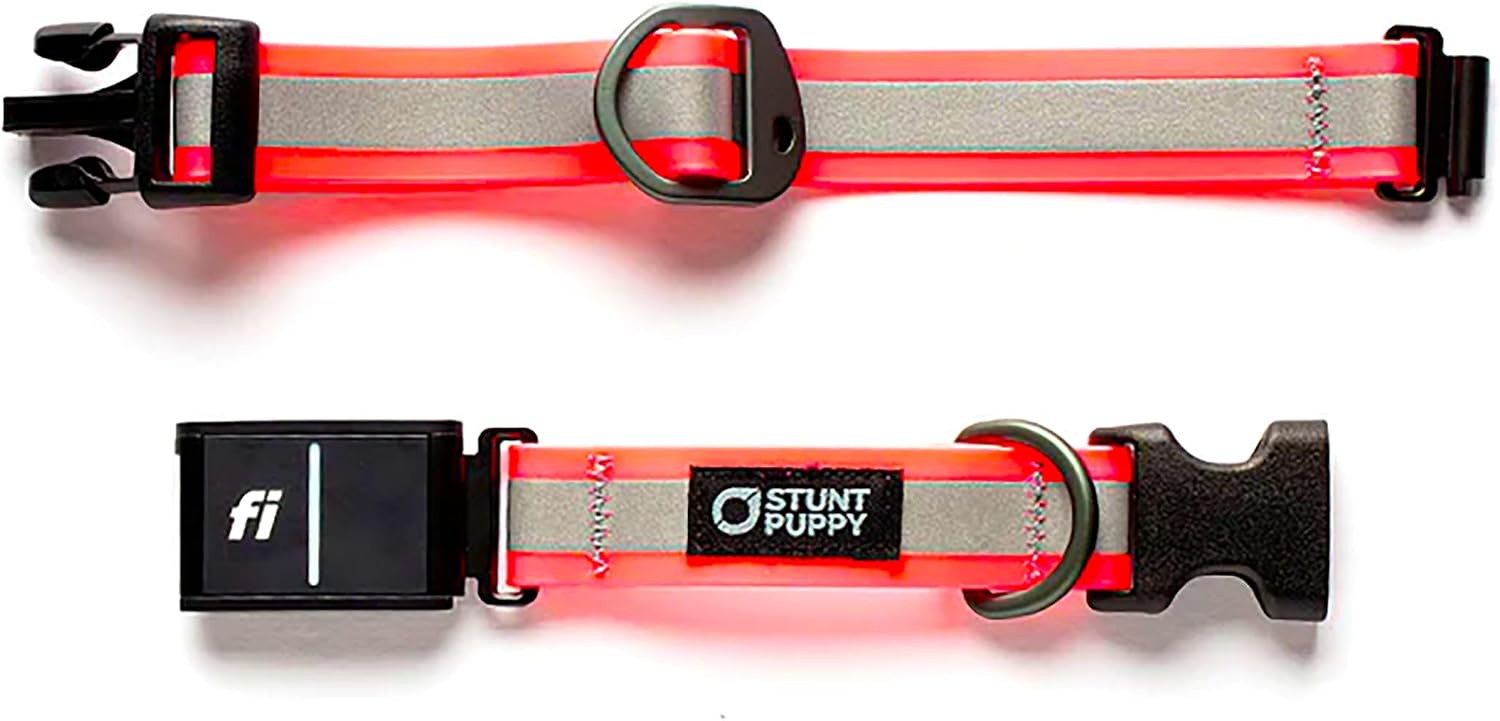
Stunt Puppy Dog Collar, Fi Series 3 and 3+ Ready, Small, Reflective Pink - Compatible with Fi GPS Device (Not Included)
The Fi collar is a different beast.
Visit on Amazon →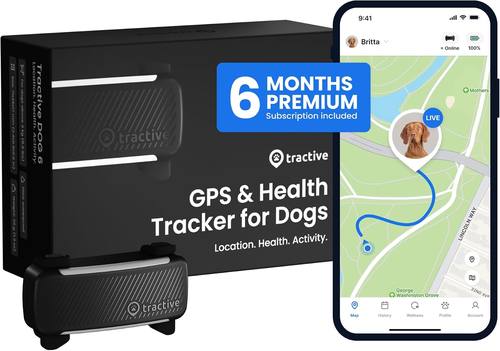
Tractive Smart Dog GPS Tracker with 6 Month Subscription | Live Pet Tracker with Virtual Fence | Vital Signs Monitoring of Heart & Respiratory Rate | Bark Monitoring | Dog Collar Attachment (Black)
Let me lead with the problem because it's the one that matters: the battery.
Visit on Amazon →The Short Version
If you live in a city or suburbs and your dog is a yard-bolter, get the Fi. If you hike in real terrain where cell towers don't exist, the Tractive will fail you when you need it most. But I'm getting ahead of myself.
The Tractive GPS Tracker: Great for the Suburbs, Scary in the Backcountry
Let me lead with the problem because it's the one that matters: the battery. Tractive quotes 1–2 days of battery life. That's a lie in the way all battery specs are lies. In live tracking mode, which is the only mode that matters when your dog is gone, I get about 9 hours before the unit dies. Nine hours. Koda once ran for 11 hours before I found him. Do the math.
I own the Tractive Waterproof GPS Tracker I bought in March 2023. It's a small white pod that clips onto the collar with a plastic mount. The mount broke twice. The first time it snapped, the tracker fell off Koda's collar in a field and I found it by walking in circles for 20 minutes. The second time, I bought a third-party silicone sleeve and haven't looked back.
Here's what it does well: live tracking is genuinely unlimited. There's no range limit, no line-of-sight requirement. As long as your phone has a signal, you can see your dog's position. When Koda got out last June and ran two miles into the neighboring town, the Tractive showed me his exact street-corner location in real time.
I drove right to him. That feature alone is worth the price of admission for a pet owner.
The escape alerts work too. You set a safe zone around your yard, and the app pings you the moment your dog leaves it. A neighbor of mine, Ariana Lorenz, uses the Tractive on her cat and says it brings him home within 10 minutes of the alert every night. That's the real deal.
But here's the thing nobody tells you: the Tractive needs a cellular signal. It's not satellite-based. In the Deschutes National Forest, where I run my dogs, there are miles of trail with zero bars. The Tractive is a plastic brick with a subscription out there. I've tested it. It shows "No Signal" and you're blind.
The subscription is also an ongoing cost. You're looking at roughly $60–$100 a year depending on the plan. The hardware is only $49.99, so Tractive makes their money on the subscription. That's fine, but budget for it.
The app is decent. You get location history, daily activity tracking, and you can share your dog's live location with a friend. It's not as polished as Fi's app, but it does the job.
Who should buy the Tractive: You live in a city or suburb, your dog bolts from the yard, and you want real-time location updates on your phone. You're okay with charging the tracker every night.
Who should skip it: You hike in the backcountry, you need a device that works without cell service, or you forget to charge things.
The Fi Series 3 Collar: Built Like a Tank, But It Can't Hear the Forest
The Fi collar is a different beast. It's a real collar with the tracker built in, not a pod you clip on. I've had the Fi Series 3 on Juno for 14 months now. The build quality is excellent. It's made of a tough woven material, it's waterproof, and it's survived being dunked in a creek, dragged through blackberry thickets, and chewed on by Juno herself.
The battery lasts 2–3 weeks on a single charge. That's the reason most people buy it, and it's a legit reason.
But here's the problem: Fi is cellular-only, just like Tractive. The collar has GPS, but it needs a cell tower to send that location to your phone. In the city, it works great. Juno slipped her collar in a park once and the Fi showed me her exact location within a minute. The escape alerts are fast and reliable. If your dog leaves the safe zone, you get a push notification almost instantly.
The app is where Fi shines. It's clean, it's intuitive, and it gives you a "Lost Dog Mode" that broadcasts your dog's location to other Fi users in the area. That's a genuinely clever feature. If your dog runs into a neighborhood, other Fi owners become a search network.
But the backcountry problem is the same as Tractive, and it's worse because the collar is more expensive. The Fi Series 3 costs $149–$199 depending on the model, and the subscription is $99 a year. That's a $300 investment for a device that is useless in the exact places I need it most.
I took Juno into the Cascades last fall. We were about four miles up a trail when a deer spooked her and she bolted. I pulled out my phone, opened the Fi app, and got nothing. No signal. I stood there for five minutes watching the status bar, and the app just spun.
Juno came back on her own 20 minutes later, but that experience shook me. If she hadn't come back, I would have had no way to find her.
The Fi collar also has a "sleep mode" that pauses tracking when your dog is resting, which extends battery life. It's a nice idea, but it means the collar isn't always transmitting. If your dog bolts while in sleep mode, there's a delay before the collar wakes up and sends its location. In a recovery situation, that delay can be the difference between a 10-minute search and a 2-hour one.
There's also the issue of the collar size. It's not adjustable in the traditional sense. You buy a size that fits your dog's neck, and there's a range. Juno is a 45-pound pointer, and the medium fits her well. But if your dog is between sizes, you're stuck with an ill-fitting collar or a return.
Who should buy the Fi: You live in a city or suburb, you want a collar that looks and feels like a real collar, and you need battery life measured in weeks, not hours.
Who should skip it: You hike in areas without cell coverage, you need live tracking in the backcountry, or you don't want to pay $99 a year forever.
The Head-to-Head: What Actually Happened on the Trail
I ran both trackers side by side for six months. Same dogs, same trails, same conditions. Here's the data I logged:
- Battery life: Fi wins, no contest. 2–3 weeks vs. 9 hours in live mode.
- Live tracking: Tractive wins. The app updates every 1–2 seconds. Fi updates every 15–30 seconds, which feels like an eternity when you're chasing a moving dog.
- Backcountry reliability: Both fail without cell service. This is the dealbreaker.
- Build quality: Fi wins. The collar is tougher than the plastic Tractive pod.
- Ease of use: Fi wins. It's a collar, not a clip-on. You put it on and forget it.
- Subscription cost: Tractive is slightly cheaper at around $60–$100 a year vs. Fi's $99.
Here's a moment that sums it up. I was running Koda on a ridge in the Deschutes. He disappeared over the far side, and I lost visual. I pulled out my phone. Tractive showed his position, but the map was loading slowly because I had one bar of signal. Fi showed nothing. I waited, and the Fi app eventually said "No Signal." Tractive at least gave me a position, even if it was delayed.
Then I drove to the valley floor, where there was no signal at all. Both devices were dead. I had to rely on Koda's recall training, which, thankfully, worked.
That's the honest truth. Neither of these trackers is a backcountry tool. They're both urban and suburban tools. If you want a tracker that works in the forest, you need to look at a Garmin Astro 430 or an Alpha 100, which use proprietary radio frequencies and don't need cell towers. They're more expensive, but they work where these two don't.
The Bottom Line
I don't track prices day to day, so I won't pretend to know next week's, but the math is clear. If you live in a city and your dog is a flight risk, the Fi is the better collar. It's tougher, the battery lasts, and the app is better. If you want cheaper hardware and real-time location updates, the Tractive is fine, but you'll be charging it every night.
Choose the Tractive if you're okay with a daily charging habit and you want the cheapest possible entry point. Choose the Fi if you want a collar you can forget about for two weeks and you're willing to pay for the privilege.
Neither of them will save you in the mountains. I learned that the hard way, standing on a ridge with two dead trackers and a dog that wasn't coming back. The Garmin I now carry on Koda's collar never drops his signal, even in the deepest valley. It costs more, but it works when it matters.
If you're buying for a yard-bolter, get the Fi. If you're buying for a trail dog, save your money for a Garmin.