Related: How to Fit a GPS Dog Tracker Collar So It Stays On in Thick Brush
I have spent four years and roughly 2,000 miles of trail figuring out which dog GPS trackers tell the truth and which ones only look good in a product photo. Along the way I have logged battery drain, satellite lock times, and the trackers that quietly stop reporting at the exact moment you need them. Two of the units I found in the woods were no longer attached to dogs. One 11-hour search in the Deschutes National Forest ended with a neighbor's phone call, not an app. So when someone asks me about a no subscription dog GPS tracker, I do not answer with a feature list. I answer with a question: where does your dog actually run?
That question decides everything, because this category has a hard fork in it. On one side are trackers that carry their own cellular radio and charge a monthly plan. On the other are trackers that borrow the phone network through Apple Find My or Google Find My and charge nothing after purchase. Both get sold as dog GPS trackers. They are not the same product, and the difference shows up on the worst day of your year, not the best one.
Here are the four I would put in front of a normal dog owner right now, and how I sort them.
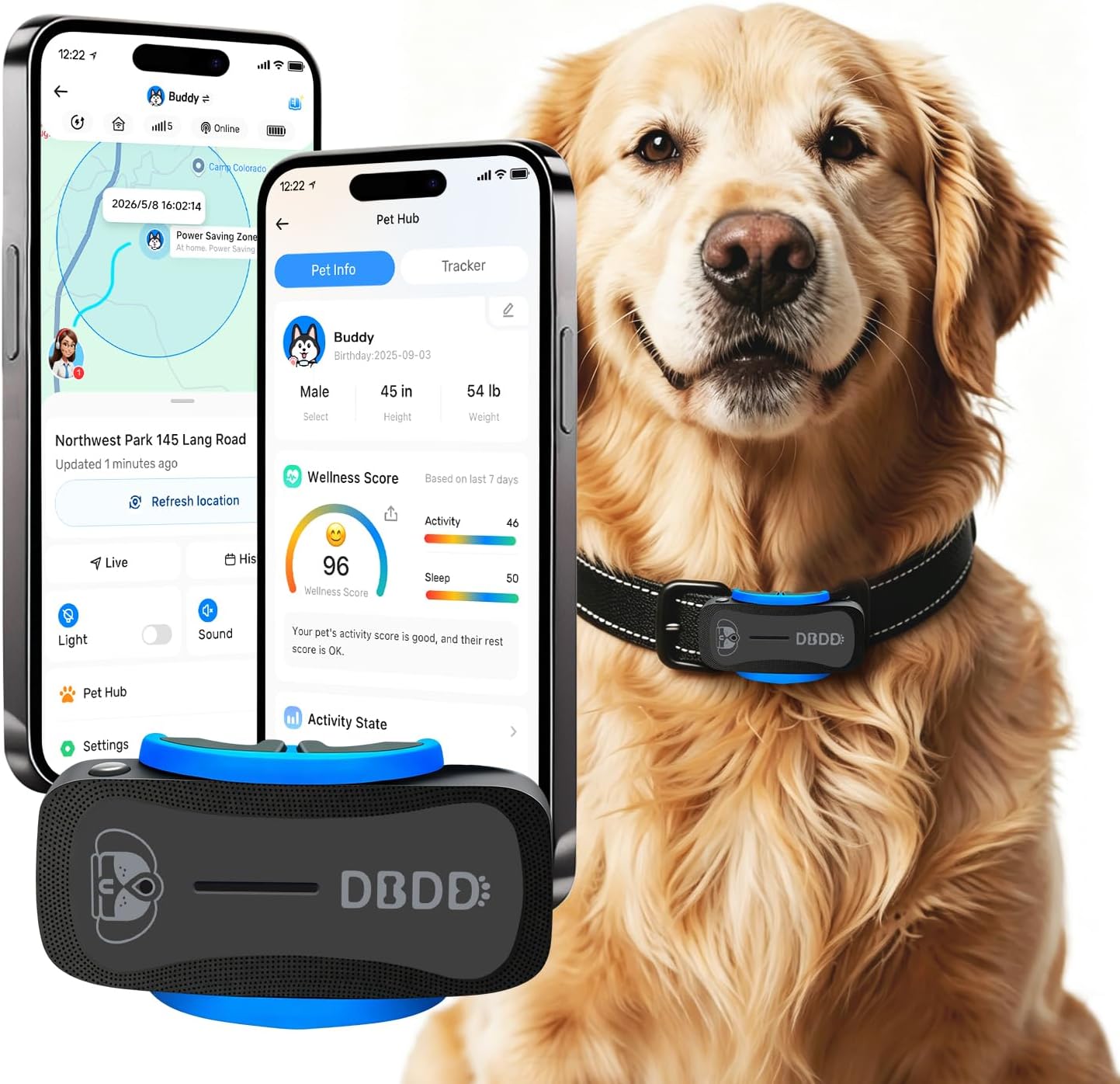
Best for Real Recovery Work: DBDD GPS Dog Tracker
The DBDD is the one in this group built the way I want a trail tracker built. It runs on a subscription, and that is precisely why it can report real-time location, hold a virtual fence, and keep a health monitor running without needing your phone within Bluetooth range. It is rated IP67, which is the first number I check on any collar-mounted device, because a tracker that cannot survive a swim in the Deschutes is a donation to the forest.
Recovery features are the whole point. Live tracking is a party trick that looks great in a demo. What saves a dog is a last known location, a geofence alert that fires while you are still close enough to do something about it, and a map trail you can hand to a neighbor or a search team. A subscription tracker is the only kind that reliably gives you all three in the backcountry.
The tradeoff is the plan. I price three years of subscription before I price the hardware, because most pet-GPS plans I have priced land between $10 and $15 a month, and that adds up to $360 to $540 over three years. That is more than the tracker, every single time. If you hike where your phone has no bars, pay it and stop complaining. If you do not, keep reading.
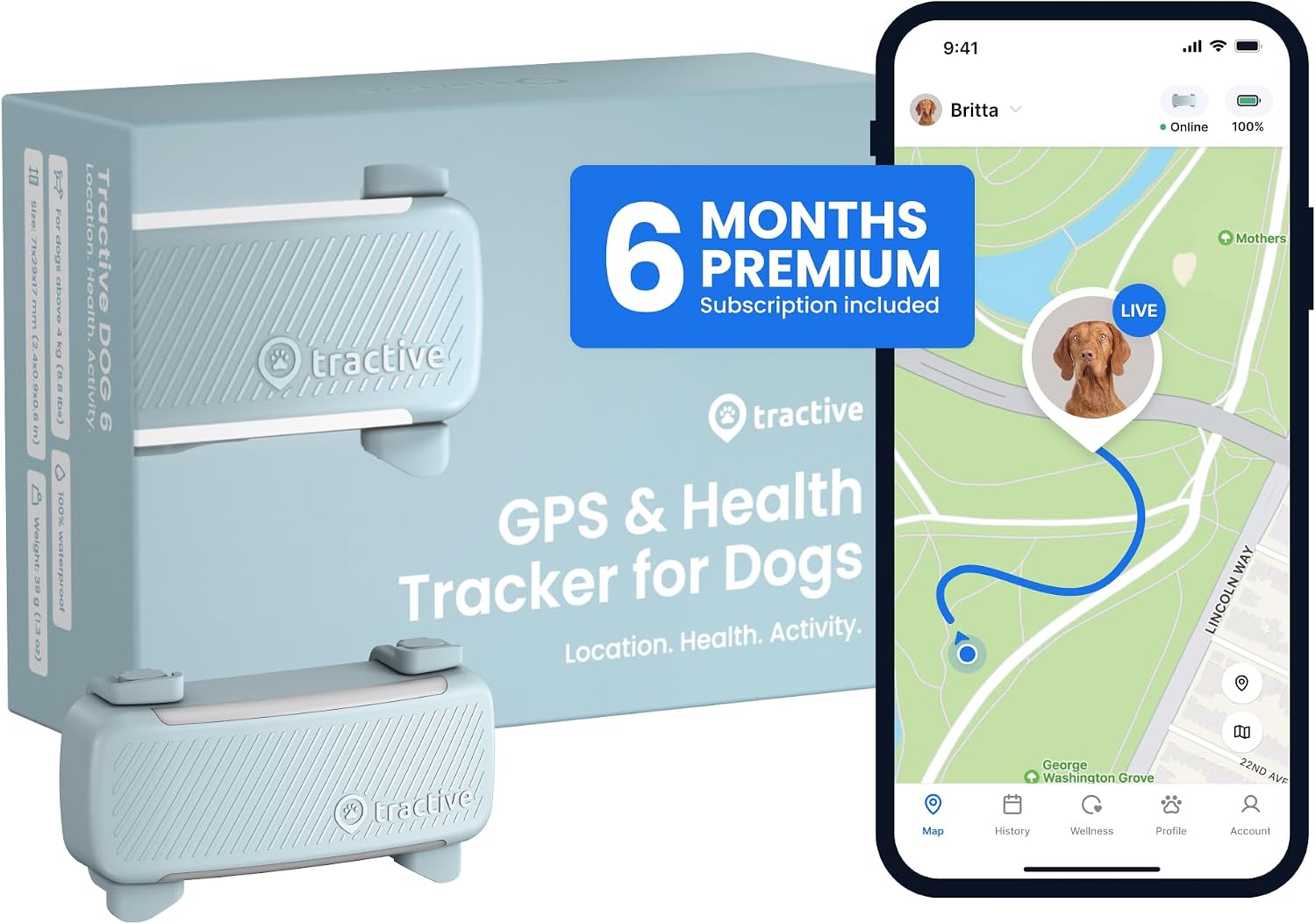
Best Subscription Value: Molly&Cody Smart Dog & Cat GPS Tracker
The Molly&Cody is the more affordable of the two subscription trackers here, and its spec sheet reads like a recovery tool rather than a toy: four smart modes, a custom virtual fence you draw yourself, IP67 waterproofing, location history, and 365-day health data monitoring. The custom fence matters more than people expect. A default circle around your house is fine until your dog finds the gap in the back corner, and at that moment you want to redraw the boundary, not move house.
Location history is the other feature I will not buy without. When a dog goes missing, the last 20 minutes of movement tell you which direction to drive. A tracker that shows only a single dot makes you guess, and guessing is how an afternoon turns into a night.
It is marketed for cats as well as dogs, and I will stay out of that argument. Cat escape physics are a different problem and I do not review for them. For a dog, this is a well-rounded subscription tracker with the two things I care about most: a fence you control and a history you can actually read.
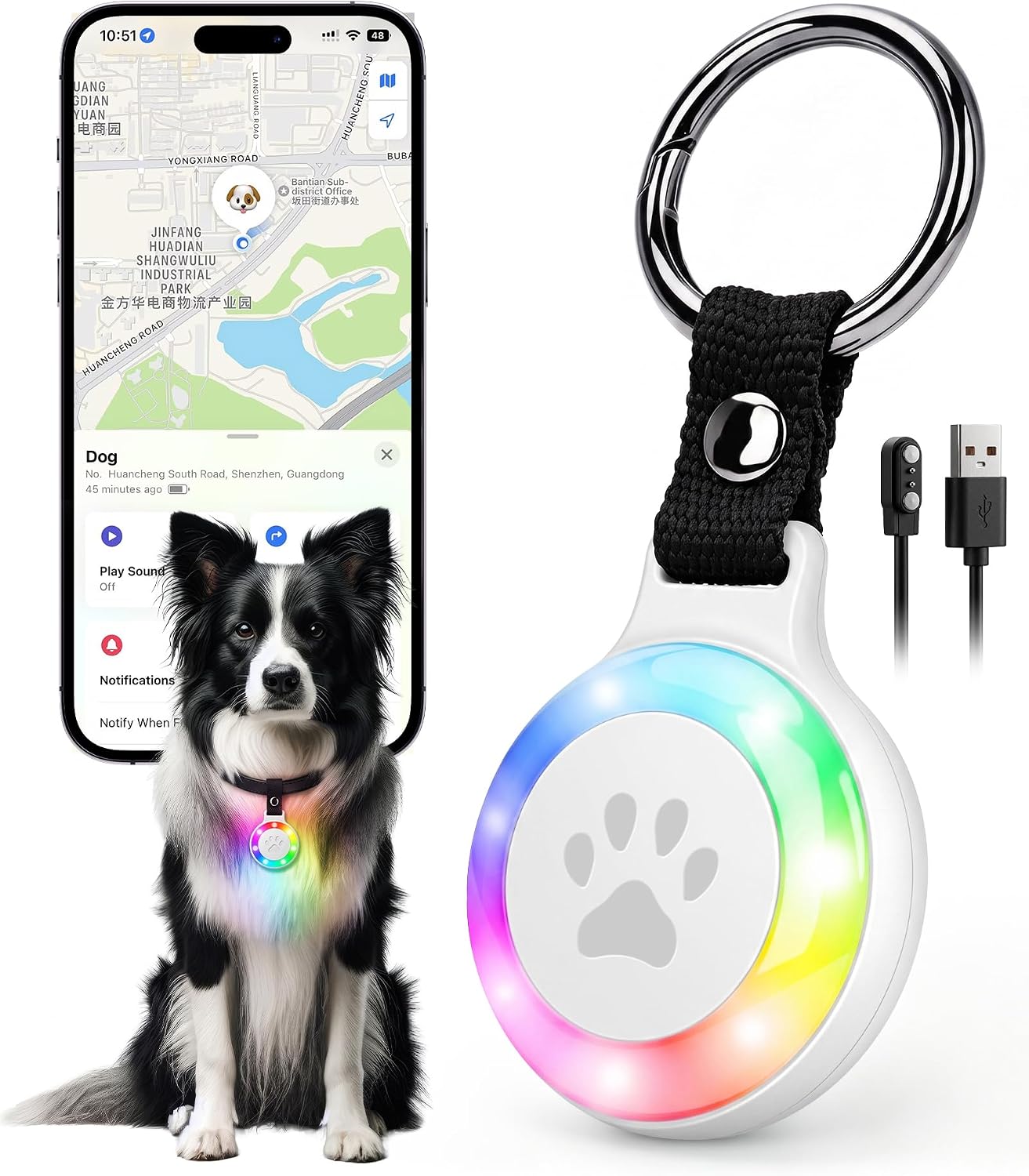
Best No-Fee Tracker for iPhone Households: GPS Tracker for Dogs and Cats Smart Collar
This one works with iOS Find My, needs no SIM card, and charges no monthly fee. It is IP68 rated, a step above the IP67 on the two subscription units, and it is the slimmest and most compact of the four, which matters on a small dog or a dog with a narrow collar. It ships with a holder, so you are not improvising a mount out of tape and hope.
Here is what you are actually buying: a tag that rides the Find My network. When your dog is near other Apple devices, the network can report a position, and you read that position in an app you already have on your phone. No plan, no auto-renewal, no cancellation call, no arguing with a billing department.
What you are not buying is a lifeline in the backcountry. Crowd-sourced networks need crowds. On a trail with no other phones around, there is nothing out there to relay a position, and the tag cannot talk to a satellite on its own. I have watched people buy this class of tracker expecting mountain coverage and then blame the hardware. It is a superb neighborhood and trailhead tool. It is not a substitute for a radio.
Best No-Fee Tracker for Android Households: GPS Collar for Dogs
The Android counterpart works with Google Find My, requires no monthly fee, and is sold as a waterproof smart tag on a collar for small and large dogs. The single most important line in its listing is the one that says Android only. Apple's network and Google's network do not share anything, so a household split between an iPhone and an Android phone needs to decide which phone will be doing the searching before the dog leaves the yard.
The same rules apply as with the iOS tag. No plan, no SIM, no bill, and no satellite radio. The upside is cost of ownership after purchase, which is zero. For a dog that lives in a fenced suburb, rides to the trailhead, and has a habit of bolting when a delivery truck rolls past, that is a genuinely good deal. It is also why I still recommend this category even though I do not trust it in a canyon.
How I test trackers
Three modes, every time.
The trail test is the one that separates products. I run the same routes in the Cascades and the high desert, through dense pines and down canyon bottoms where coverage goes to die, and I log battery drain and GNSS lock time instead of trusting the app's confidence indicator. A tracker that takes four minutes to lock is a tracker that misses the first four minutes of a dog's sprint.
The recovery drill is a simulated lost dog. I hand the phone to someone who has never used the app and time how long it takes them to find the last known location, read the map trail, and say out loud which direction they would drive. If a stranger cannot do that in under a minute, the app has failed, no matter what the hardware can do.
The buyer's chair is the boring one. I do the three-year cost math, the attachment check, and the charging cable check. Cables get chewed. Mounts fall off in brush. Both trackers I found in the woods had attachment failures, not electronics failures.
What the specs actually tell you
IP67 versus IP68 is a real distinction but a small one for most owners. Both survive rain, mud, and a swim. The bigger number is battery duty cycle, because a tracker that dies at hour 14 on a day hike is a rock with a subscription. Live mode burns battery fast. Recovery mode, where the device reports less often, is what keeps a tracker alive for a full day. Know which mode you are in before you leave the truck.
Cellular versus crowd-sourced is the fork that decides your coverage. A cellular tracker with a subscription works where there is a tower and fails where there is not. A Find My tag works where there are phones and fails where there are not. In the mountains, both can fail, which is why my search team still carries radios and why I tell every owner to pair a tracker with a recall that works and a collar with a readable phone number on it.
The subscription is the real price, and auto-renewal is the real trap. Put the renewal date in your calendar the day you activate the thing. I have watched people pay for a full extra year on a tracker that spent eight months in a drawer.
The four trackers side by side
| Tracker | Subscription | Water rating | What it is built to do |
|---|---|---|---|
 Visit on Amazon → Visit on Amazon →DBDD GPS Dog Tracker Visit on Amazon → |
Required | IP67 | Real-time location, virtual fence, health monitoring |
 Visit on Amazon → Visit on Amazon →Molly&Cody Smart Dog & Cat GPS Tracker Visit on Amazon → |
Required | IP67 | Four smart modes, custom virtual fence, location history, 365-day health data |
 Visit on Amazon → Visit on Amazon →GPS Tracker for Dogs and Cats Smart Collar Visit on Amazon → |
None | IP68 | iOS Find My tracking, no SIM card, ultra-slim body with holder |
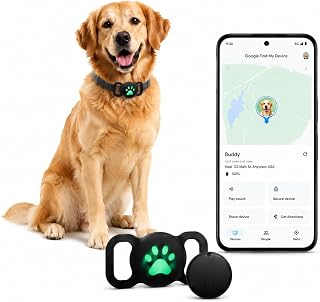 Visit on Amazon → Visit on Amazon →GPS Collar for Dogs Visit on Amazon → |
None | Waterproof, no rating listed | Google Find My tracking, Android only, no monthly fee |
Should you buy the DBDD GPS Dog Tracker?
Yes, if your dog runs where your phone does not. It is the most complete recovery package of the four: real-time location, a virtual fence, health monitoring, and IP67 protection against water and mud. It costs more up front than the two no-fee tags and it adds a monthly plan on top, so run the three-year math honestly before you order.
Should you buy the Molly&Cody Smart Dog & Cat GPS Tracker?
Yes, if you want the recovery features without the top-tier price. The custom virtual fence and the location history are the two things I would not give up on a subscription tracker, and this one has both plus a year of health data monitoring. If your dog is the type that finds the weak spot in a fence line every few months, the fence redraw alone justifies it.
Should you buy the iOS Find My smart collar?
Yes, for a suburban or trailhead dog in an Apple household. It is IP68, it is the slimmest of the four, it comes with a holder, and it will never send you a bill. Just do not expect it to work in a canyon with no other phones around, because that is not what a crowd-sourced network does.
Should you buy the Android Google Find My collar?
Yes, if the searching phone is an Android. No monthly fee, waterproof, and sized for small and large dogs alike. Check the Android-only requirement against every phone in your house first, then treat it as the yard and neighborhood tool it is rather than the mountain tool it is not.