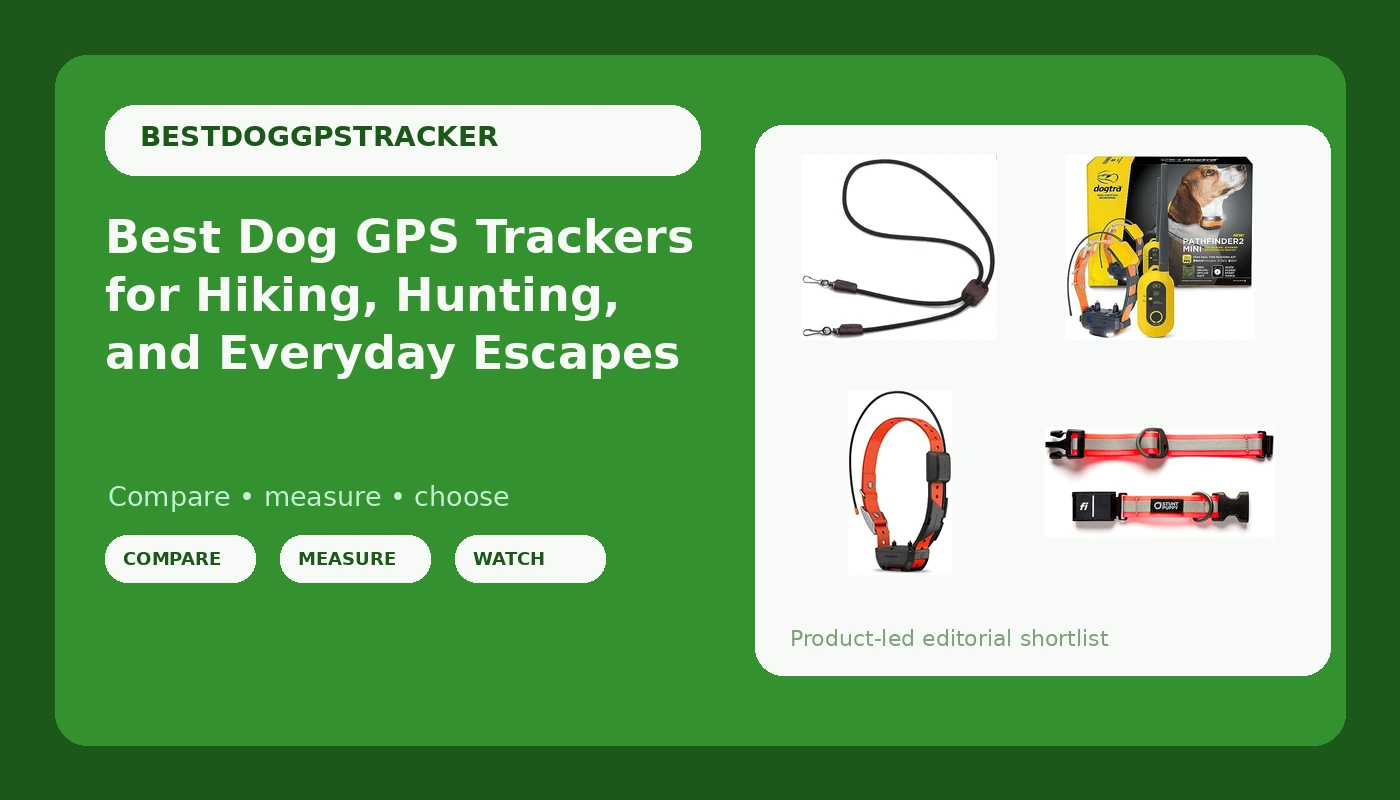
Most people do not go shopping for a dog GPS tracker until the day they wish they already had one. The yard seemed secure, the trail seemed familiar, the recall seemed solid, and then something moved in the brush and the dog was gone. What separates a long range dog GPS tracker that actually helps from a gadget that lives in a drawer comes down to three things: whether it keeps reporting where your dog runs, whether it survives mud, water, and thick cover, and whether the recovery features still work when the battery is low and the sky is full of pine.
This guide looks at six products that come up again and again in that conversation. Two are dedicated tracking and training collars, one is a virtual fence collar that also reports location, one is a low-cost smart tracker, one is a collar built to carry a GPS device you already own, and one is a small piece of handling gear rather than a tracker at all. Everything below stays with what the listings actually state, so you can match the gear to your dog and your terrain instead of to a marketing page.
Related: How to Fit a GPS Collar So It Stays On the Dog
Quick answer
The Dogtra Pathfinder 2 Mini GPS Dog Tracker e Collar is the strongest fit for off-leash trail, hunting, and backcountry work because the listing rates it for up to 4 miles of range, it runs through a free app, and it lists no monthly fees. Choose the GPS Tracker for Dogs, Smart Dog Tracker with Real-Time Location instead when you want the lowest-cost way to try live location tracking, and choose the Stunt Puppy Dog Collar, Fi Series 3 and 3+ Ready when you already own a Fi device and only need a reflective collar to carry it.
Dog GPS trackers and tracking gear worth comparing
Six products, six different jobs. Compare them on range, coverage type, subscription terms, and how they attach before you compare them on anything else.
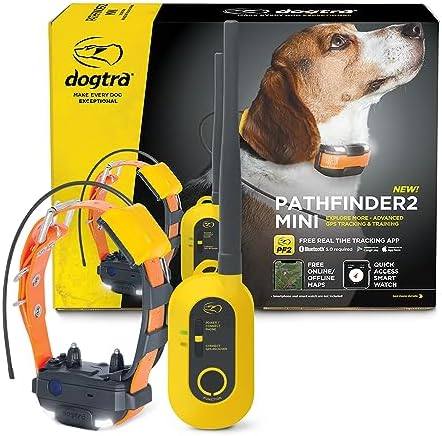
Dogtra Pathfinder 2 Mini GPS Dog Tracker e Collar 4 Mile Long Range LED Light No Monthly Fees Free App Waterproof Smartwatch Control Based Real Time Tracking Multiple Dogs Smartphone Required
A tracking and training collar rated by the maker for up to 4 miles of range, with a free app, no monthly fees, smartwatch control, and support for multiple dogs. The listing states it is waterproof and includes an LED light for finding the dog after dark. A smartphone is required.
Visit on Amazon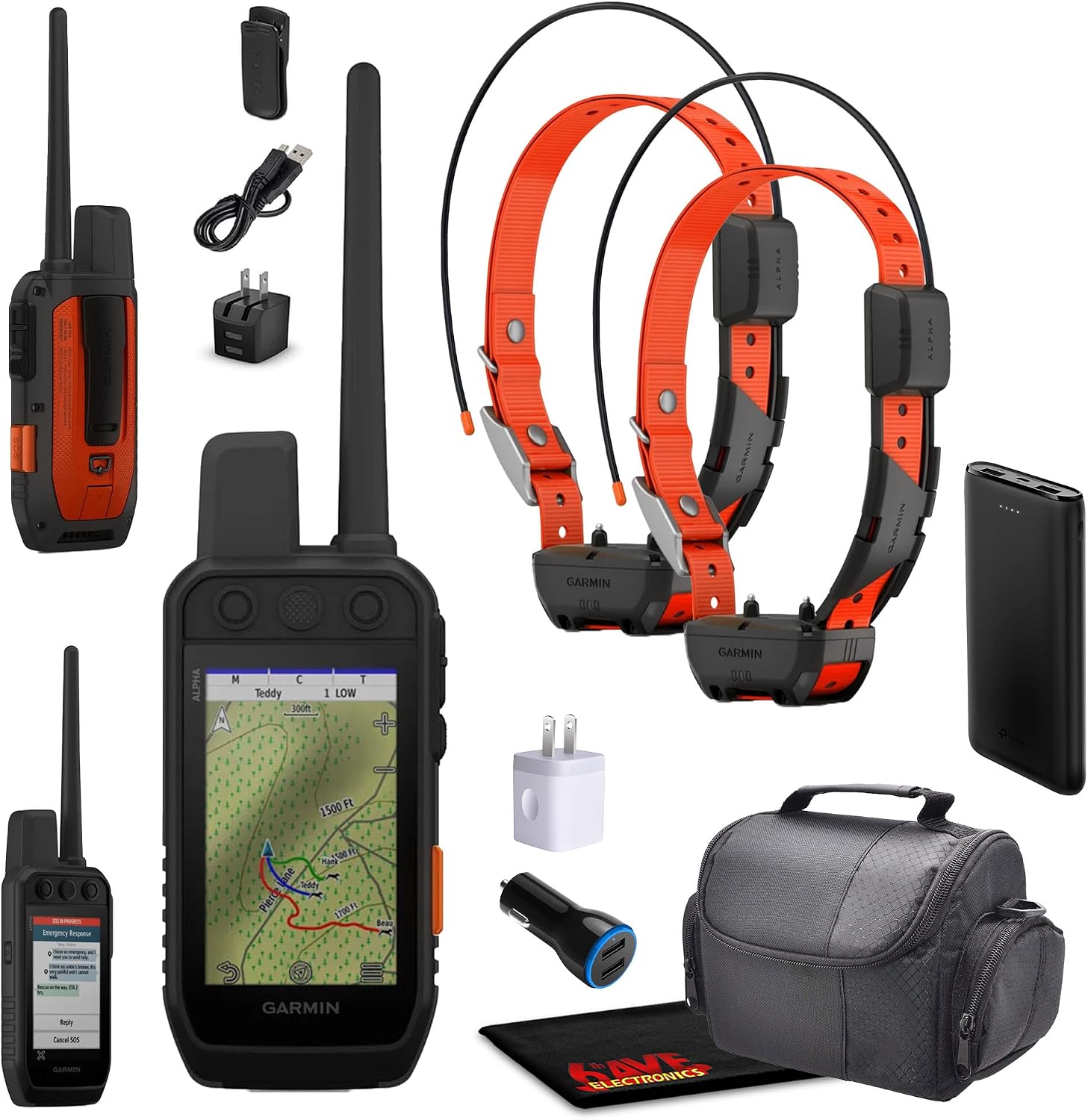
Garmin Alpha® TT 25, GPS Dog Tracking & Training Collar
A GPS tracking and training collar from Garmin's Alpha line. Check the listing to confirm which handheld or app the collar pairs with and whether a handheld is included, because that pairing is the system.
Visit on Amazon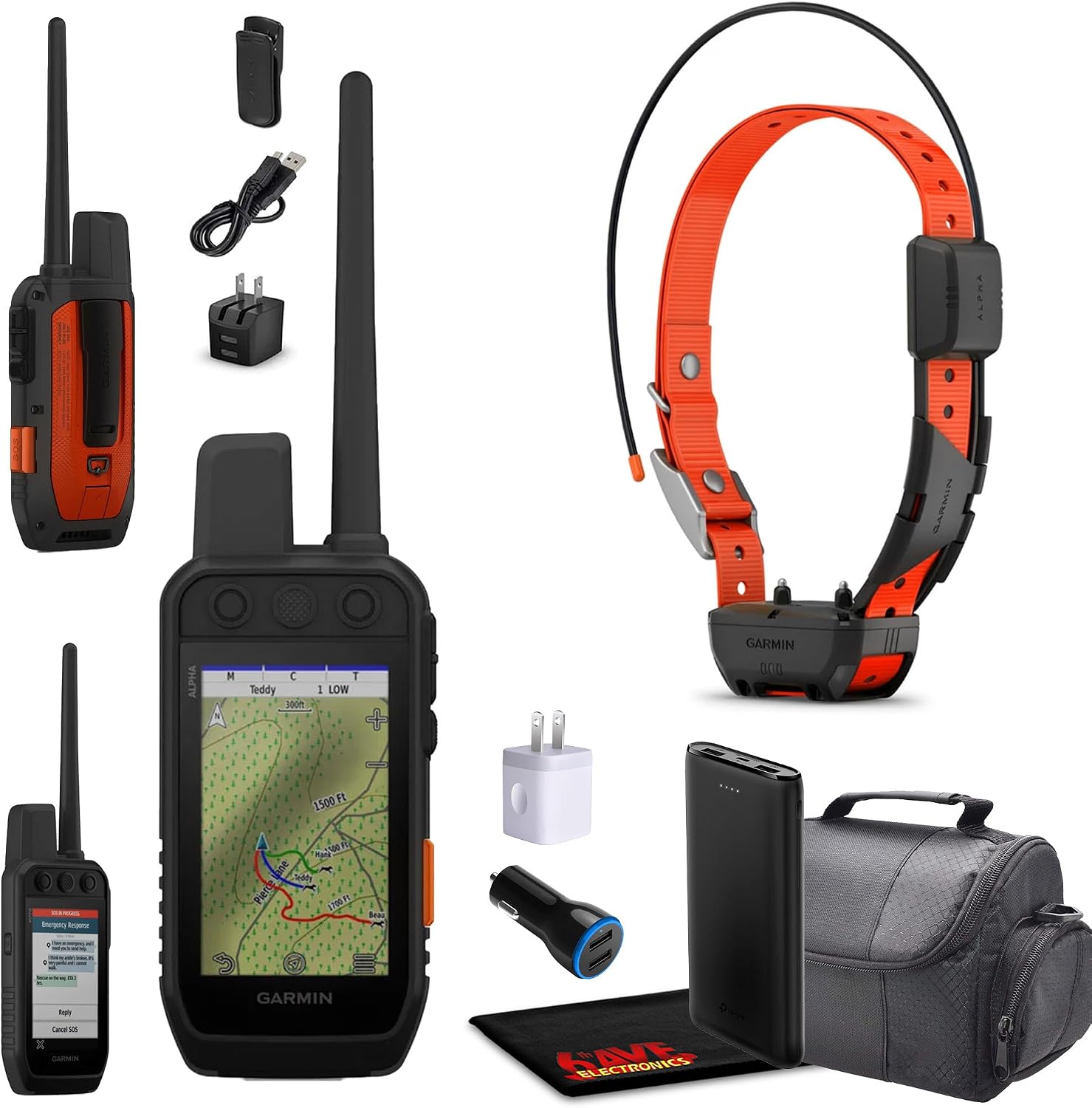
MeeXH GPS Wireless Dog Fence Collar, Smart Dog Tracking Collar with App-Controlled Custom Virtual , Real-Time GPS Tracker for Dogs, Escape Alerts with Sound & Vibration Guidance, Waterproof
Check current Amazon price
A waterproof collar that combines an app-controlled virtual fence with real-time GPS tracking. The listing describes custom boundary setup, escape alerts, and sound and vibration guidance rather than a sharper correction.
Visit on Amazon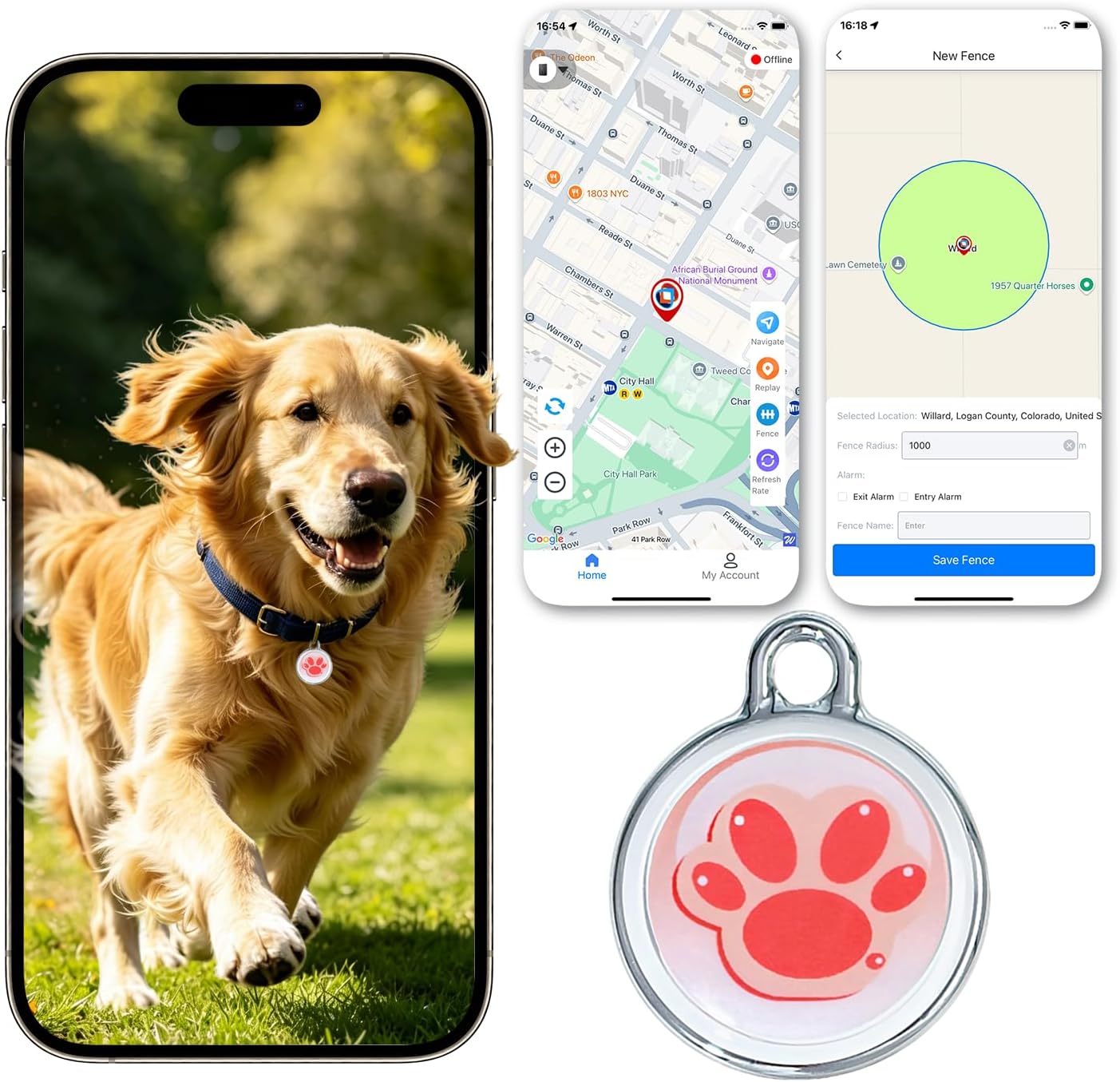
GPS Tracker for Dogs, Smart Dog Tracker with Real-Time Location
Check current Amazon price
A low-cost smart dog tracker that advertises real-time location. Confirm on the listing how it connects, whether any service plan applies, and what accessories ship in the box before you rely on it.
Visit on Amazon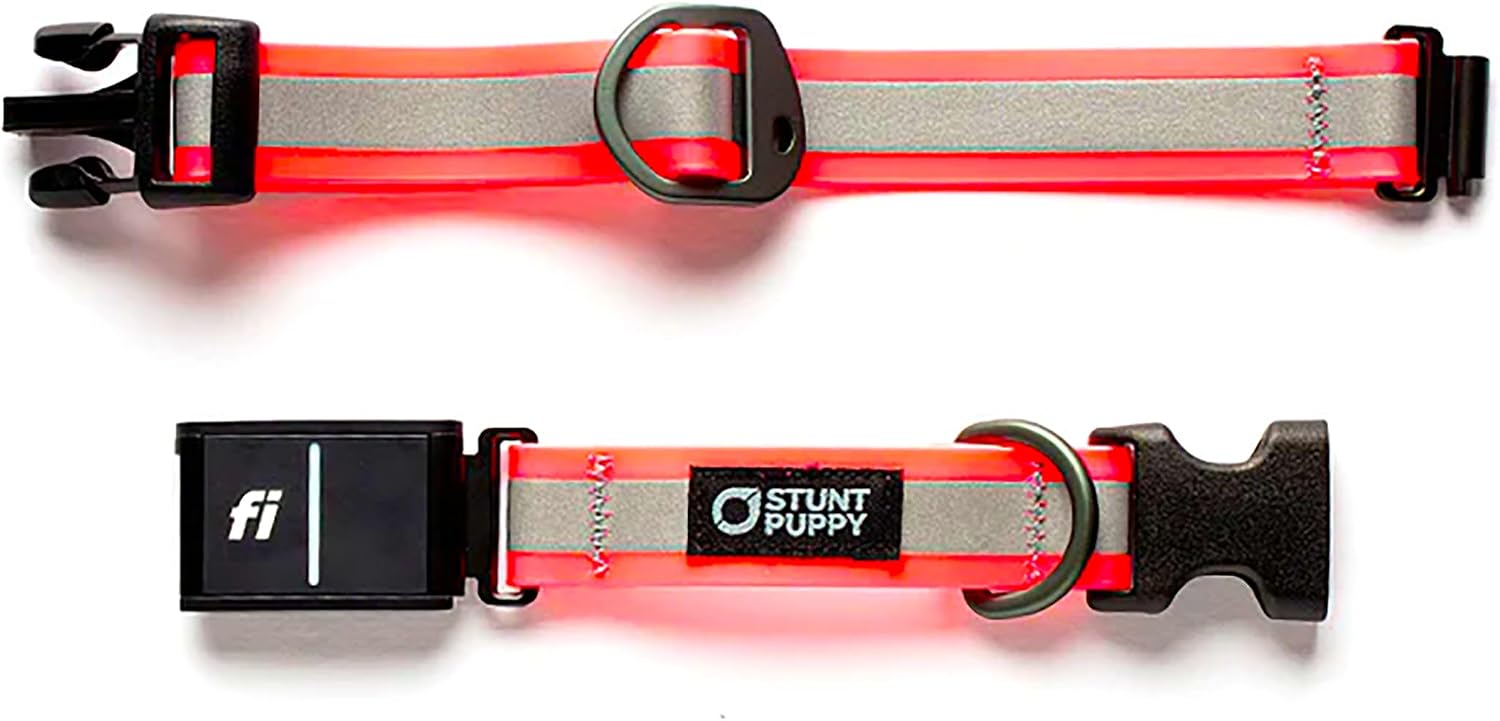
Stunt Puppy Dog Collar, Fi Series 3 and 3+ Ready, Small, Reflective Pink - Compatible with Fi GPS Device (Not Included)
A small reflective pink collar built to hold a Fi Series 3 or 3+ GPS device. The tracker is not included, so this is the collar solution for an owner who already has the device.
Visit on Amazon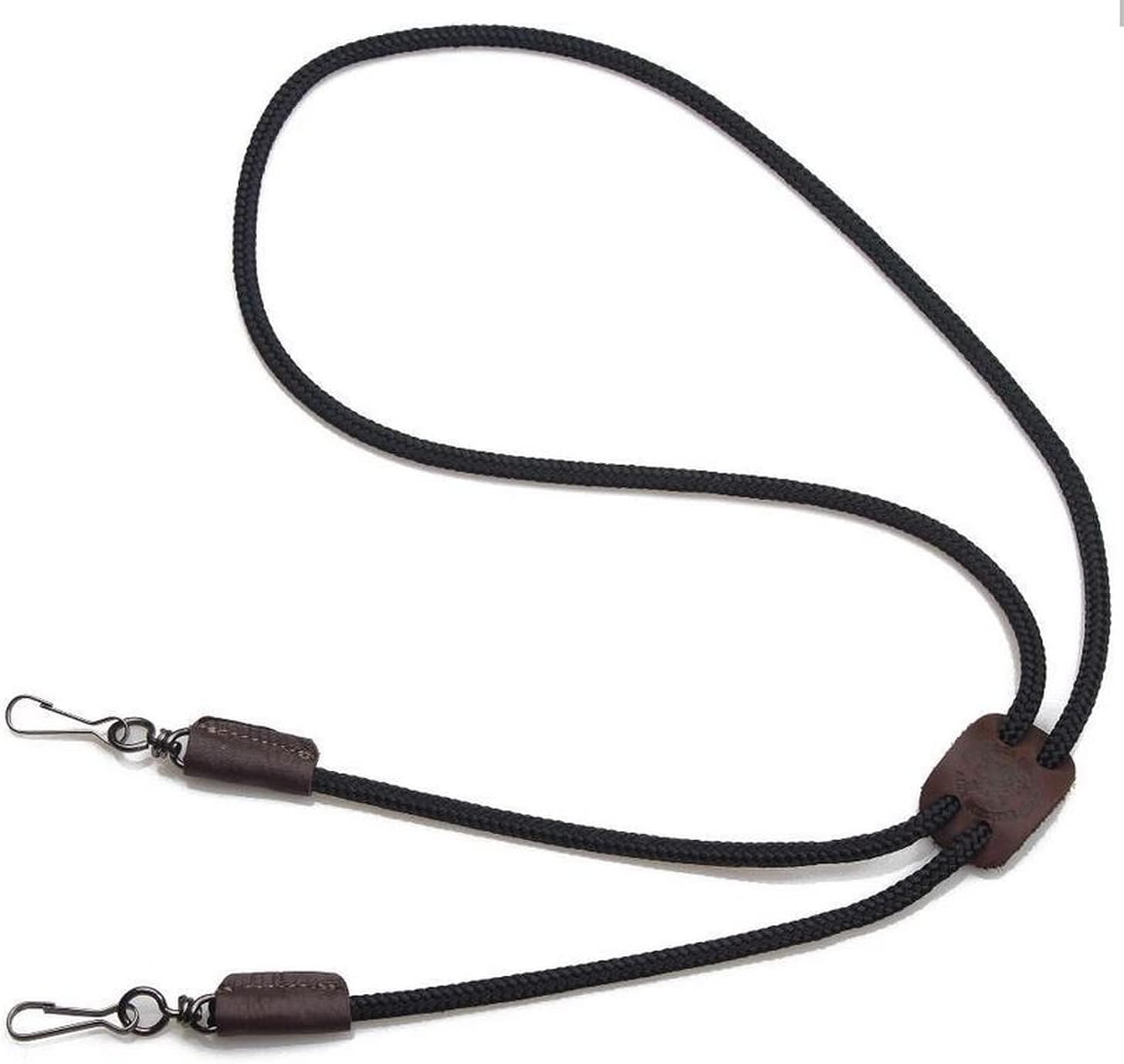
Mendota Pet Lanyard - Whistle Lanyard - Made in USA - Black, 30 in (Double)
A made in USA 30 inch double whistle lanyard in black. It is handling gear rather than electronics, and its job is to keep a whistle or a small handheld where your hand expects it.
Visit on AmazonPrices and availability may change. Check the retailer for current details.
How these products were compared
No two of these products solve the same problem, so the comparison here is built from the published product information rather than from a single score. Five things did the sorting:
- Stated range and how the device communicates, meaning whether it needs cellular coverage, a paired handheld, or a virtual boundary to be useful.
- Subscription terms, since a monthly fee changes the three-year cost far more than the hardware price does.
- Attachment and fit, because a tracker that slips off in thick brush is worse than no tracker at all.
- Included accessories, since one product here is a collar that holds a device and another is a lanyard rather than a tracker.
- Durability claims, including waterproof ratings where the listing states one.
Every card matches one product name, one image, and one retailer link to the same item, and the link points at that exact product. Prices and availability move around constantly, so nothing here prints a price. Use the link on any card to confirm the current price, what is in the box, and the return terms before you buy.
How to choose the right dog GPS tracker
The first question is not brand, it is how the tracker talks to you. A collar that depends on cellular coverage is only as reliable as the nearest tower, and towers get thin in canyons, river bottoms, and dense pine. Devices that communicate over their own long range radio link or report without a cell signal keep working past the point where your phone shows no bars. Match the coverage type to the terrain your dog actually runs in. A suburban escape artist who slips the gate needs a live location ping and an alert. A hunting dog working a quarter mile of cover needs range, a light you can see at dusk, and a handheld or app that holds up when the screen is wet and your hands are cold.
The second question is cost over time, and it is the one most buyers get wrong. A tracker with a monthly plan can cost more across three years than the hardware itself, so add any subscription to the purchase price before you decide which option is cheaper. If you would rather not carry another recurring bill, prioritize the products whose listings state no monthly fees, and read the fine print on any plan that auto-renews. If you already pay for a service and want to know how fit affects reliability, the guide on fitting a GPS collar so it stays on the dog covers the part of the problem no app can fix.
The third question is fit and attachment. Trackers fail at the collar, not at the satellite. Measure your dog's neck, leave room for a snug two-finger fit, and check the mount or pouch every time the collar comes off. A device that swings loose catches brush, and one that is too tight on a growing dog rubs the coat raw.
Dogtra Pathfinder 2 Mini GPS Dog Tracker e Collar
The Pathfinder 2 Mini is the pick here because of what its listing promises and what it does not require. Dogtra rates it for up to 4 miles of range, which is the kind of distance that matters when a dog is working open country and you are standing still. It pairs with a free app and is controlled from a smartphone, and it can also be driven from a smartwatch, a small convenience that turns into a real one when your hands are full of leash, whistle, or gun. The listing states no monthly fees, so the three-year math does not keep climbing after you buy it.
It is also built for the conditions that kill lesser gear. The collar is waterproof, and it includes an LED light, which is the feature that matters most after dark: a light you can switch on from the app turns a black dog in black timber into something you can see. The system supports multiple dogs, so a two-dog household or a handler running a brace does not need two separate receivers.
The trade-off is honest. This is a training collar as well as a tracker, and it needs a smartphone to get the most out of it. If you have no interest in remote training features, you are paying for capability you will not use, and a simpler tracker or a collar that carries a device you already own may suit you better. If you want a self-contained unit that works without a phone in your pocket, look at a handheld-based system instead. For most trail and field handlers, though, the combination of range, no recurring fee, and a light you can trigger is the right one.
Alternatives to consider
The Garmin Alpha® TT 25, GPS Dog Tracking & Training Collar is better suited to handlers who already work inside Garmin's Alpha line and want tracking and training from a brand with a deep, well documented ecosystem. Before buying, confirm on the listing which handheld or app the collar pairs with and whether a handheld is included, because that pairing is the whole system.
The MeeXH GPS Wireless Dog Fence Collar is a stronger fit when the main risk is a boundary rather than a horizon. Its listing describes an app-controlled virtual fence, real-time GPS tracking, escape alerts, and sound and vibration guidance in a waterproof collar. That makes it a reasonable choice for a yard, a camp, or a pasture where you want a warning as the dog approaches the line. It is not a substitute for a long range radio collar, and the guidance it uses is sound and vibration rather than anything sharper, which is worth knowing if that distinction matters to you.
The GPS Tracker for Dogs, Smart Dog Tracker with Real-Time Location covers the low-cost end of the category. It is the least expensive way on this list to try live location tracking, and it is a sensible first step for an owner who wants a location ping and an alert rather than a full training system. Check the listing for how it connects and whether a service plan applies, since budget trackers vary widely on that point.
The Stunt Puppy Dog Collar, Fi Series 3 and 3+ Ready covers a different job entirely: it is the collar, not the tracker. If you already own a Fi Series 3 or 3+ device, this small reflective collar is built to hold it, and reflective webbing is a genuine safety feature on evening walks. The GPS device is not included, so budget for it separately.
The Mendota Pet Lanyard is the smallest item here and the one that is not a tracker at all. It is a made in USA double whistle lanyard in black, 30 inches, and its job is to keep a whistle or a small handheld where your hand expects it while you work a dog. Buy it if you already run a whistle, and skip it if you are shopping for electronics.
Day-to-day use and maintenance
Battery duty cycle is the whole product. Charge the night before, not the morning of, and keep a short charging cable in the vehicle so a dead tracker does not end a trip early. Trackers that report live location constantly drain faster than trackers that report on an interval, so decide before you leave whether you need a continuous breadcrumb trail or a last known location you can act on. Test the LED light and the alert features once a month at home, where a failure is annoying instead of serious.
Wash and inspect. Mud, salt, and pine sap are hard on webbing and on charging contacts. Rinse the collar in fresh water after a swim in a lake or the ocean, dry it before charging, and check the mount or pouch for cracks or stretched stitching. Recheck the fit every few weeks, especially on a young dog, and look at the attachment point after any run through heavy brush.
No tracker replaces training or identification. Keep a plain ID tag and a registered microchip on every dog, because a tracker can be lost, drained, or out of range, and a neighbor with a phone is often faster than an app. Practice the recovery routine before you need it: know where last known location appears in the app, know how to switch the collar light on, and know what a geofence alert sounds like. A boundary cue from a virtual fence collar is a reminder, not a physical barrier, so pair it with a real fence or a long line while your dog learns the line.
Buying checklist
- Measure your dog's neck and the clearance the collar needs for the tracker, leaving a snug two-finger fit.
- Choose range and coverage type based on normal use rather than an occasional edge case, and be honest about whether your dog runs where cell service ends.
- Confirm that the exact model includes the accessories you are counting on, such as a charging cable, a handheld, or the GPS device itself.
- Add up three years of any subscription before you compare hardware prices.
- Read the cleaning and maintenance instructions for the collar and the charging contacts.
- Verify the current retailer price, availability, and return terms.
Final recommendation
Choose the Dogtra Pathfinder 2 Mini GPS Dog Tracker e Collar when your dog works off leash in open country and you want up to 4 miles of stated range, a light you can trigger, and no monthly fees. Choose the Garmin Alpha® TT 25 when you are already invested in Garmin's Alpha ecosystem and want tracking and training in one collar, and choose the MeeXH GPS Wireless Dog Fence Collar when the risk you are managing is a boundary rather than a horizon. If you already own a Fi device, the Stunt Puppy Dog Collar is the straightforward fix, and the GPS Tracker for Dogs, Smart Dog Tracker with Real-Time Location is where to start if budget is the deciding factor. If the honest answer is that your dog never leaves a fenced yard, put the money into recall training first and come back to trackers when the terrain changes.