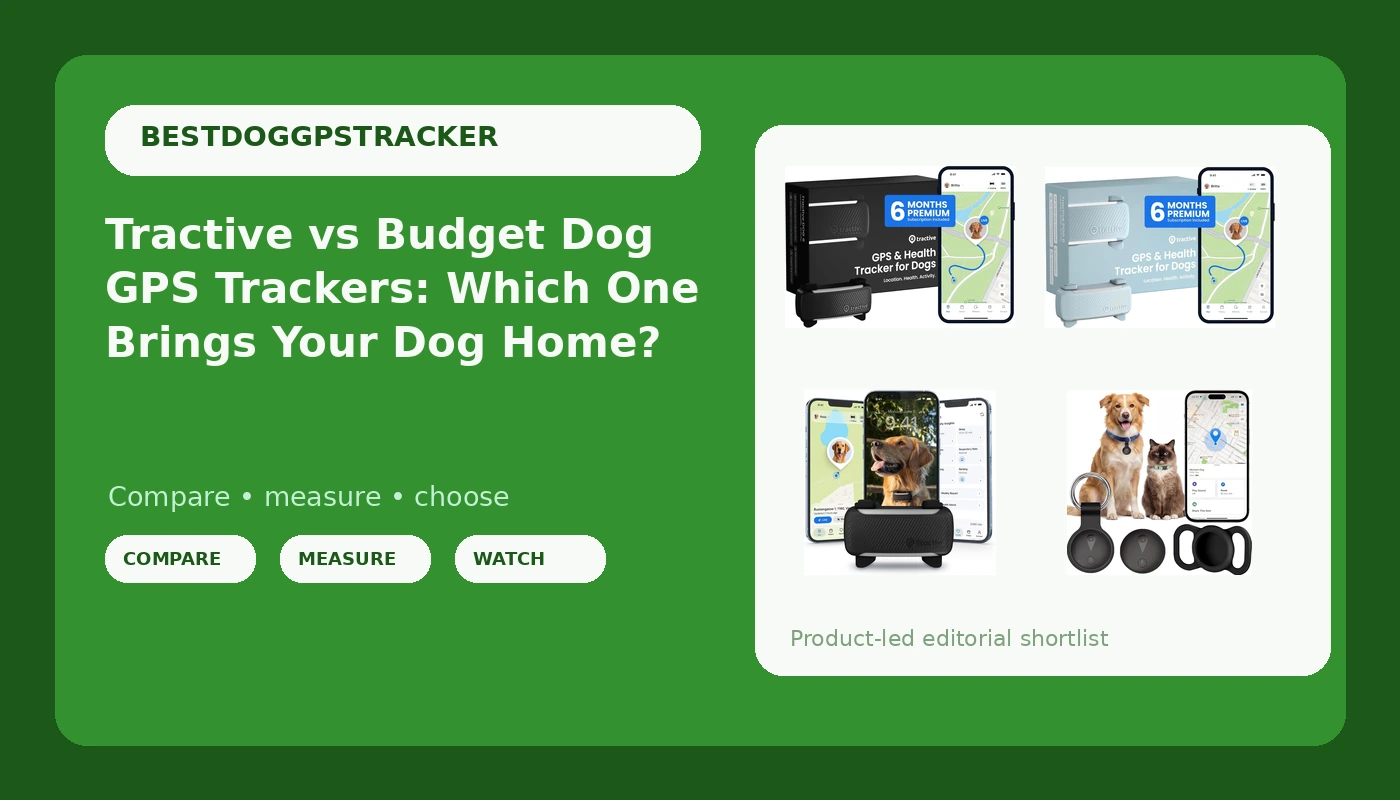
I lost a dog for eleven hours once, and the tracker I was carrying that day did not find him. My husky slipped through a gap in a fence line in the Deschutes National Forest, and the search ended with a neighbor's phone call, not with the app on my phone. That day is why I own a shelf of these devices, why I read product listings like legal documents, and why I keep a log of which units tell the truth about coverage. This dog GPS tracker comparison is the version of that log I would hand to a friend at the trailhead.
Here is the short answer before the details. For most dog owners, a Tractive unit with the included six-month subscription is the one I would buy, because the features that actually bring a dog home are the recovery features: a virtual fence, a live map you can hand to a search party, and a health baseline you can read at a glance. The budget collar in this lineup is a different animal, and I will tell you exactly where it stops being useful.
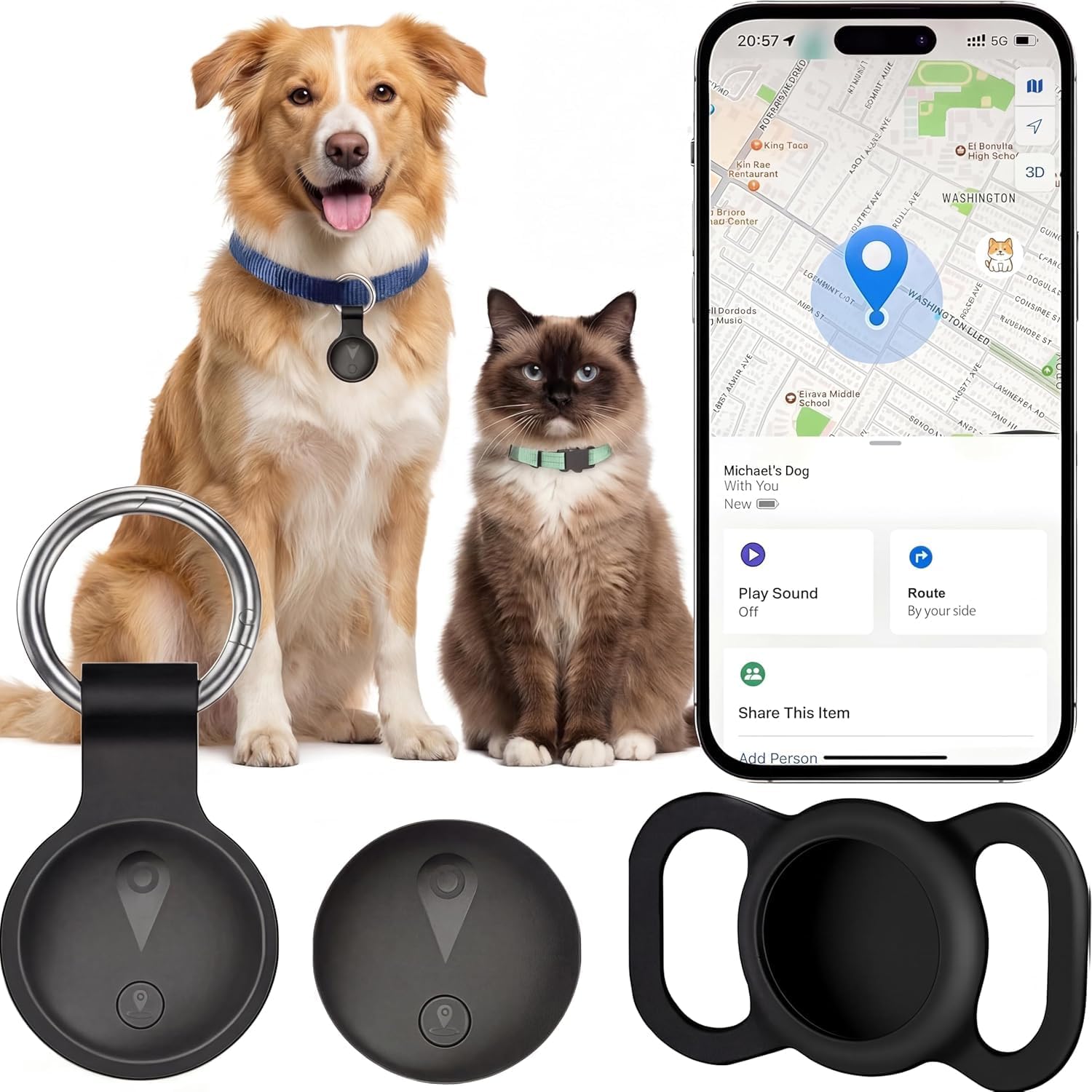
GPS Tracker for Dogs, Smart Collar with Real-Time Locator with Holder
Lowest cost of entry, simplest setup, holder included in the package
The listing promises a real-time locator and says nothing about coverage, battery life, or recovery alerts
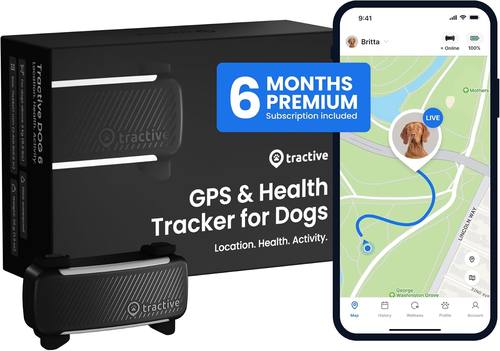
Tractive Smart Dog GPS Tracker with 6 Month Subscription (Black)
Six months of subscription included, virtual fence, vital signs and bark monitoring, collar attachment
Black shell only, and the two colorways do not always price the same
Tractive Smart Dog GPS Tracker with 6 Month Subscription (Mint)
Same tracker and same included subscription as the black version, in a lighter shell
Color is the only difference, so there is no feature reason to pick one over the other
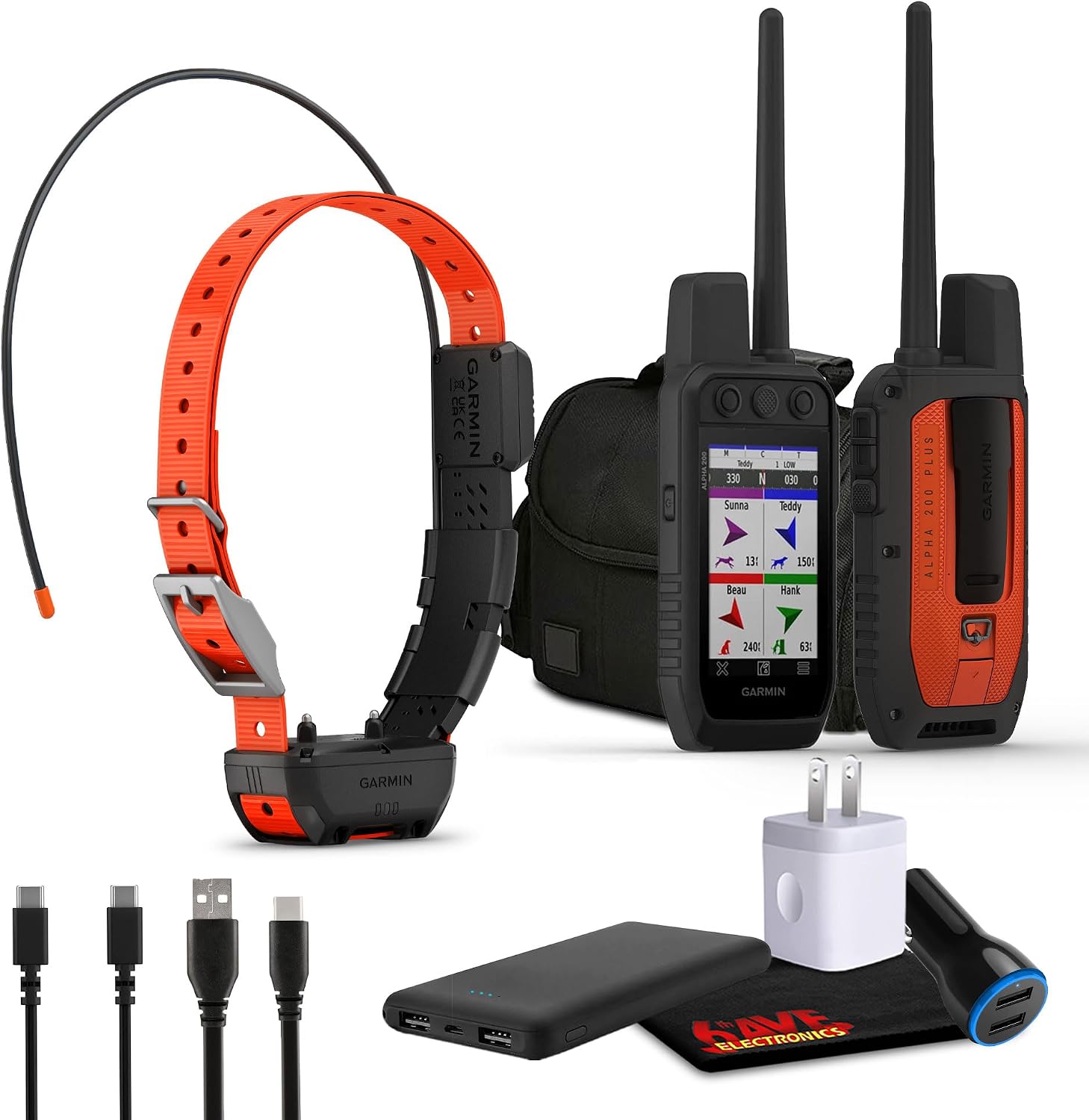
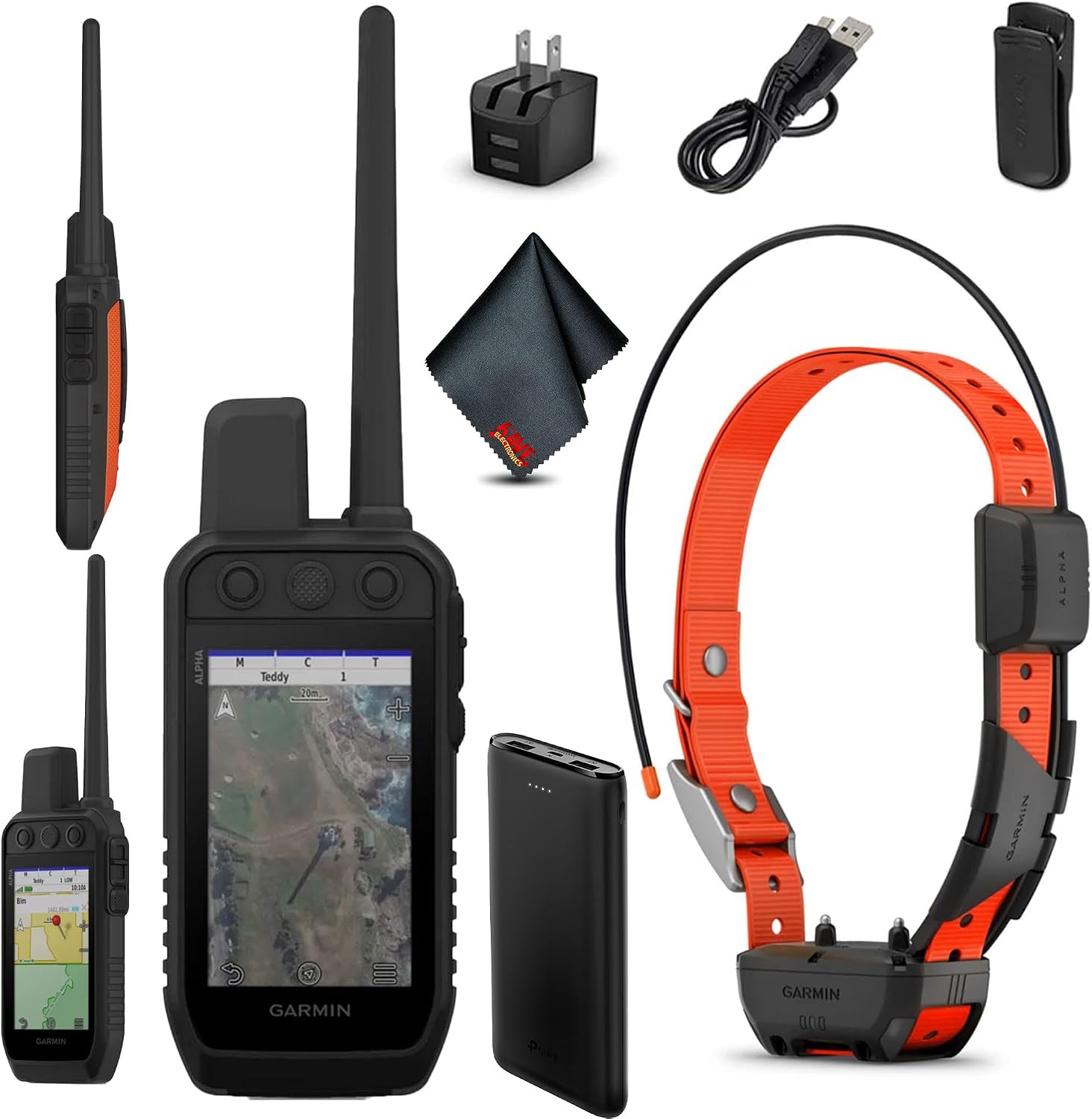
Tractive XL Smart Dog GPS Tracker (Black)
Up to six weeks of battery life claimed, XL housing for bigger dogs and thicker collars
The bulkiest option here, and no second colorway is listed
Prices and availability were captured from Amazon Creators API and may change.
How I judge a dog tracker
Four things, in this order, and none of them are the animation quality of the app.
Coverage honesty. A tracker that needs a cell tower is a leash, not a lifeline. In the canyons and pines where I train, there are miles with no bars, so what matters is whether a unit can hold a satellite lock and report a last known location that is genuinely the last known location. When a listing is silent on coverage, that silence is information.
Battery duty cycle. Battery life is the whole product. A tracker that dies on the second day of a backcountry trip is a rock with a subscription attached. I want a stated number, and I want it to be honest at the end of its range, not just at the start.
Attachment. I have found two trackers in the woods that were not on dogs. Collar fit and the attachment method matter more than any dashboard feature, because a tracker in the brush is worse than no tracker at all.
Recovery features. Live tracking is a party trick. The features that matter are the ones that work when the dog is out of sight: a virtual fence alert, a last known location pin, and a light you can trigger at night. Everything else is marketing.
Tractive Smart Dog GPS Tracker, black and mint
The black Tractive listing is the most complete package in this comparison. You get the tracker, a dog collar attachment, and six months of subscription included, which matters because the subscription is normally the part nobody budgets for. The feature list is the one I care about: live tracking, a virtual fence, vital signs monitoring of heart and respiratory rate, and bark monitoring.
Two of those features are worth more than they sound. The virtual fence is a recovery tool, not a containment tool. I do not use it to keep a dog in a yard; I use it to get an alert the moment a dog leaves the boundary I set, which is the difference between a ten-minute search and an eleven-hour one. And the health baseline is the quiet win of this generation of trackers: a resting heart and respiratory rate you can compare against a normal day tells you something is wrong before the dog tells you.
The mint version is the same tracker, the same subscription, the same attachment, and the same feature set. The shell color is the only difference. That sounds trivial until you are on a checkout page trying to work out why two listings that read identically do not have the same number next to them. They do not always move together, so check current Amazon price on both colorways before you commit. If one is the better deal the day you buy, take that color. Your dog does not have a color preference.
Tractive XL Smart Dog GPS Tracker
The XL is the version I would put on a big dog or a dog that spends long days outside. It carries the same recovery feature set as the standard Tractive, with the same virtual fence, live tracking, vital signs and bark monitoring, plus one claim that changes the math: up to six weeks of battery life.
Six weeks is not a small number in this category. It changes how you live with the device. A tracker you charge weekly is a chore you will eventually skip, and a tracker you forget to charge is the exact failure mode that turns a bad afternoon into a bad week. The trade-off is size. The XL housing is bigger, and on a small or medium dog that bulk is noticeable on the collar. If your dog is small and wears a slim collar, the standard Tractive is the better physical fit even though the XL wins on battery.
Worth noting too: only the black XL shell is listed here. If color coordination with a harness matters to you, that decision is made for you.
GPS Tracker for Dogs, Smart Collar with Real-Time Locator with Holder
This is the budget entry, and I want to be fair to it. It is a smart collar with a real-time locator and a holder, and for a dog that stays in a fenced yard inside a dense suburban cell network, a locator that reports a position is better than nothing.
Here is my problem with it, and it is not the brand. The listing does not tell you what you are actually buying. There is no stated coverage technology, no stated battery life, no subscription terms, and no recovery features such as a virtual fence or a last known location pin. Those four omissions are the whole ballgame. When I am choosing a tracker for a dog that can clear a fence, I need to know whether the unit holds a satellite lock, how long it runs, and what happens at the moment the connection drops. A product page that skips all three has not answered the questions I care about.
That is not a knock on the price point. There is a real place for inexpensive hardware, and if your dog's world is a yard and a sidewalk, you may never need the rest. But if you are buying a tracker because your dog has already run once, this is not the listing I would trust with that job. Read the reviews for coverage complaints before you buy, and be honest with yourself about where your dog actually goes.
The subscription is the real price tag
Nobody wants to hear this, so I will say it plainly. The hardware is not the cost of ownership. The plan is. Subscriptions in this category commonly run in the range of ten to fifteen dollars a month, which adds up to hundreds of dollars over three years, and that is more than the tracker itself in most cases.
This is why the Tractive listings here are interesting: six months of subscription is included, which gives you a real trial period of the recovery workflow before you decide whether to keep paying. Use those six months properly. Set a virtual fence you would actually want an alert from. Walk the boundary. Trigger a test alert and see how long it takes to reach your phone. Learn what the last known location pin looks like on the map, so the first time you see it is not the first time you need it.
Also check how the plan renews. Auto-renewal you did not expect is one of the fastest ways to sour on a tracker you otherwise like. Put the renewal date in your calendar the week you activate it.
Fit and attachment are where trackers fail
I keep coming back to this because it is the failure I see most in the field. The attachment on the Tractive units is a collar mount, which is the right approach: it sits on the collar you already trust rather than on a flimsy clip that pops off in thick brush. Check the collar width and the weight of the unit against your dog's neck before the first hike, and give it a shake test in the yard. If a tracker can come off when your dog shakes off water, it will.
For the budget collar, the holder is part of the package, which is at least a sign the manufacturer thought about attachment. Fit it, then test it.
Which one I would put on which dog
- A dog that has already escaped, any size: a Tractive with the included six-month subscription. The virtual fence and last known location are the features you are paying for, and the mint or black choice is purely about which colorway is priced better that day.
- A big dog, a working dog, or a dog that is outside for days at a time: the Tractive XL. Up to six weeks of battery is the spec that keeps the tracker alive long enough to matter.
- A dog that never leaves a fenced yard in a city: the budget collar is defensible, as long as you have read the coverage complaints in the reviews and accepted the limits.
What I am watching next
I think the subscription model is the part of this category that breaks first. As satellite-direct trackers get cheaper, the monthly plan stops being the only way to keep a dog on the map, and I would not be surprised to see more a la carte coverage options show up within a few years. Watch the battery chemistry, not the app animations. The tracker that lasts weeks on a charge and reports honestly at the edge of coverage is the one that will still be on my dogs in 2029.
Until then, the rule I give every owner who asks me at the trailhead is the same one I learned the hard way. Buy the tracker with the recovery features, test the geofence before you need it, and check current Amazon price on every colorway before you check out. The eleven-hour search that ended with a neighbor's phone call could have ended in twenty minutes. That gap is what you are actually shopping for.