I have paid for three tracker subscriptions in four years and cancelled all three. Not because the tracking was bad, but because the math never worked: a monthly fee that runs forever, attached to a device my dog wears maybe 40 hours a month. So when readers ask me for a dog GPS tracker no monthly fee, I understand the appeal down to my bones. The catch is that "no monthly fee" describes a business model, not a technology, and the technology inside these four trackers is not the same thing twice.
I spend my weekends in the Deschutes National Forest with a search-and-rescue team and my own husky, who has escaped three times and once stayed gone for 11 hours. The tracker did not find him that night. A neighbor did. That failure shapes how I read every tracker listing now. I care less about the map on the app and more about what happens at hour 12, in a canyon, with no cell bars and nobody else around.
So this is the honest comparison. Four no-subscription trackers, two genuinely different radio technologies, and one conclusion that will annoy anyone shopping for a backcountry lifeline.
The best no-subscription pick for most suburban and small-town dog owners is the GPS Tracker Collar with the 365-day battery claim, because battery life is the only spec that matters when you are not there to charge it. The only unit here that needs no phone network at all is the Tabcat V2, and it is built for cats, not for a dog on a trail.
The four trackers, side by side
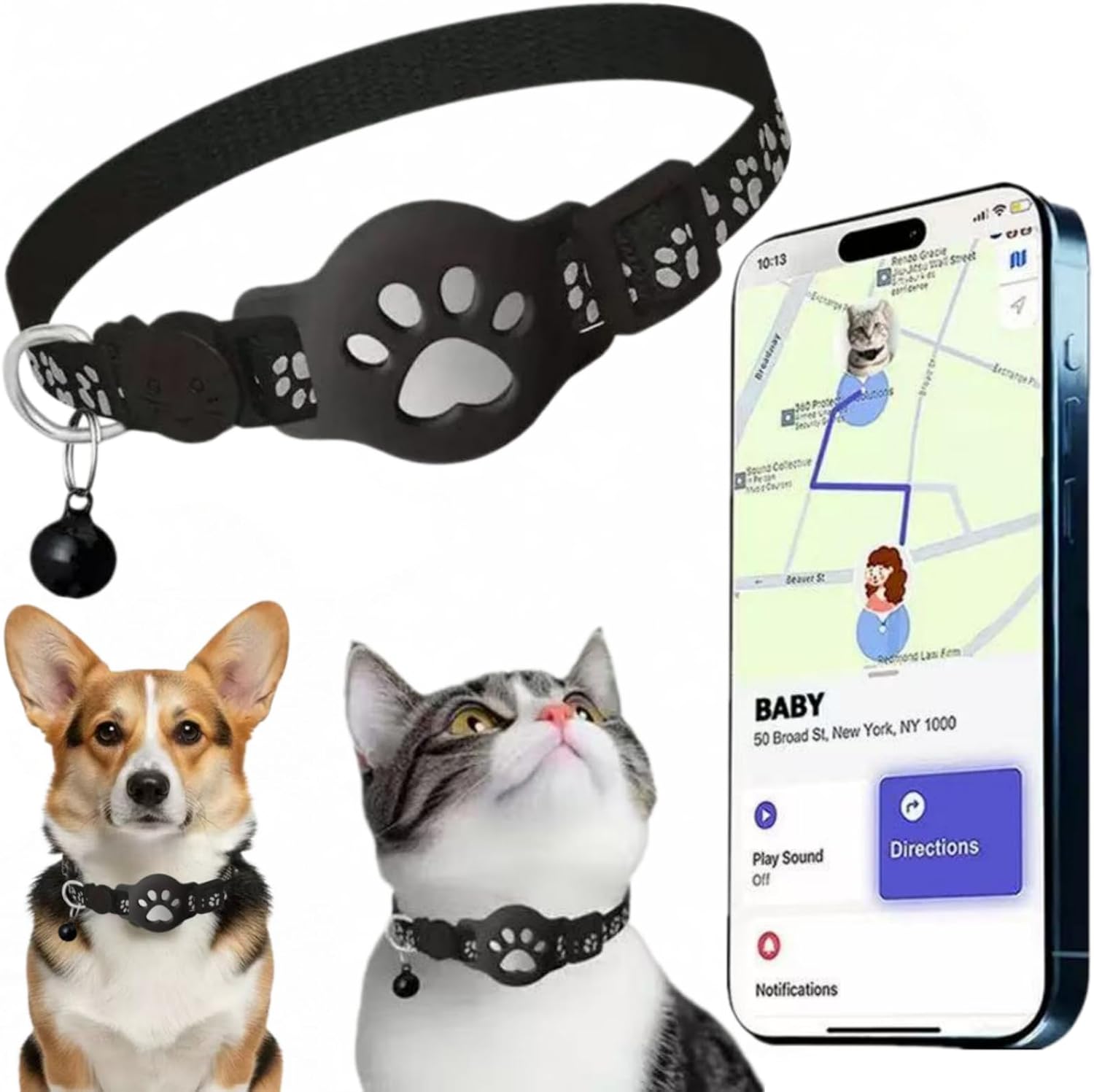
GPS Tracker Collar for Dogs, Cats & Pets, 365-day battery (Black)
The longest battery claim of the four, IP67, Apple Find My, no monthly fee
A one-year battery claim is the hardest spec to verify and the easiest to inflate
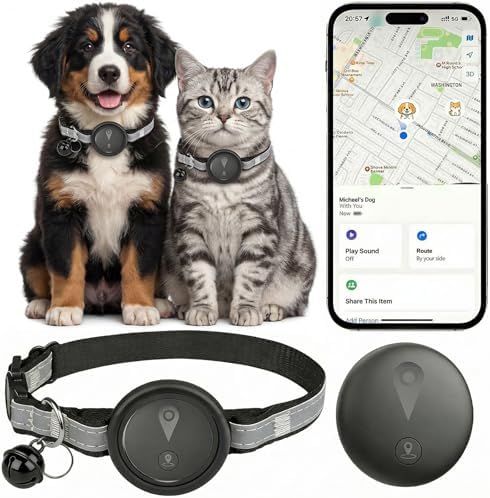
GPS Pet Tracker for Dogs & Cats, Apple Find My, IP68 Waterproof
The best water rating in the batch, Find My compatible, no monthly fee
The listing never states battery life, which is the first number I look for
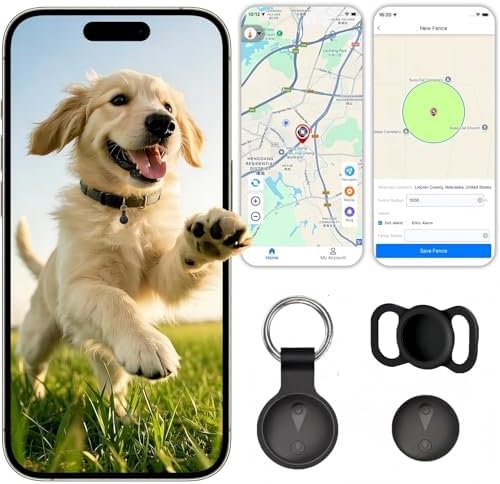
Tracker for Small, Medium, and Large Pets
Universal fit language, no subscription, no locked-in monthly plan
The listing does not say which radio it uses, how it is charged, or what it weighs
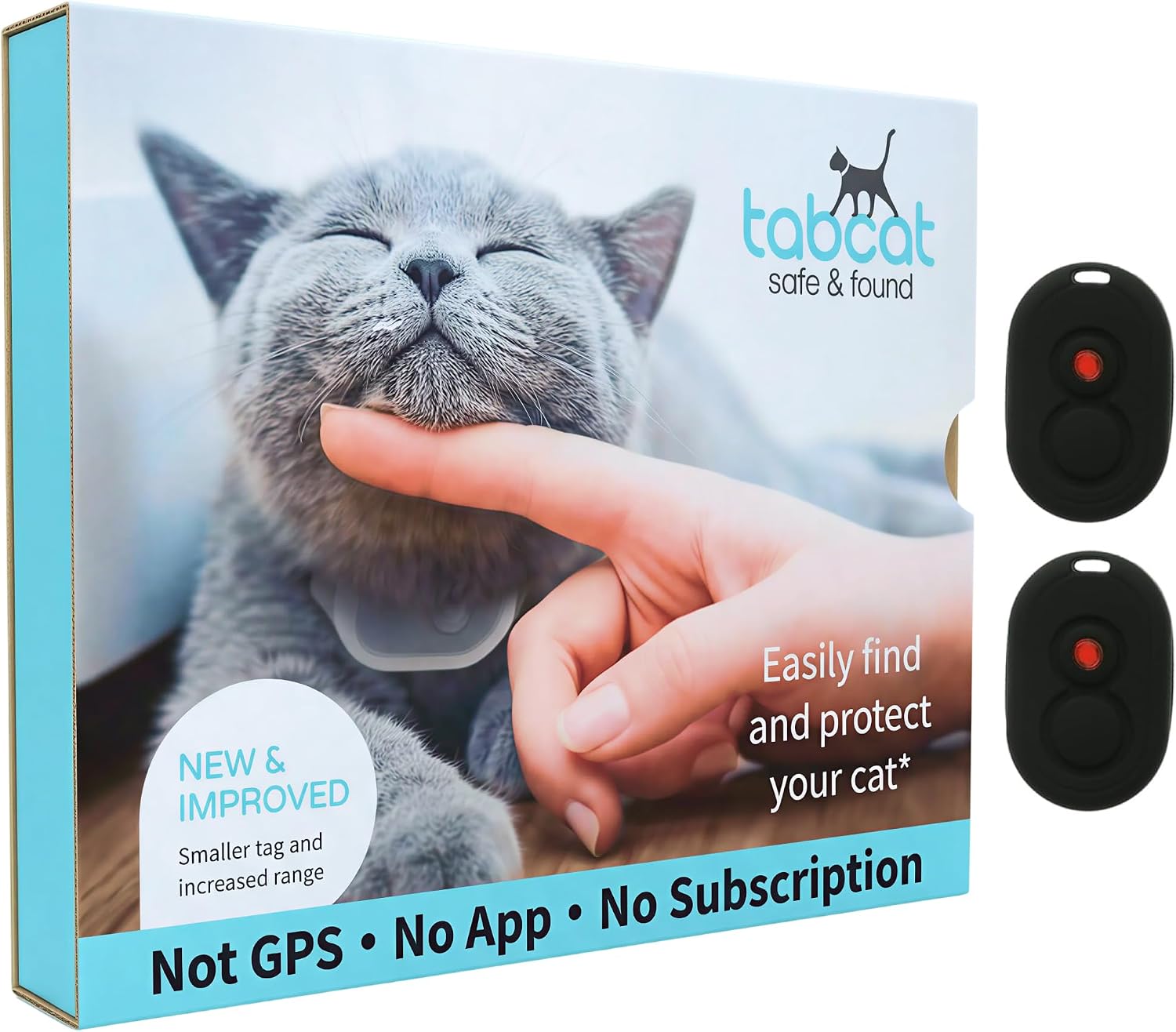
Tabcat V2 Cat & Kitten Tracker with 2 homing tags
Radio homing, works with zero phone signal, two tags included, 150m range
150m is a yard and house range, not a trail range, and it is designed for cats
Prices and availability were captured from Amazon Creators API and may change.
Two radios, two completely different failure modes
Three of these four trackers work through Apple's Find My network. The fourth, the Tabcat V2, does not touch a phone network at all. That single difference matters more than every other spec combined.
Find My trackers do not talk to satellites. They broadcast a short-range signal, and any nearby Apple device that hears it quietly uploads an approximate location. In a subdivision, that is a dense web of iPhones and the system works surprisingly well. Standing in a canyon 12 miles from a trailhead, the network is only as good as the number of iPhones within earshot, which is usually zero. The tracker is still broadcasting. Nobody is listening.
Tabcat goes the other direction. It is a radio homing system: the tag emits a signal, and the handheld unit tells you which way it is coming from. That is old, unglamorous technology, and it is genuinely useful because it needs no towers, no satellites, and no strangers' phones. Its limit is printed right in the product name. Up to 150m is a house, a yard, and a couple of blocks. It is not a national forest.
This is the part of the category that makes me grind my teeth. "No monthly fee" and "no coverage needed" are not the same promise, and listings blur them constantly. A tracker with no subscription that depends on a phone network is still dependent on coverage. You just stopped paying for it monthly.
What Apple Find My compatibility actually buys you
Find My compatibility is a real feature, and it is also a marketing phrase that hides a limitation. It means the tracker can be located by the Find My network, which is the same network that finds lost AirTags. That network is enormous in cities and thin to nonexistent where I actually work.
For a dog in a fenced suburban yard, that is plenty. For a dog that bolts into open country, it is a coin flip. I have watched a handler stand on a ridge with full bars on her phone and zero usable location on the tracker, because bars on your phone have nothing to do with whether a stranger's iPhone is close enough to hear the tag. Your phone's signal and the tracker's visibility are two separate things, and no listing explains that.
The two units that name Apple Find My in the listing are the GPS Tracker Collar and the IP68 unit, both of which you can see here: Visit on Amazon →. The generic "Tracker for Small, Medium, and Large Pets" listing does not name a network at all, and that omission is the single biggest red flag in this table. When a listing will not tell me which radio it uses, I assume the answer is not flattering. If you want to look at it anyway, here it is: Visit on Amazon →.
Battery life is the product
Everything else is a feature. Battery is the product.
A tracker that dies at hour 14 of a day hike is a rock with a subscription, and a tracker that dies at hour 14 with no subscription is just a rock. The GPS Tracker Collar claims a 365-day battery, which is a year of standby on a single charge. That claim is plausible only if the tracker spends almost all of its time asleep and wakes up rarely. That is exactly how these devices work, and it is also exactly why the claim should be read carefully: the year-long number describes standby, not live tracking. If your dog goes missing and you start pulling locations every few minutes, that number is not the one you are living with.
The IP68 unit does not publish a battery figure in the listing, and the generic tracker does not either. I would rather see an honest 10-day claim than a heroic year-long claim with no explanation, but I would rather see any number at all than silence. If you are comparing these two, start with the one that at least states a figure: Visit on Amazon →.
One more battery detail that never makes the listing: the charging cable. I have lost two charging cables to a bored husky, and a proprietary cable means a dead tracker while you wait for a replacement. Check what the listing ships with before you buy, not after.
Water ratings, collar fit, and how trackers actually get lost
IP67 and IP68 both mean the unit survives being submerged. The difference is depth and duration, and for a dog that swims in a creek or rolls in wet snow, either rating is adequate. Water is not the failure point I worry about.
Attachment is. I have found two trackers in the woods in four years, both lying in duff beside a trail, both still powered on. Neither was on a dog. A tracker that clips to a D-ring with a plastic loop will eventually leave the collar, and thick brush is where it happens. Look at how the tracker attaches, not just at the waterproof number. If the listing shows a silicone sleeve or a screw-on mount, that is a better sign than a bare clip.
Fit matters too, especially on a small dog. A tracker sized for a large dog will drag a collar sideways on a terrier, and a collar that rotates is a collar that catches on brush. The generic listing's promise of fitting small, medium, and large pets is doing a lot of work in one sentence, and I would want the actual dimensions before trusting it on anything under 20 pounds.
Recovery features beat live tracking
Live tracking is the party trick. Everyone wants to watch the dot move in real time, and in a real search the dot is usually behind reality by enough to matter.
The features that recover dogs are the boring ones. Last known location, so you have a starting point instead of a whole county. A geofence alert, so you know the dog left before you know the dog is gone. A sound or light you can trigger, so you can hear or see the collar in the dark. On the Tabcat, the entire product is a recovery feature: a directional signal you follow on foot, which is exactly what I do when I am searching on foot anyway.
That is the argument for the Tabcat in a comparison full of GPS units, and it is also why I keep it at arm's length. This site does not review cat trackers, because cat escape physics are a different problem, and the Tabcat is built for cats. I include it because it is the only radio homing option in this batch and it shows you what no-coverage tracking looks like: Visit on Amazon →. If you have a dog, treat the three Find My units as your real shortlist.
The three-year cost math
This is where no-subscription trackers win, and it is not close. A typical pet GPS subscription runs $10 to $15 a month, which is $360 to $540 over three years, and that is more than the hardware in every case. A no-fee tracker costs whatever the listing charges once, plus the cost of replacing it if it fails or falls off.
The catch is that "no monthly fee" does not always mean "no cost after purchase." Read the listing for app tiers, cloud history limits, or anything that looks like a paid upgrade. A no-fee tracker with a crippled free tier is a subscription in disguise, and I have seen that trick more than once.
The other catch is lifespan. A cheap tracker that dies in 18 months is more expensive per year than a better one that lasts four. Since none of these listings publishes a warranty, assume you are buying a consumable and price it that way.
Who should buy which
- Suburban or small-town dog owner who wants one charge to last: the GPS Tracker Collar with the 365-day claim. Long standby is the whole point for a dog that mostly stays home. Visit on Amazon →
- Dog that swims, or lives somewhere genuinely wet: the IP68 unit. The water rating is the best here, and IP68 is a meaningful step up if your dog is in the river every week. Visit on Amazon →
- Shopper who wants the least information possible: the generic tracker. It may be fine. The listing simply does not give me enough to say so. Visit on Amazon →
- Cat owner, or someone who wants tracking with zero phone signal: the Tabcat V2, with the clear understanding that 150m is a house-and-yard tool. Visit on Amazon →
What I would not buy, and what I am watching
I would not buy any of these as a backcountry lifeline, and I want to be blunt about that. None of these four is a satellite-direct tracker, and in the places where dogs actually go missing for 11 hours, the Find My network is not a safety net. These are excellent suburban recovery tools. They are not wilderness tools, no matter what the word "GPS" suggests.
What I am watching next is satellite-direct hardware. I have believed for two years that direct-to-satellite trackers will fall to consumer prices within three years and gut the monthly subscription model, and nothing in this batch changes that prediction. When that happens, the whole no-fee category shifts, because the coverage problem and the subscription problem get solved at the same time.
Until then, buy for the life your dog actually lives. If that life is a fenced yard and a weekly walk, one of these four will serve you well for years. If that life is ridge lines and creek bottoms, save your money, because the tracker that finds that dog does not exist in this table yet.